
Groundcover plants are important in any garden as they keep weeds at bay and help to retain soil moisture. The low groundcover layer in food forests is often relegated to vigorous but non-edible plants due to the difficulty of finding edible plants that fill this niche. As someone thoroughly obsessed with edible perennials, I found this arrangement unacceptable! So I began researching and experimenting with edible plants that can hold their own as base-layer groundcovers. Below are 10 of the edible groundcover plants that I’m most excited about this year.
Fragaria vesca subsp. vesca ‘Hawaii 4’
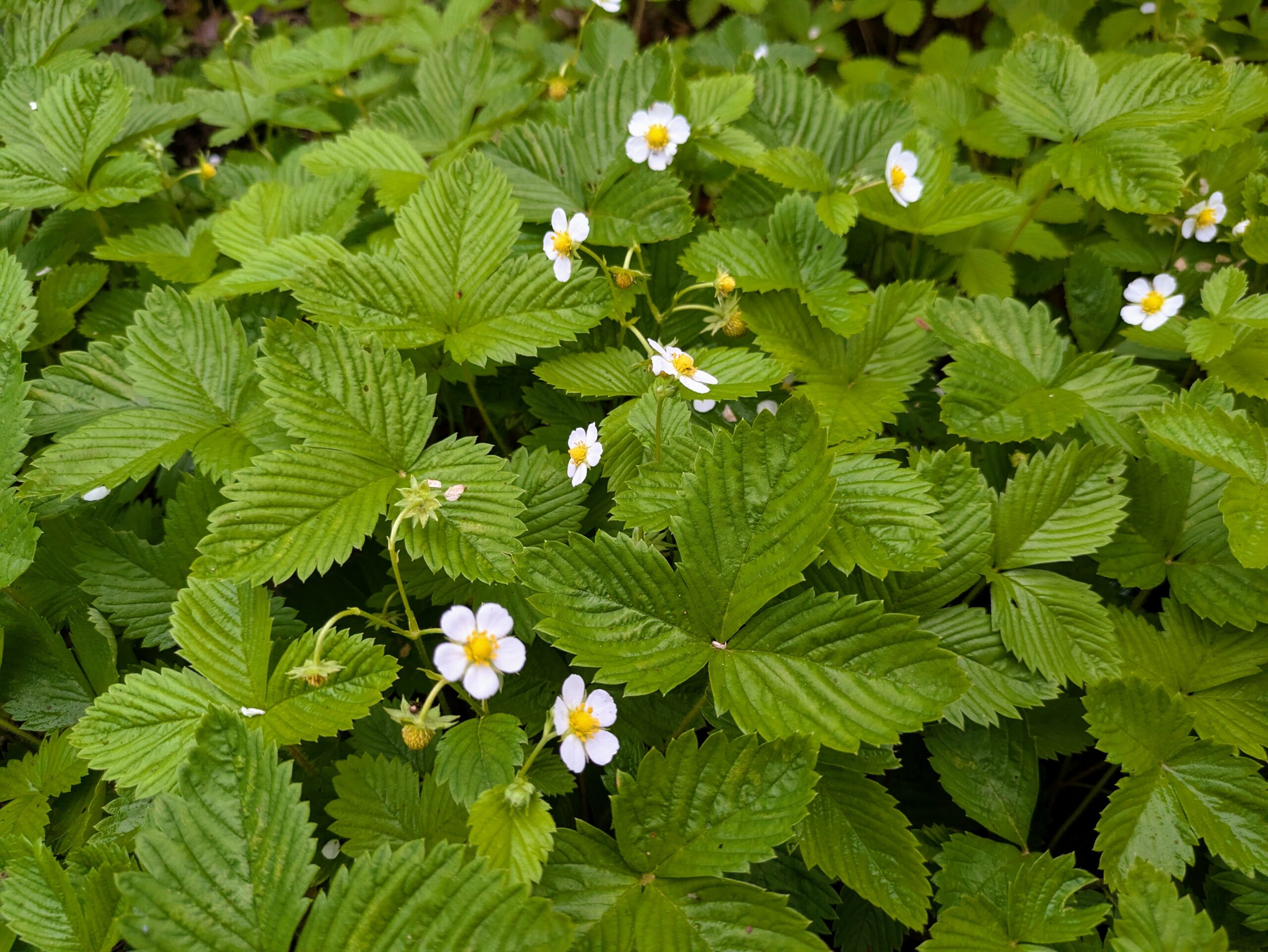
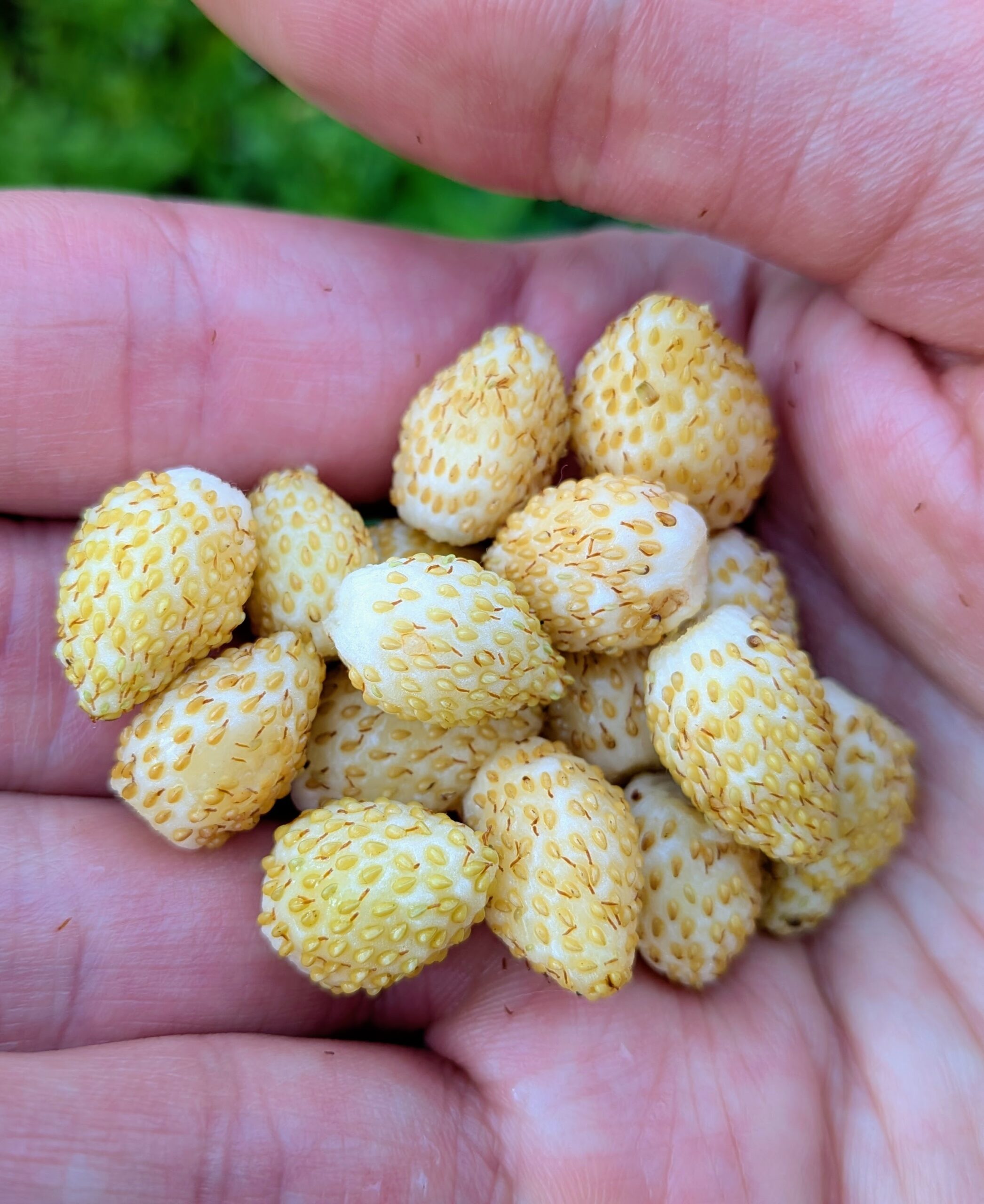
This is far and away my favorite and most-used groundcover plant. ‘Hawaii 4’ is an unusual cultivar of woodland strawberry with a few unique features. This strawberry produces white fruits, spreads vigorously by runners, is day-neutral (fruits all year), and flowers and fruits on runners even before they root. All of these features combined make it a perfect groundcover strawberry in my opinion. The white fruits of the plant are completely ignored by birds and are borne all growing season long except in the intense heat of summer. The vigorous carpeting habit allows it to quickly fill in a large area, and the new plants begin fruiting immediately. The fruits are small but have a great pineappley flavor – everyone who has tried them in my garden has loved them. The plants are tolerant of full sun to quite heavy shade in all but the driest of soils.
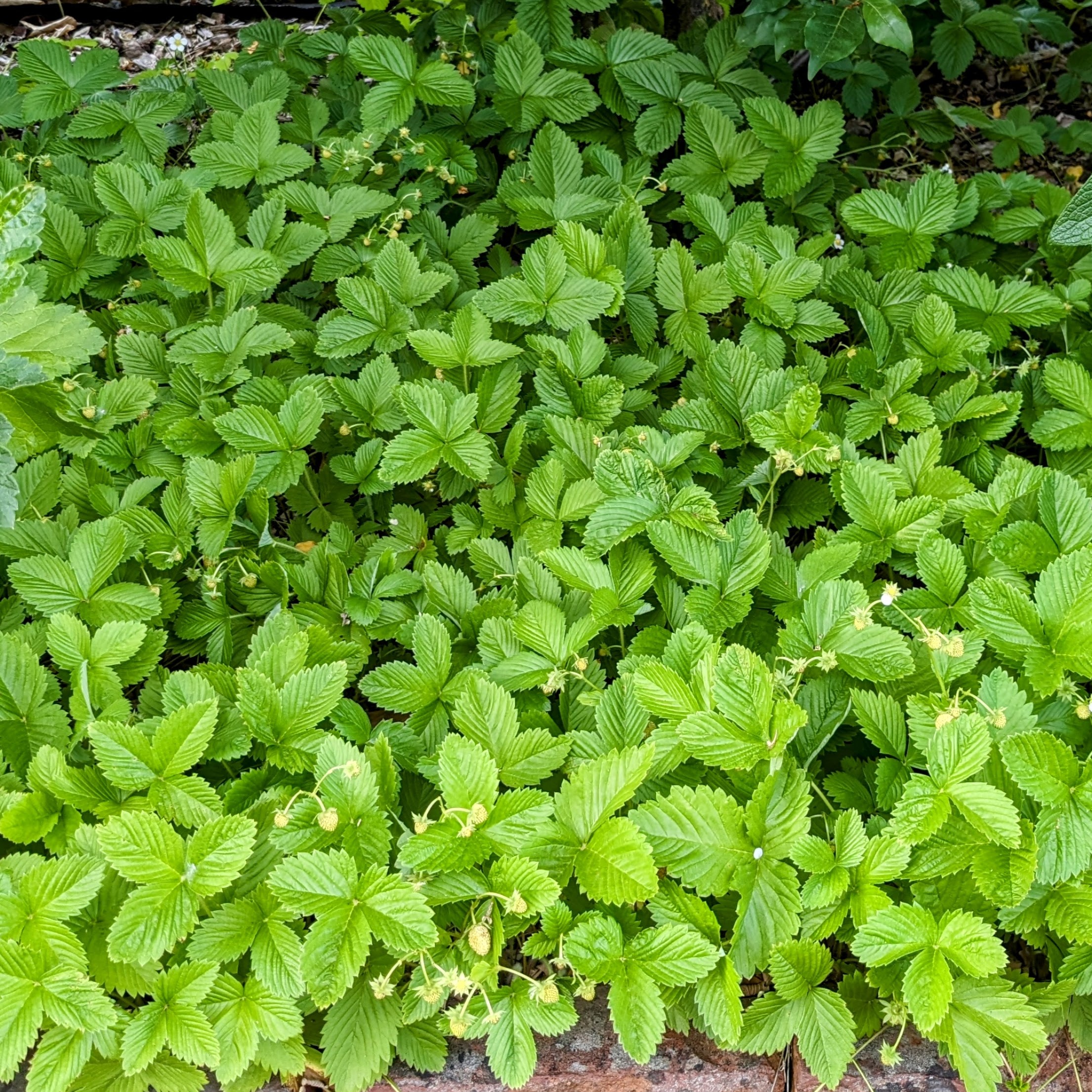
The backstory of this plant is also very interesting. It was found growing wild on the volcanic slopes of Hawaii’s big island in 1983 by famed strawberry breeder Royce S. Bringhurst. It was then crossed with itself 4 times to create a stable cultivar, hence the name ‘Hawaii 4’. How exactly this wild European strawberry species made it to the big island of Hawaii in the first place is a mystery. Because the plant is genetically stable and extremely easy to propagate, it was chosen as the first strawberry to have its full genome sequenced and has also been recommended by NASA as a fruit to be grown on long space missions. The Strawberry Seed Store is the best place to get this rare variety in the United States.
Sedum sarmentosum
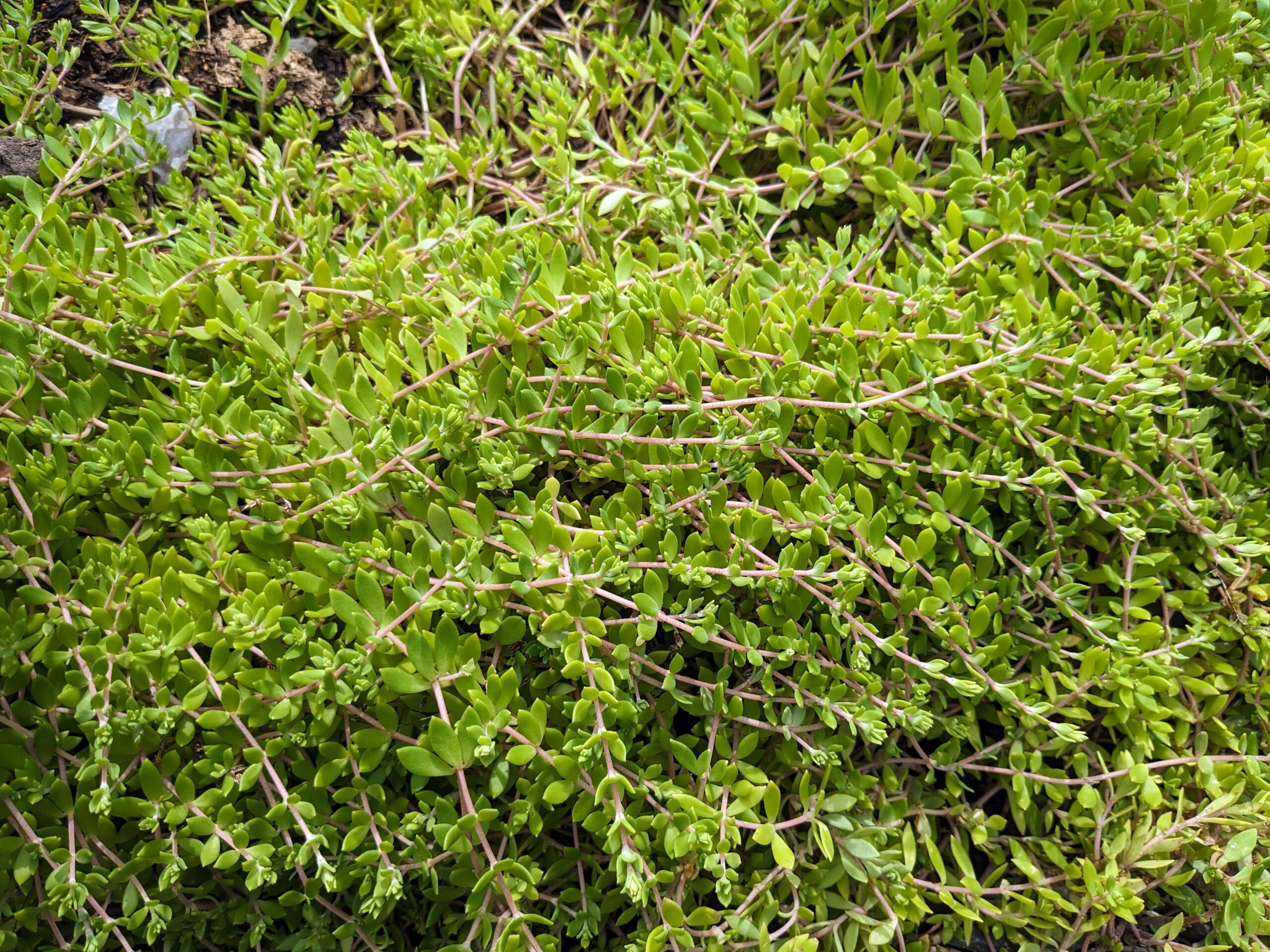
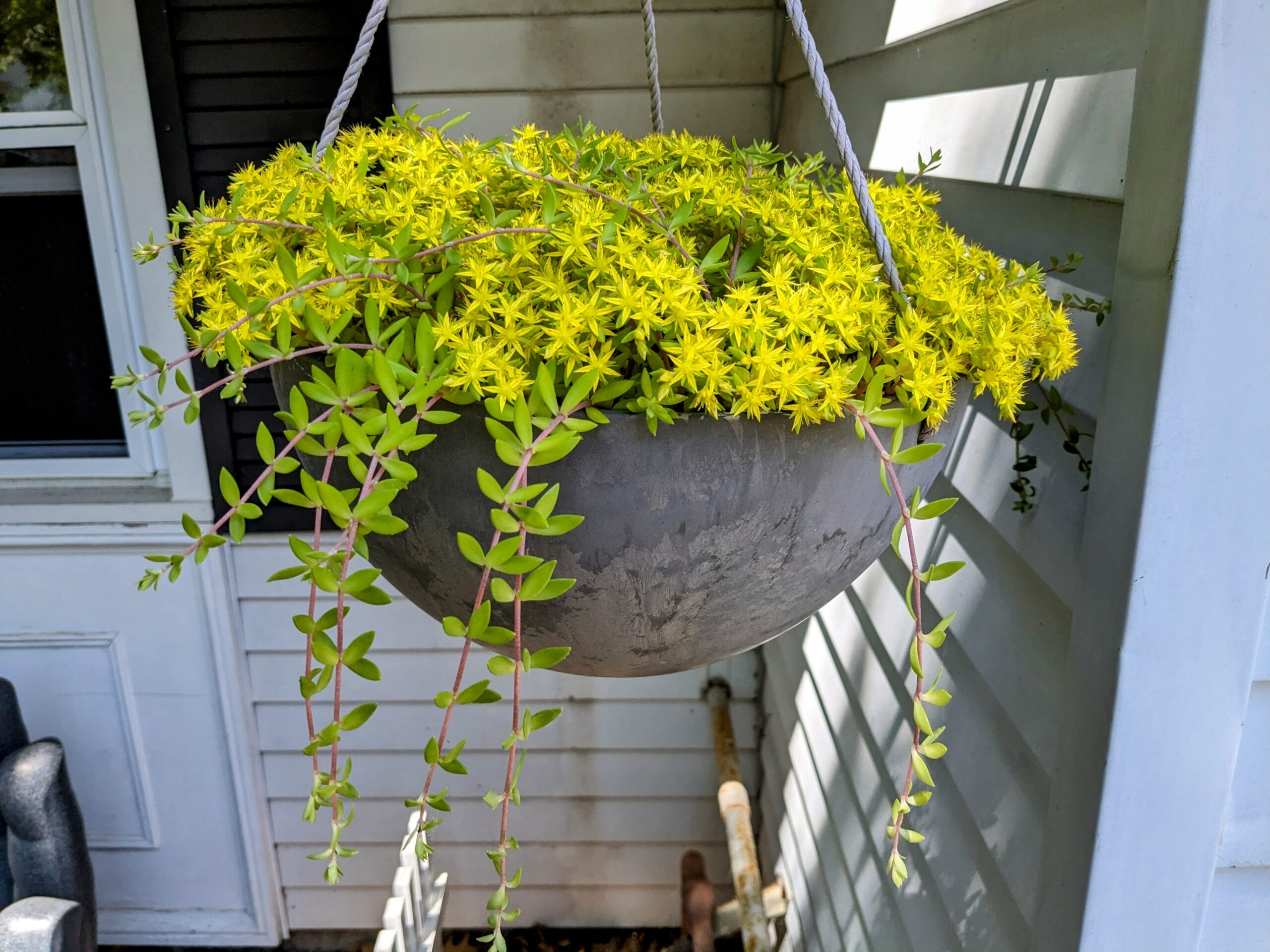
I consider Sedum sarmentosum or stringy stonecrop to be the romaine lettuce of perennial vegetables – it has a mild flavor and succulent texture that make it an essential part of any salad. Native throughout East Asia, this species has been introduced to the United States where it has naturalized widely throughout the eastern half of the country. This is just about the easiest plant you could possibly grow, thriving in all but the wettest and shadiest of conditions. It has a very long harvest season because it grows continuously all year long. Known in Korea as dolnamul, it is typically served up chopped and dressed with a spicy-tangy dressing of gochujang, vinegar, sugar, garlic, sesame oil and sesame seeds – though I find that any salad dressing works just as well!
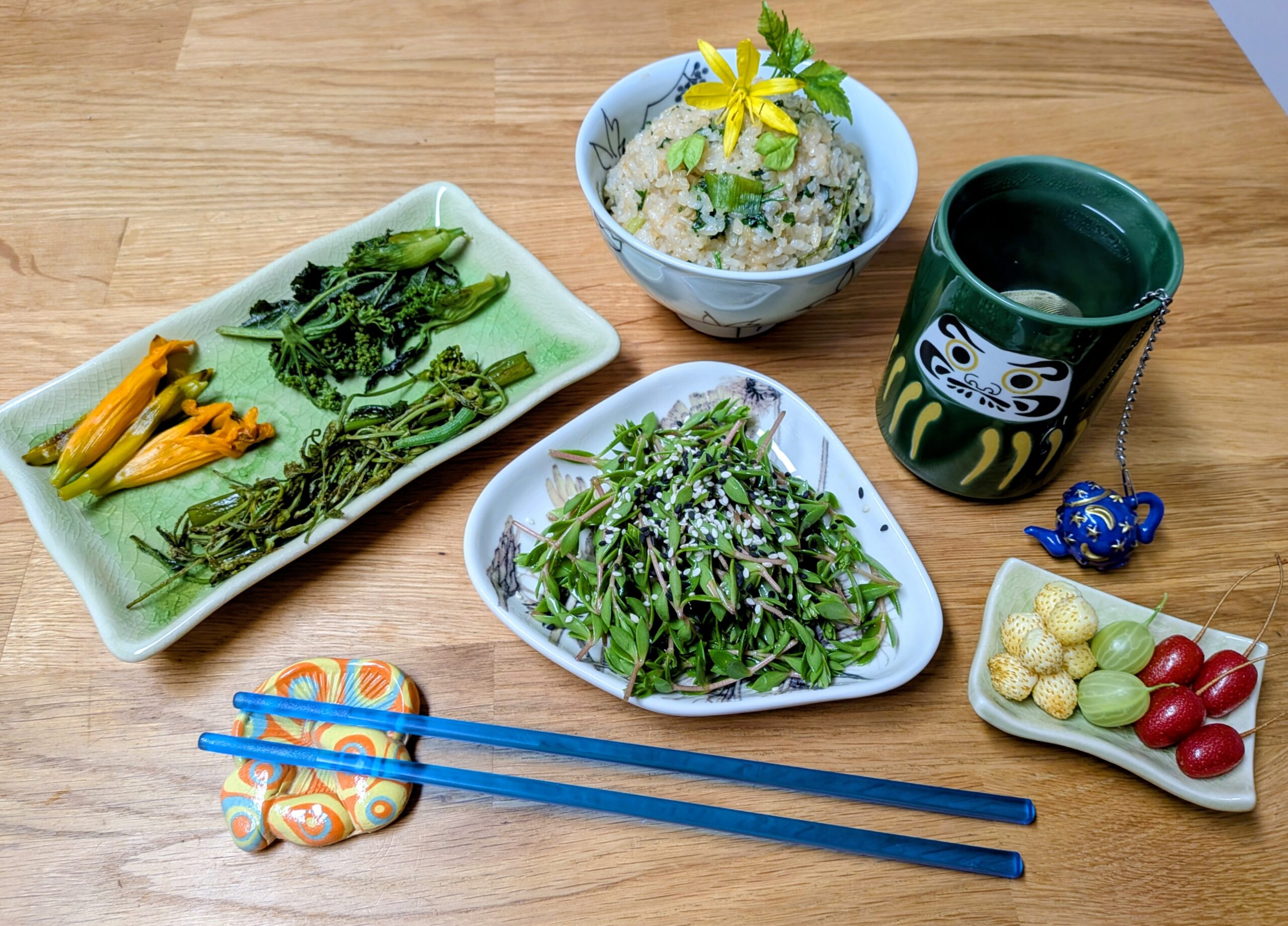
The name stringy stonecrop refers to the long shoots it produces. When harvesting I just go out with scissors and snip them off. Growing in a hanging basket or down a rocky slope can accentuate the best features of the species. Another common name for this plant is graveyard moss because it was once planted on top of freshly dug graves to quickly cover the soil. This plant can be extremely aggressive in the garden, and any planting should take this into account! I’ve given mine a large area to colonize. Any small piece of the plant that is cut off and laid on the soil is likely to root and form a new plant, and it can also spread by seed. I think this is the very best of the edible Sedum species, so having a lot of it around is fine by me!
Campanula takesimana
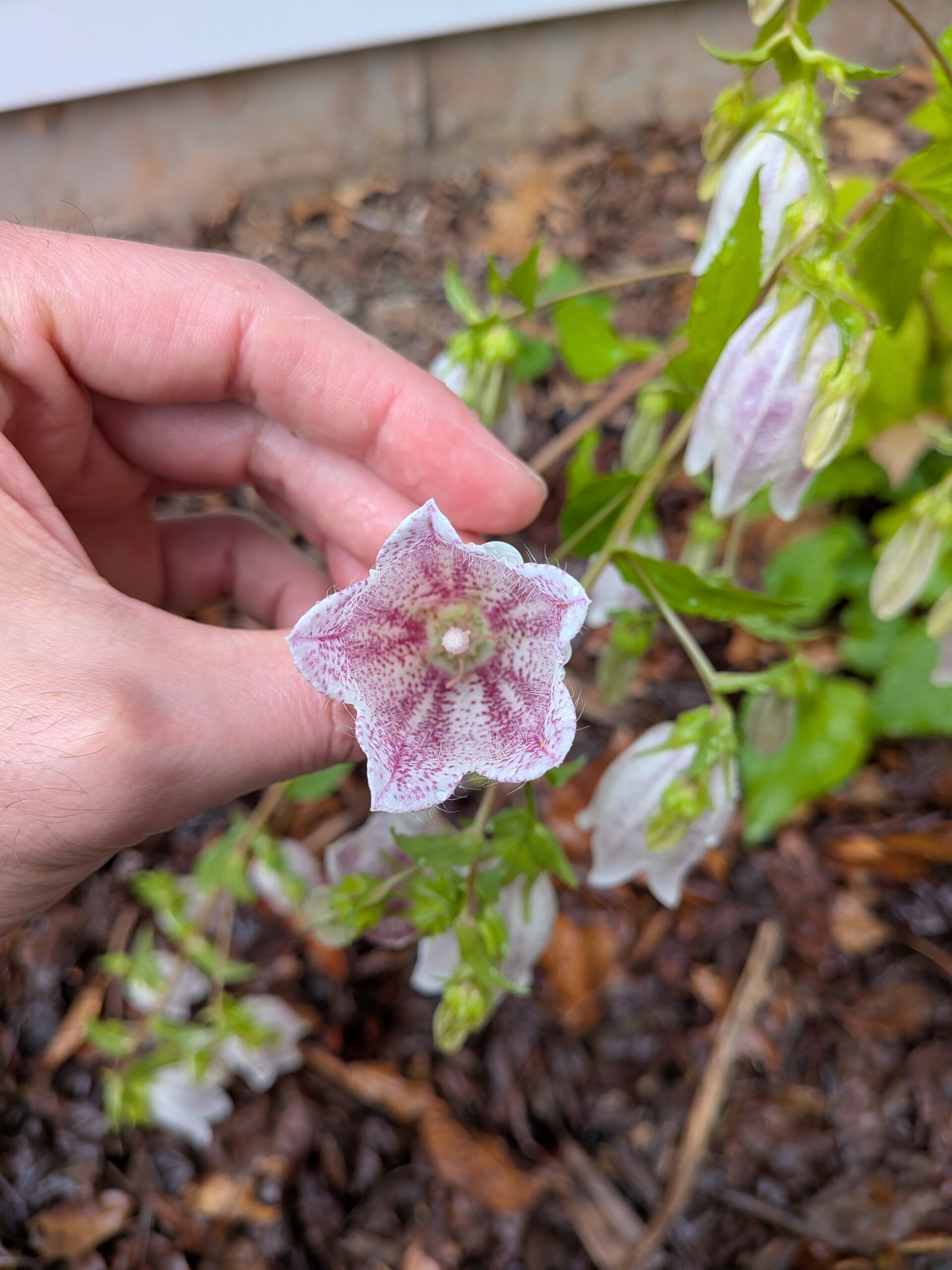
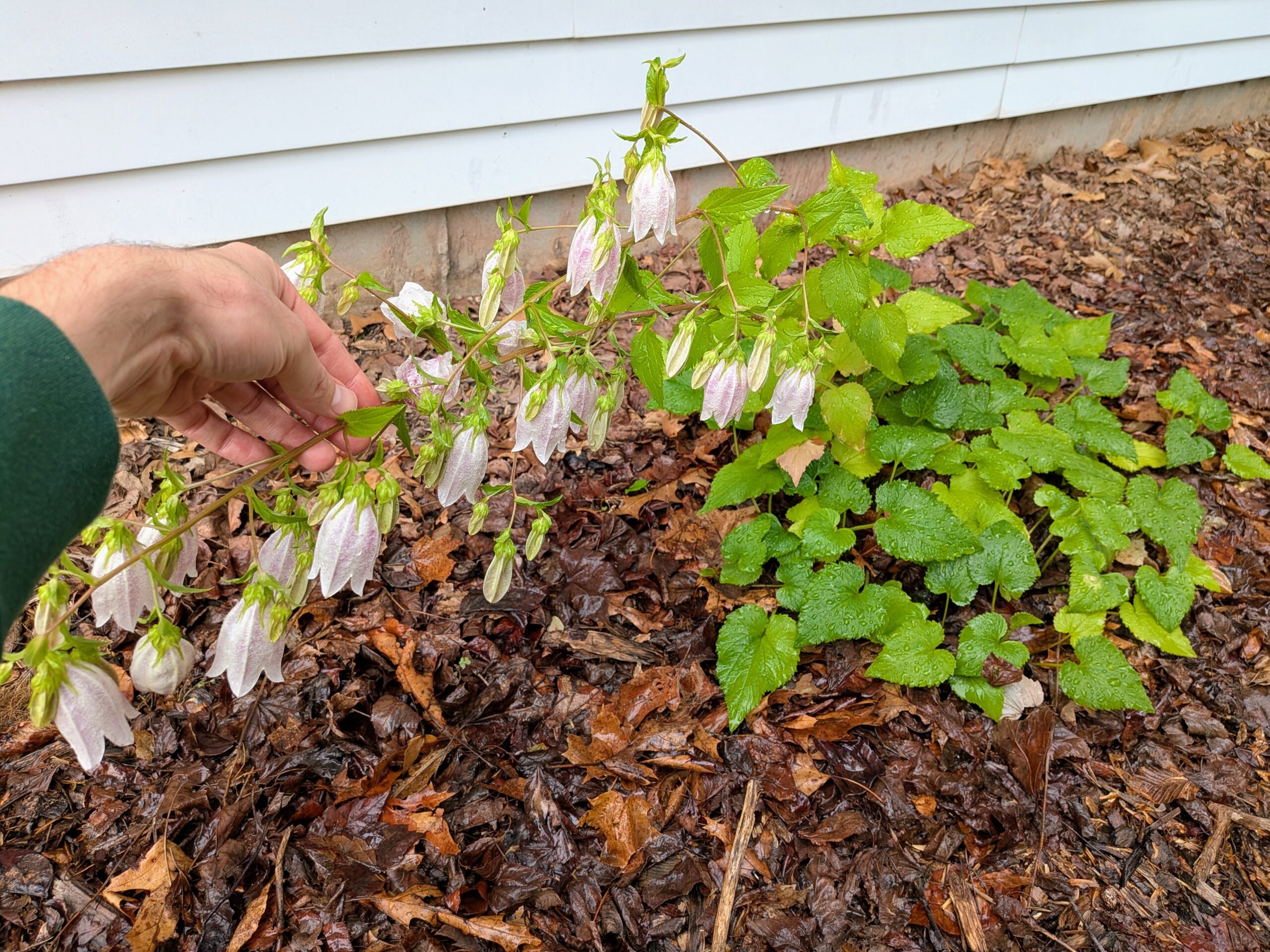
Campanula takesimana or Korean bellflower, is an extremely vigorous bellflower species from Korea which can thrive in almost any garden conditions. While many bellflower species have hairy or tough leaves, Korean bellflower is exceptional in that its young leaves are smooth and succulent – excellent raw or cooked. In early summer the plant produces large pendulous bell-shaped flowers with beautiful pink speckled patterns on the inside. These flowers are also delicious and make a welcome addition to the salad bowl.
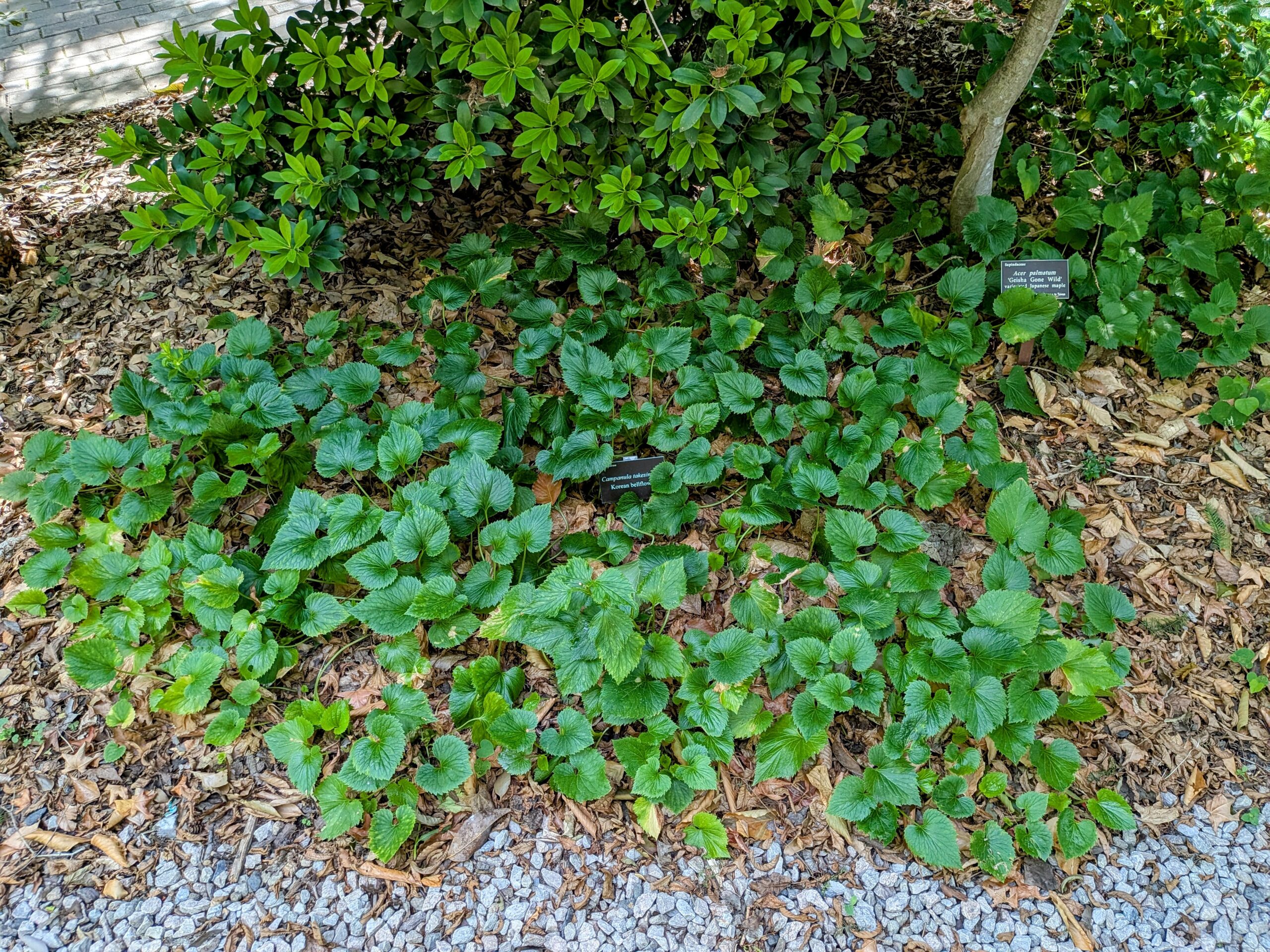
In my garden I grow this plant in heavy shade and very dry soils under an overhang and it seems wholly unfazed, spreading steadily by rhizomes each year. I recommend deadheading the flower stalks to prevent self-seeding unless you have a large area you’d like to fill. One cultivar, ‘Elizabeth’, is sometimes available. This variety is said to be more floriferous, with deeper pink flowers than the species.
Physalis heterophylla
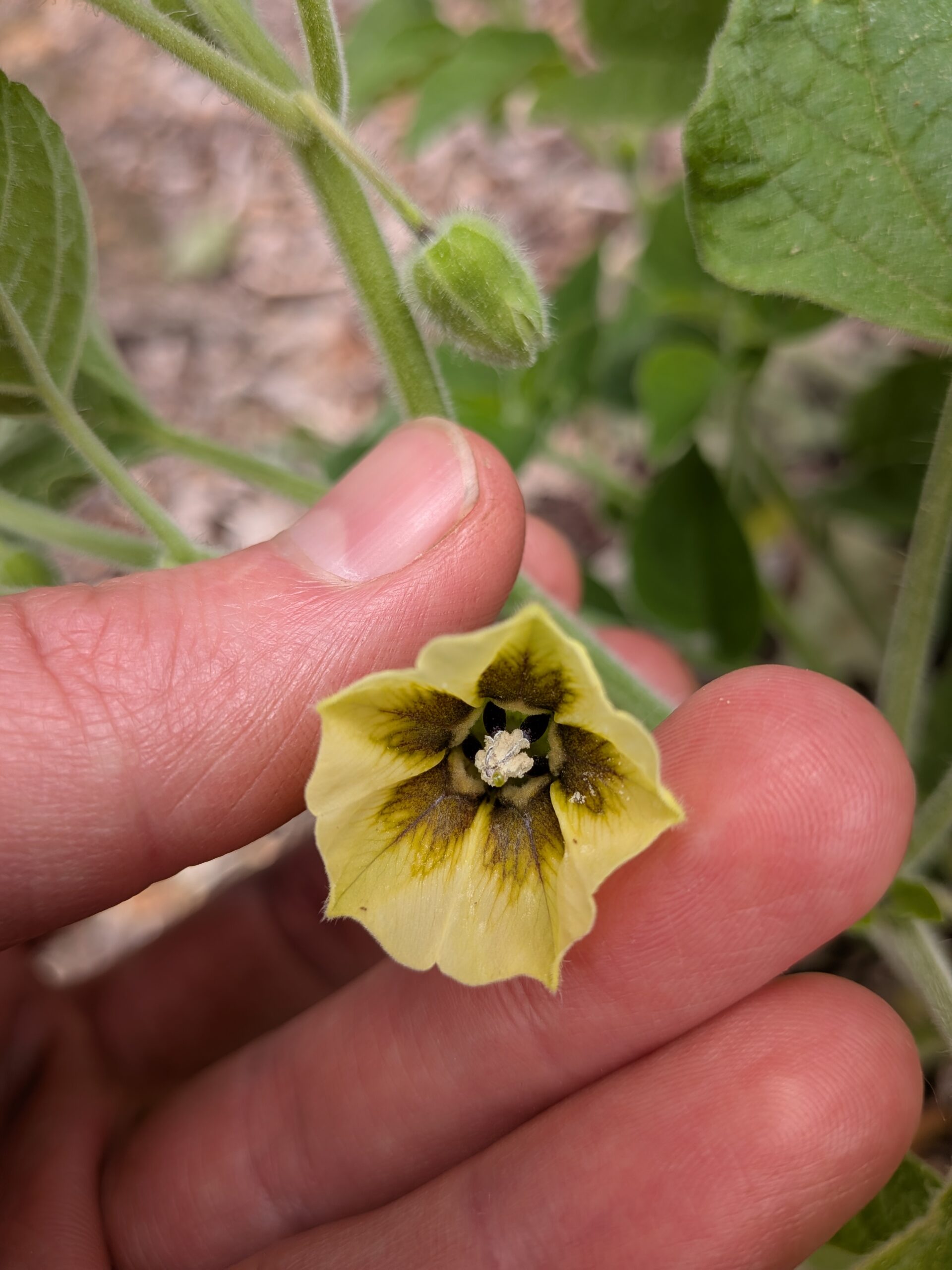
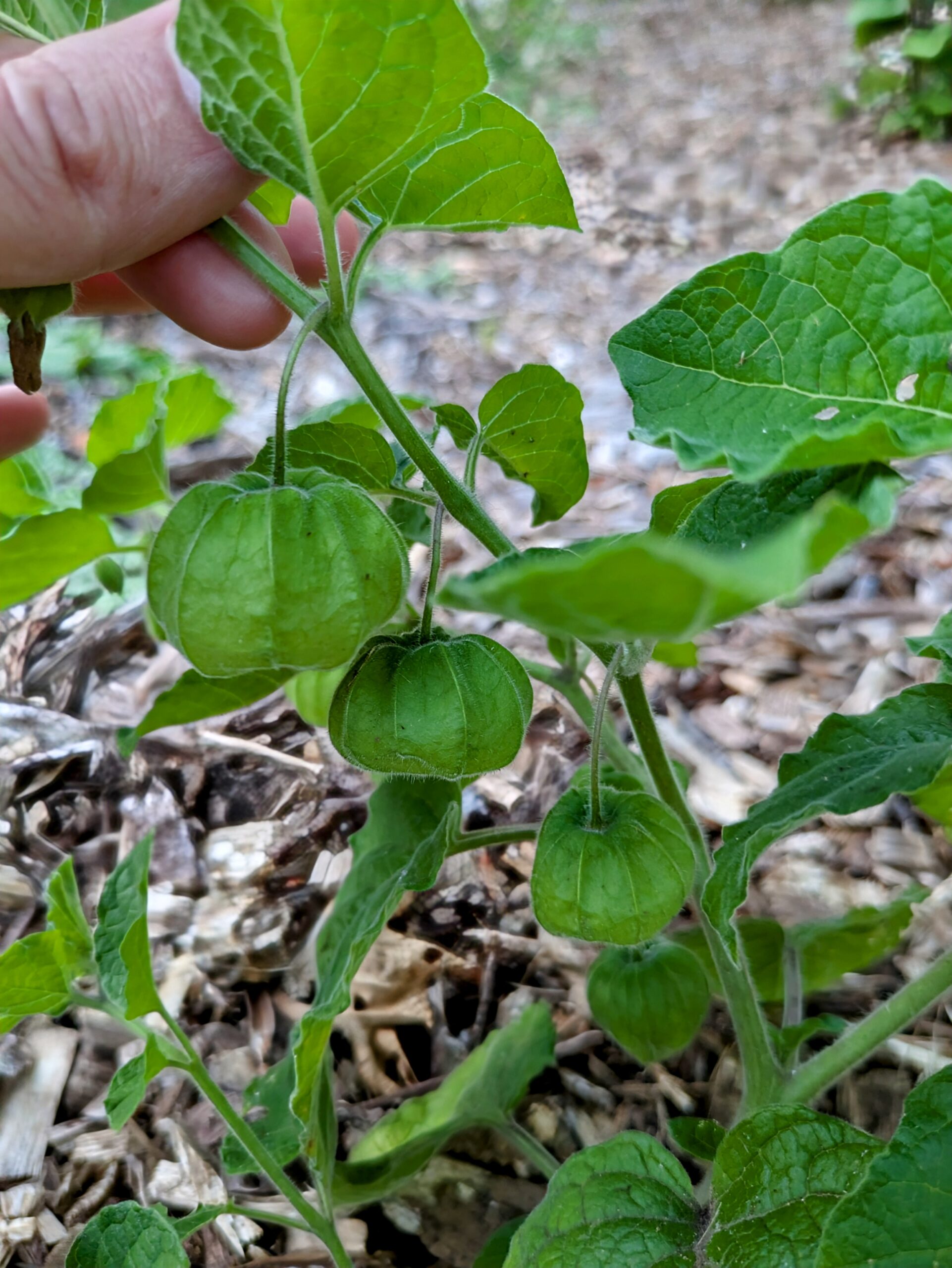
The common name “clammy groundcherry” doesn’t exactly inspire confidence, but this Physalis species is a delicious and low-maintenance addition to the edible garden. A member of the nightshade family Solanaceae, this plant is native throughout the Eastern United States where it can be found growing wild in dry, sunny places – meadows, roadsides, woodland clearings, etc. This species is said to have the largest and best tasting fruits of the many US native perennial Physalis species. I certainly find them delicious – they have a tropical pineapple flavor much stronger than the commonly available cape gooseberry Physalis peruviana. The fruits of this species are smaller in direct proportion to the overall size of the plant, which only reaches about 1 foot (30 cm) tall in my garden.
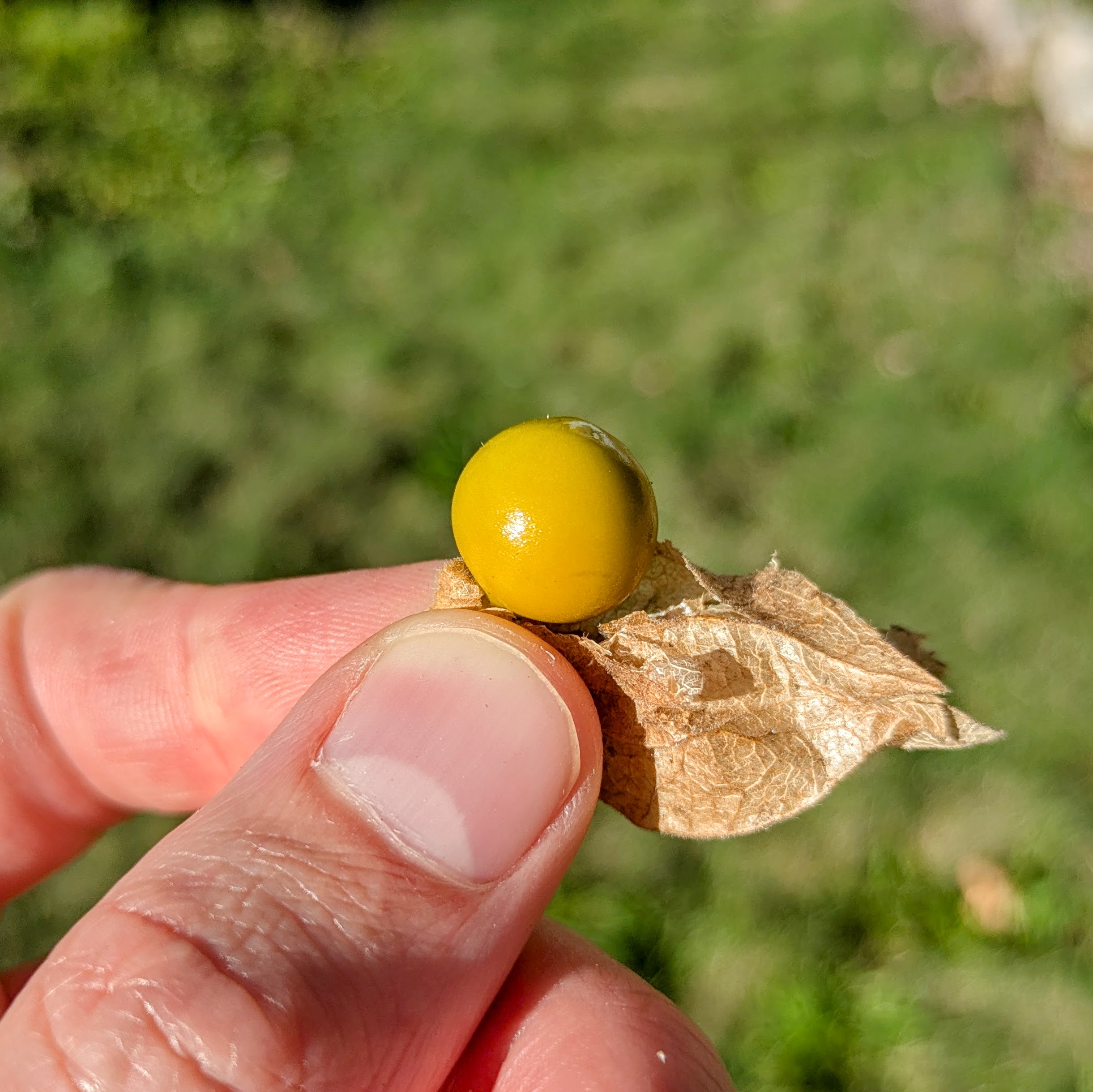
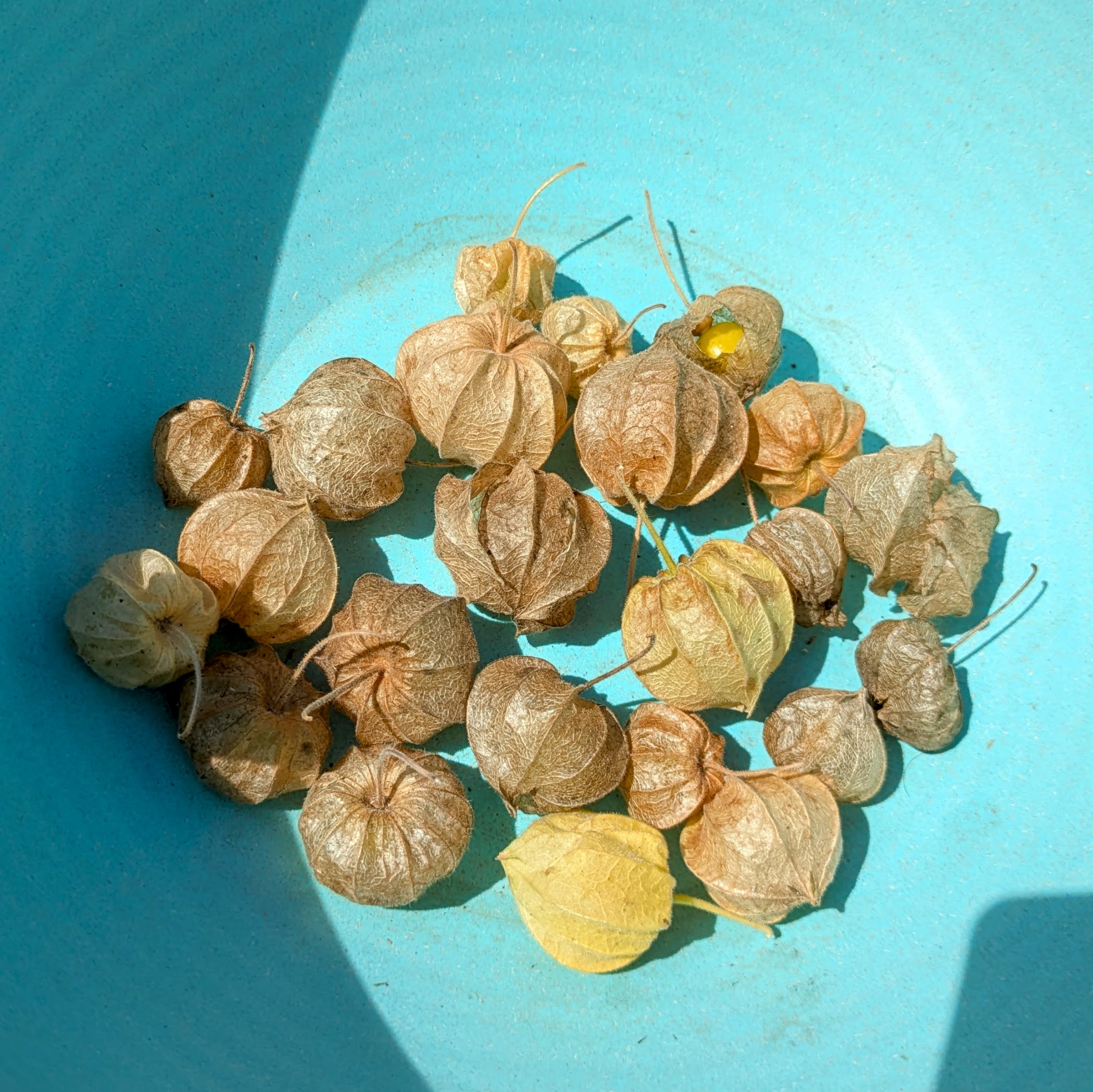
The large fuzzy leaves and pendulous yellow flowers give some ornamental quality, but only for those who look closely. Each plant can produce a surprising quantity of fruits, which can be harvested late into the fall. These plants do spread by deep underground rhizomes, so their placement in the garden should take this into account. My patch is situated such that it has a mowed lawn on one side and the heavy shade of a tree on another, keeping it in check. Sourcing these plants can be difficult. I got mine purely by chance when visiting Eric Toensmeier‘s garden. He very kindly gave me a small tray of seedlings that he had propagated from a wild population. To find populations in your area, I recommend checking out iNaturalist.
Rubus parvifolius ‘Lemon Lace’
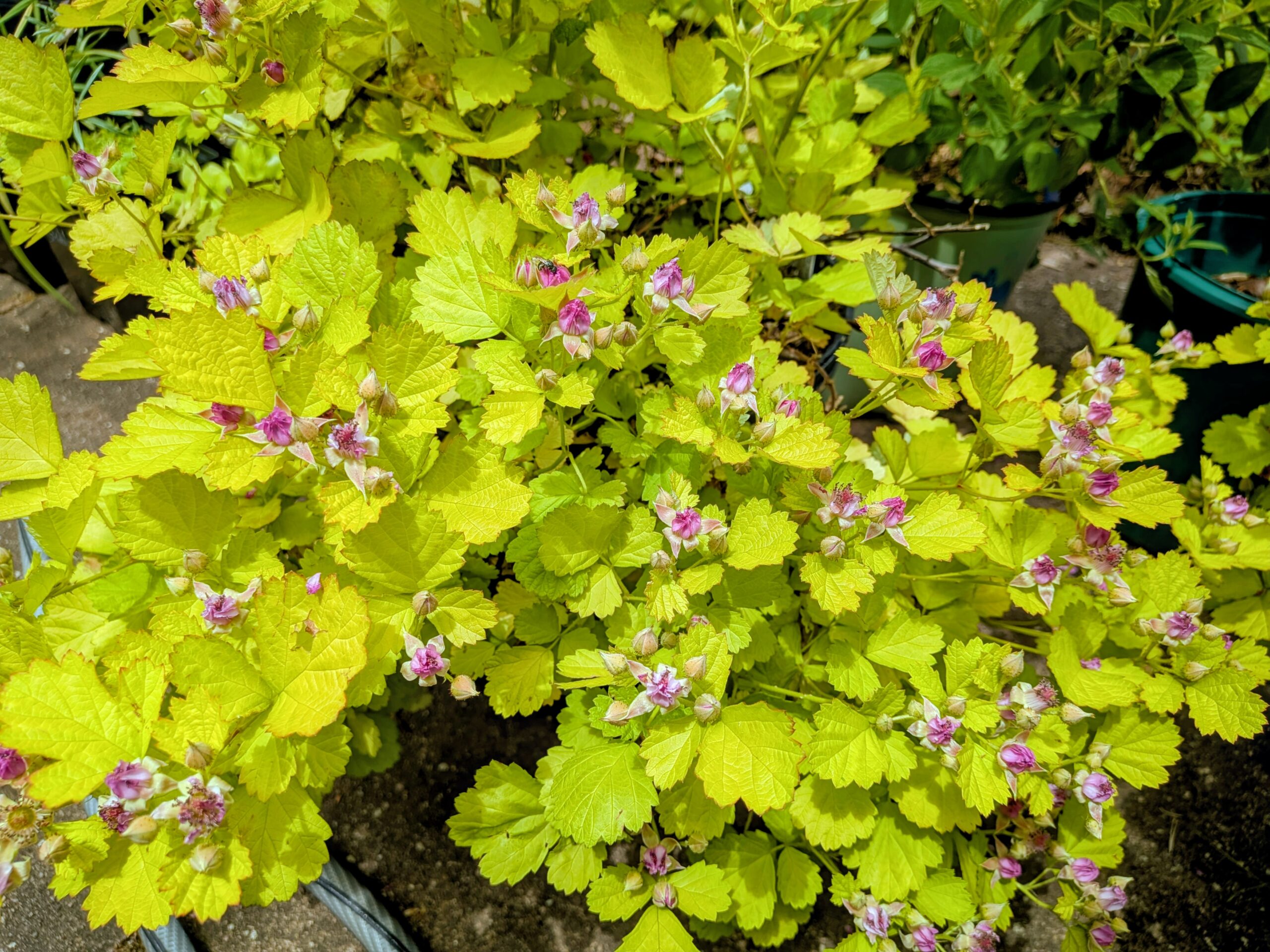
For many years I’ve been jealous of the evergreen groundcover raspberries that can be grown in milder climates – plants like Rubus rolfei and Rubus tricolor. After trying a few of these species over the years and having them barely survive much less fruit, I’ve turned my attention instead to low-growing deciduous raspberry species, which tend to be much hardier and more vigorous. As luck would have it, my favorite local nursery Broken Arrow Nursery carries Rubus parvifolius ‘Lemon Lace’, a yellow-foliaged variety of this low-growing East Asian and Australian(!) raspberry species. This plant is a thorny deciduous shrub with prostrate stems that lay along the ground, only reaching a maximum of 3 feet (1 m) tall. The yellow foliage is extremely striking in the spring, eventually fading to a bright chartreuse, and the cheery pink flowers in summer eventually give way to small red fruits.
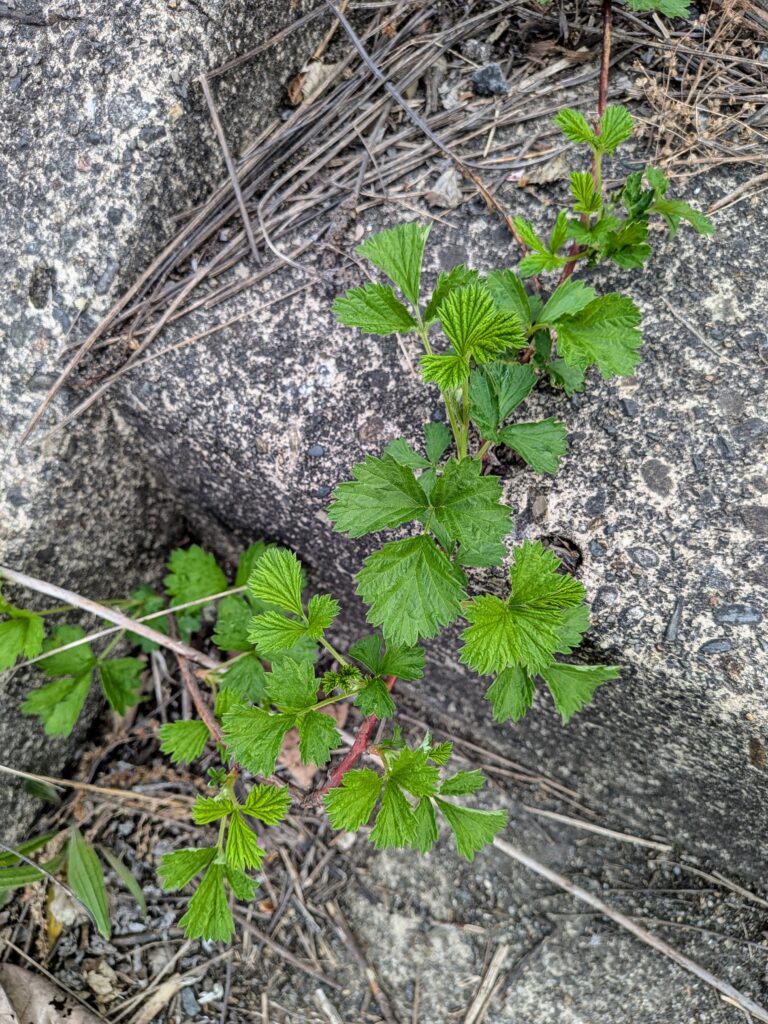
The fruits of this species are collected and eaten on a small scale in Korea, Japan, and Australia. While the plant is quite thorny, it’s not worse than any other raspberry species. Notably Rubus parvifolius seems to be at least partially self-fertile, unlike the other common groundcover raspberry species. There is some concern about invasiveness of this plant, as localized populations have sprung up in Boston and parts of Missouri. In my own garden I’ve actually struggled to get it established for the last few years! It’s hard to deny the ornamental qualities of the bright yellow foliage and unique pink flowers. I’ve given this plant a large area in the far end of my yard where it will be free to spread.
Pachyphragma macrophyllum
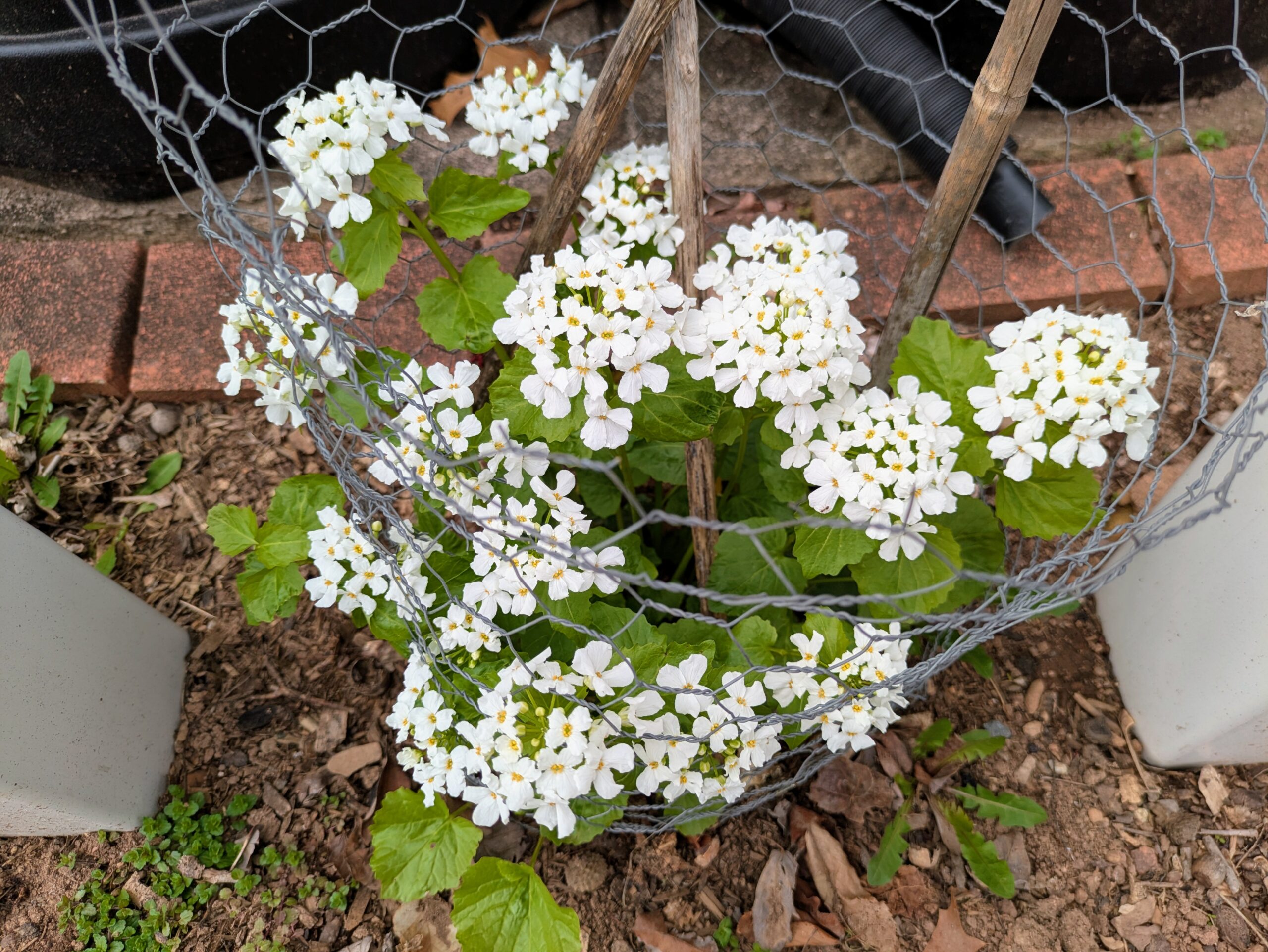
Sometimes known as Caucasian pennycress, Pachyphragma macrophyllum is a member of the cabbage family (Brassicaceae) which is as resilient as it is beautiful. This short plant to about 1 foot (30 cm) tall features rounded leaves in bright green and large white flower clusters in the spring with yellow centers and an intoxicating aroma. I enjoy eating the young leaves, which taste similar to garlic mustard (Alliaria petiolata), the flower “broccolis”, and the flowers themselves after they open. This plant is tough as nails and actually seems to prefer dry shade, though it doesn’t spread too aggressively. What else could you ask for in an edible groundcover plant?
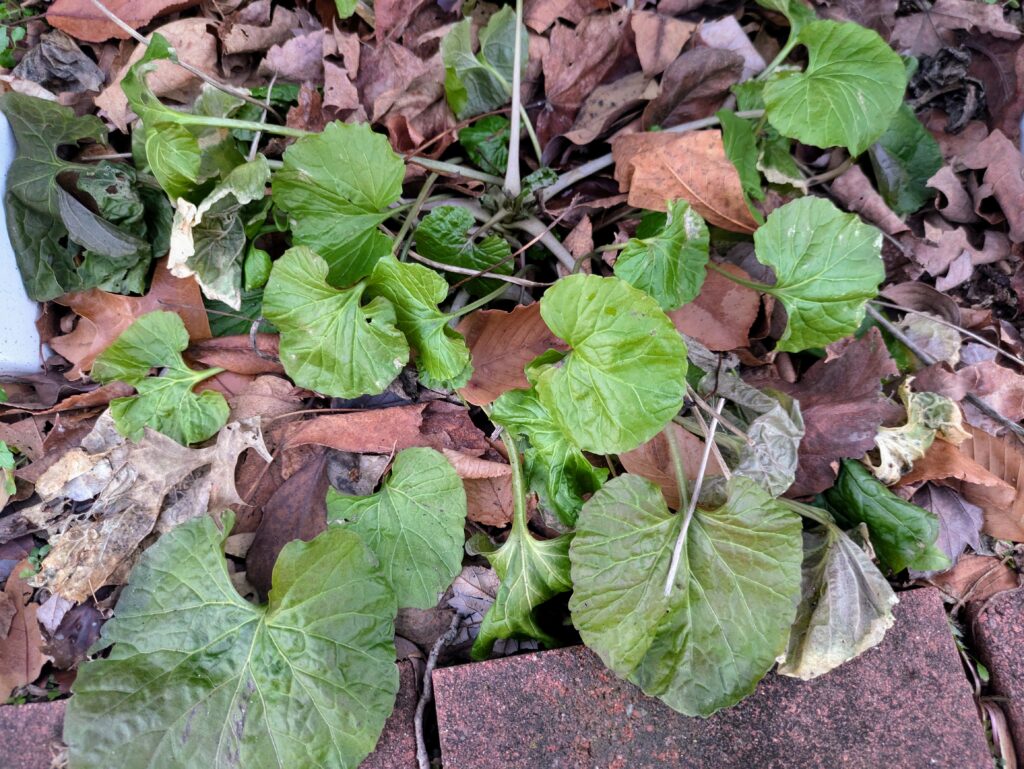
Pachyphragma macrophyllum is said to have been one of famed English plantswoman Beth Chatto’s favorite plants, and it is much more widely planted in the UK than here in the States, though it actually originates in the Caucasus mountain range. I was surprised to discover that it is actually evergreen in my garden, though it can get a bit tattered in cold winter conditions. Those in the US who are looking for plants to try can find them at Far Reaches Farm and Keeping It Green Nursery, both located in Washington state but shipping nationwide.
Aralia nudicaulis
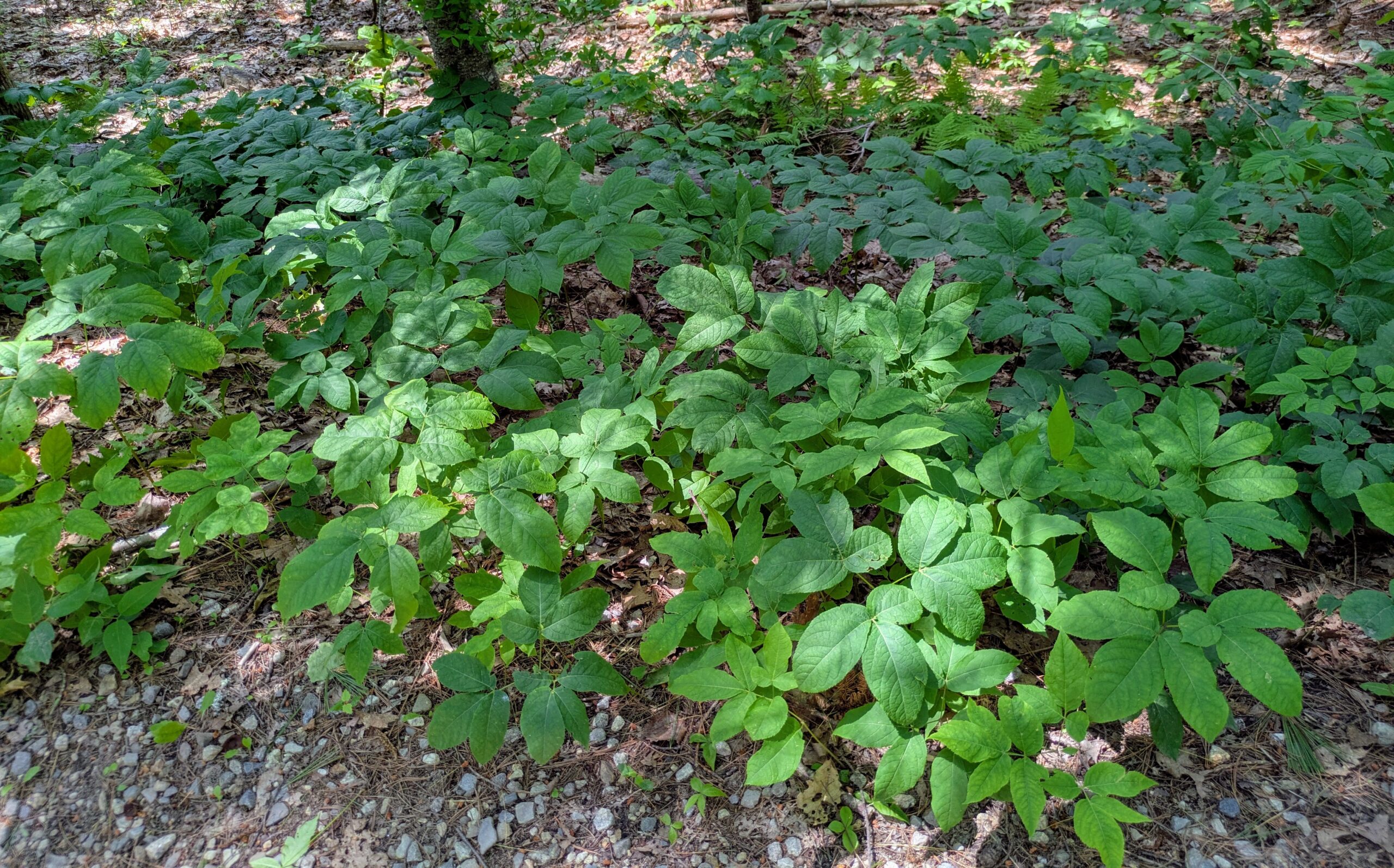
Given my interest in the ginseng family Araliaceae, it shouldn’t be too surprising that I would like wild sarsaparilla, Aralia nudicaulis. Commonly seen in dry forests throughout New England, this is perhaps one of our most common native plants. Its ubiquity shouldn’t dissuade you from including it in your garden though, as this is an excellent native plant for dry shade where few other plants will grow. While traditionally the root is used medicinally and for making root beer, I find the young shoots in spring to be the most delicious part, either raw or cooked. When they first emerge, the shoots are maroon, fading eventually to green as the leaves expand. This color change makes it easy to see which shoots are best to harvest, and large colonies can provide quite a lot of food, though the harvest window is short.

Plants are dioecious, spreading mainly by thick underground rhizomes to form large colonies in upland forests. Flowers are borne in small spherical clusters at the base of the plant, with pollinated female plants forming small black berries. The berries are edible but small and somewhat bitter so hardly worth eating, though they are attractive to birds. While colonies can often be sparse, they can form a nice dense groundcover of about 2 feet (60 cm) tall in good garden conditions. I encourage anyone in this plant’s native range to give it a taste and consider growing it in the drier, shadier parts of your garden!
Phlox divaricata
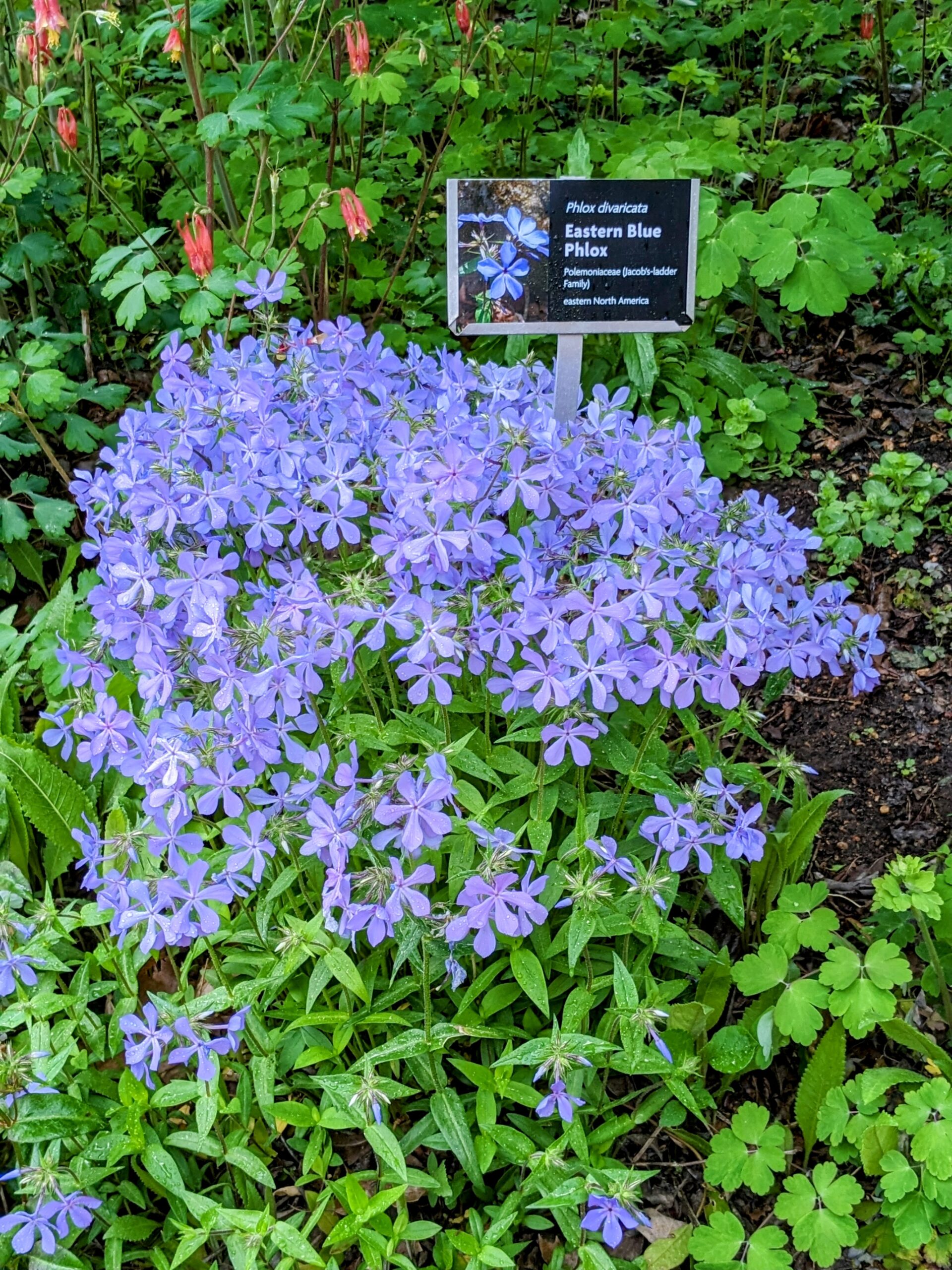
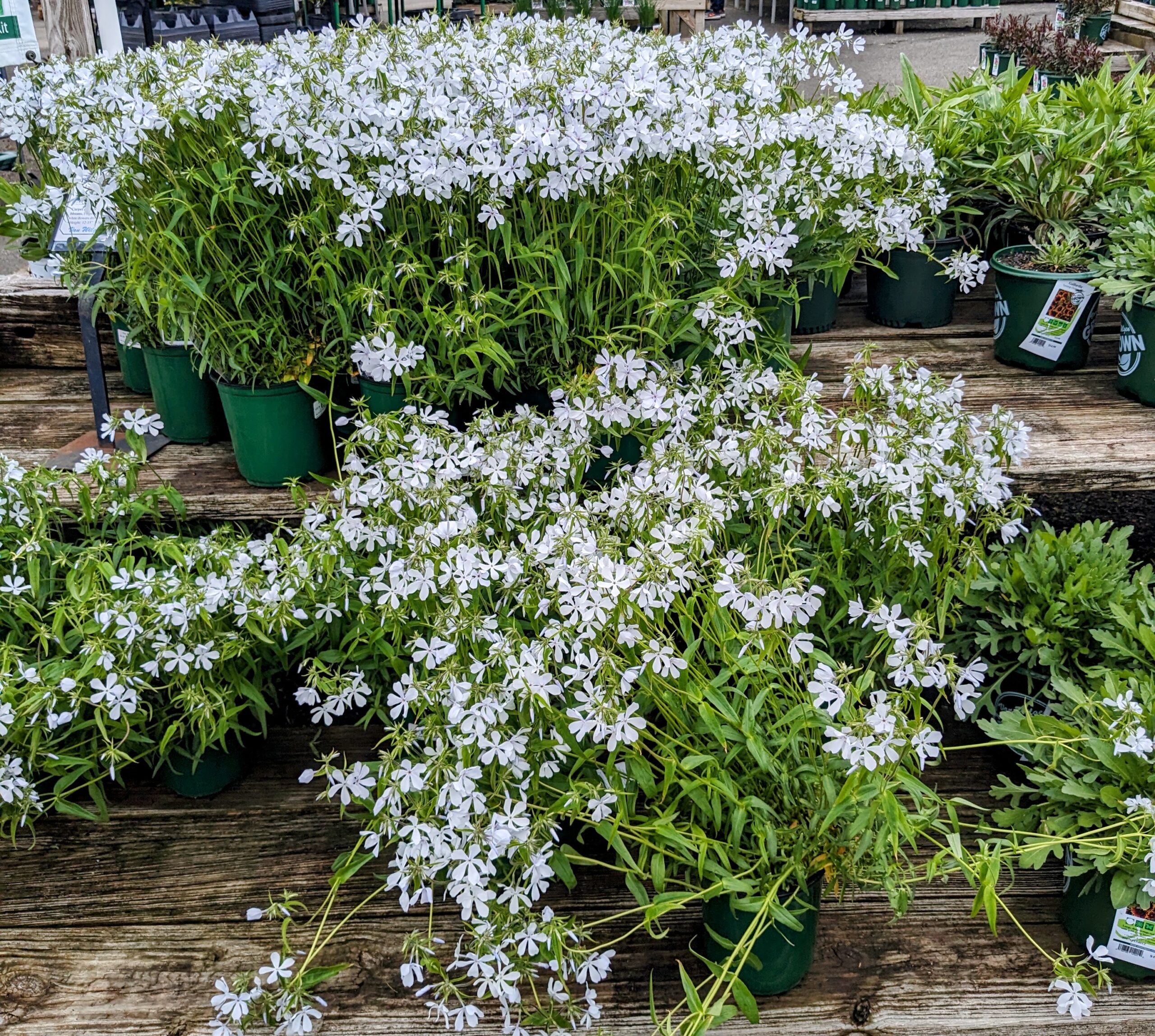
I was quite surprised to learn in Sam Thayer’s incredible Field Guide to Edible Wild Plants of Eastern & Central North America that the common woodland phlox, Phlox divaricata, is not just edible but pretty tasty! The young leaves and stems are eaten in the spring before flowering and have a mild pleasant flavor and succulent texture either raw or cooked. Later in the season the flowers can also be eaten and make a nice colorful garnish in salads or on top of cooked dishes. This native species is very shade tolerant but prefers some soil moisture. The showy flowers and sturdy disposition make it a superstar of the edimental shade garden.
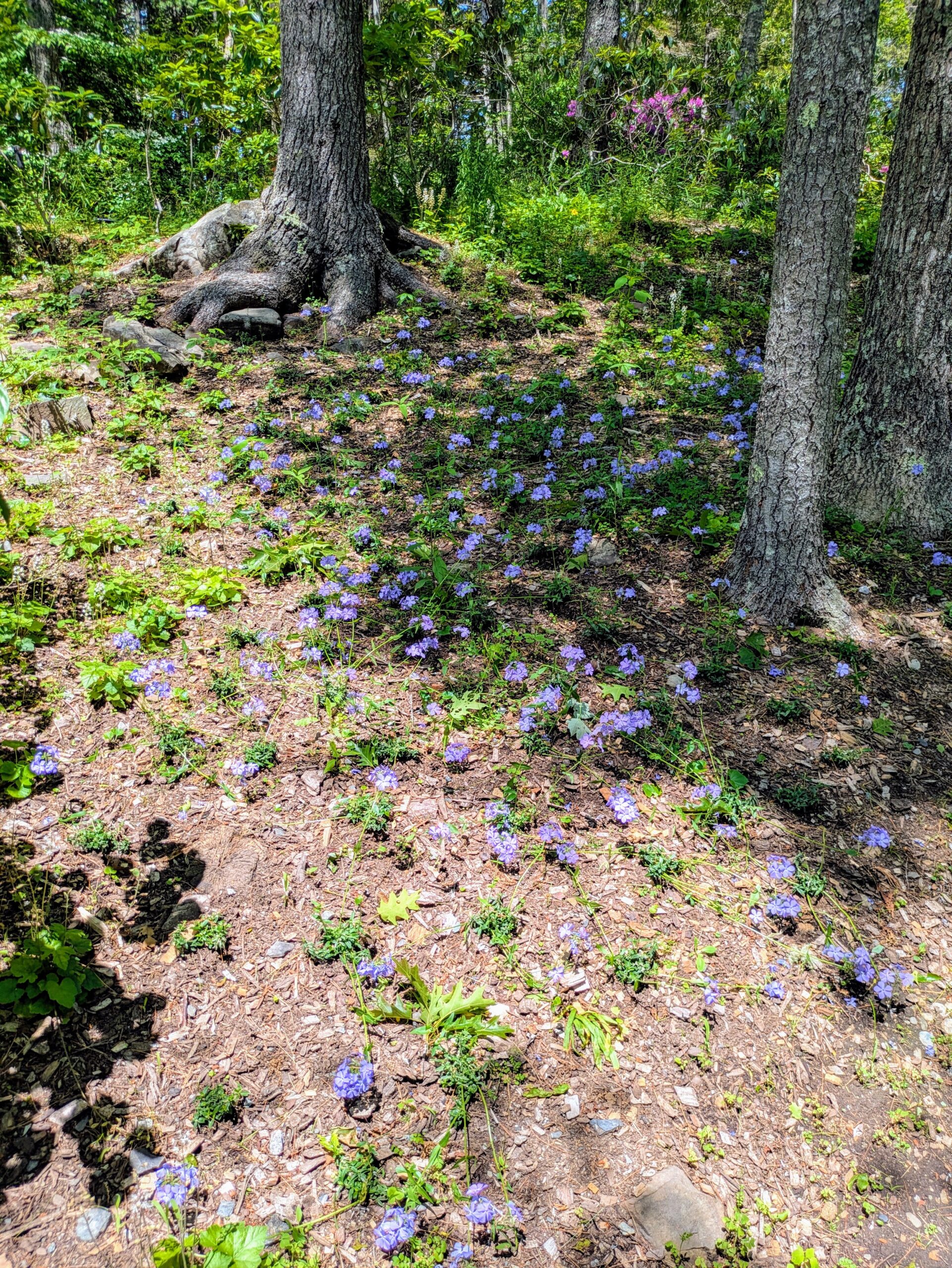
If you can’t find the straight species, the cultivar ‘Blue Moon’ is widely available and performs well. The cultivar ‘May Breeze’ is a bit taller and has white flowers, so can be used to provide contrast both in the garden and on the plate. After flowering the plants can look rather shabby, so I recommend cutting back the flowering stems, which can also cause a nice flush of new edible stems. This plant is widely available in garden centers throughout its native range, making it an easy plant to source and add to your garden.
Trachystemon orientalis

My first exposure to Trachystemon orientalis or early-flowering borage was in early April of 2024 when I visited the Cornell Botanic Gardens in Ithaca, NY on my way north to see the solar eclipse. Amongst the flowers of the cornelian cherries and hellebores I spotted these unusual large leaves emerging. The nearby sign said “Early-flowering borage” which turns out to be an appropriate name. Had I been there a few weeks later I would have seen the incredible electric-blue flowers. Trachystemon orientalis is a rhizomatous perennial plant in the borage family Boraginaceae closely related to the comfreys (Symphytum spp.) and true borage (Borago officinalis). It hails from the Black Sea region where it grows on dry wooded slopes. The young flowering shoots are a common food in Turkish markets each spring.
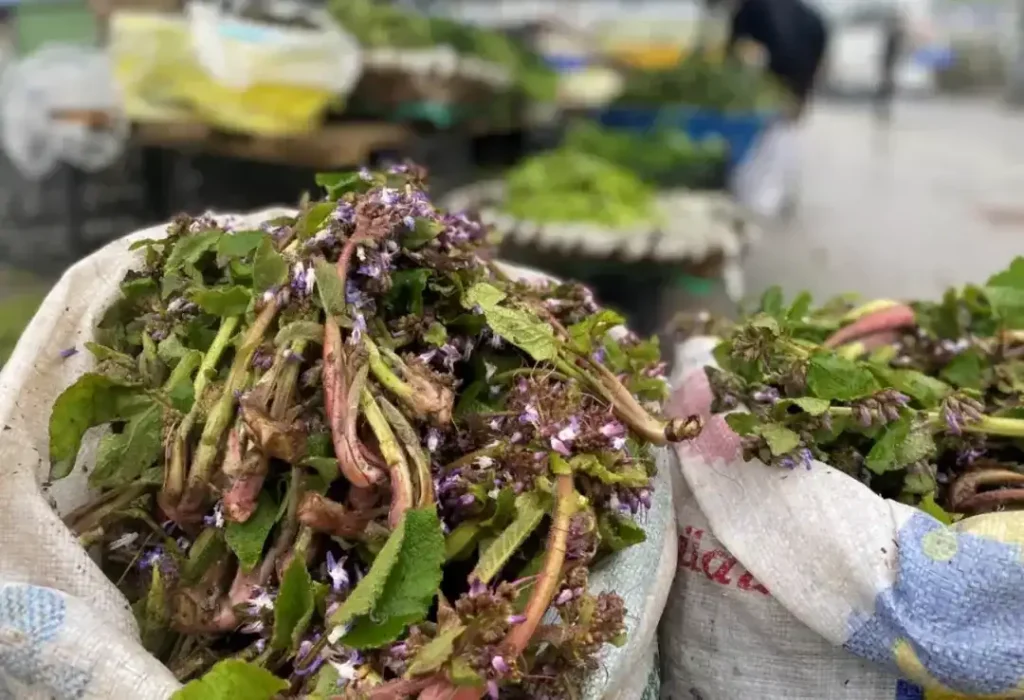
This is another plant that spreads by underground rhizomes, so treat it like running comfrey when choosing a location. As with other plants in the borage family, there is some concern about hepatotoxic pyrrolizidine alkaloids in the leaves, but so far there has been no research done on the subject. Because the plants are so widely eaten in Türkiye, I personally consider them safe to eat until I learn otherwise. The main edible use is the young flowering stalks, cooked, though there is some evidence that all parts of the plant are edible. There are two good cultivars of Trachystemon orientalis available in the nursery trade that expand its ornamental uses. ‘Kiwi Sun’ is a Dan Hinkley selection with chartreuse foliage, and ‘Sundew’ is a Plant Delights Nursery selection with true gold/yellow foliage.
Hosta clausa
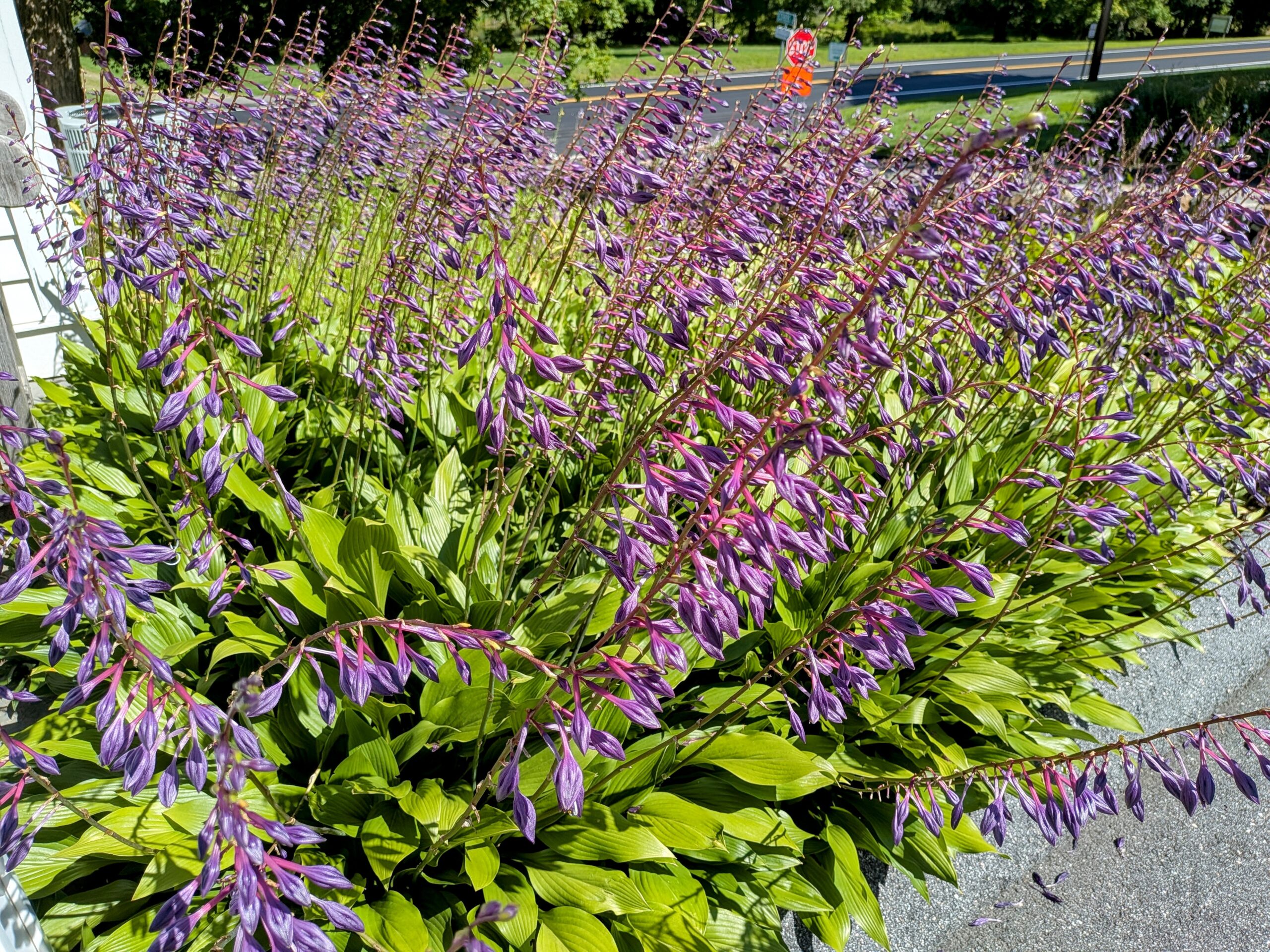
I was very surprised recently to learn that there are Hosta species which spread by rhizomes. Of these, Hosta clausa is the most promising as an edible groundcover plant. Hosta clausa (particularly var. clausa) is a Korean hosta species with the unusual trait that its flowers never open, hence the Latin name “clausa” or closed. It is said to be the most vigorously spreading of all rhizomatous hostas, and is also large enough at 1 foot (30 cm) tall to be worth eating. Despite never opening, the flowers certainly aren’t lacking in ornamental appeal! The bright purple flower buds are borne in abundance on 2 foot (60 cm) tall stalks, and each flower bud features a ring of hot pink around the base!
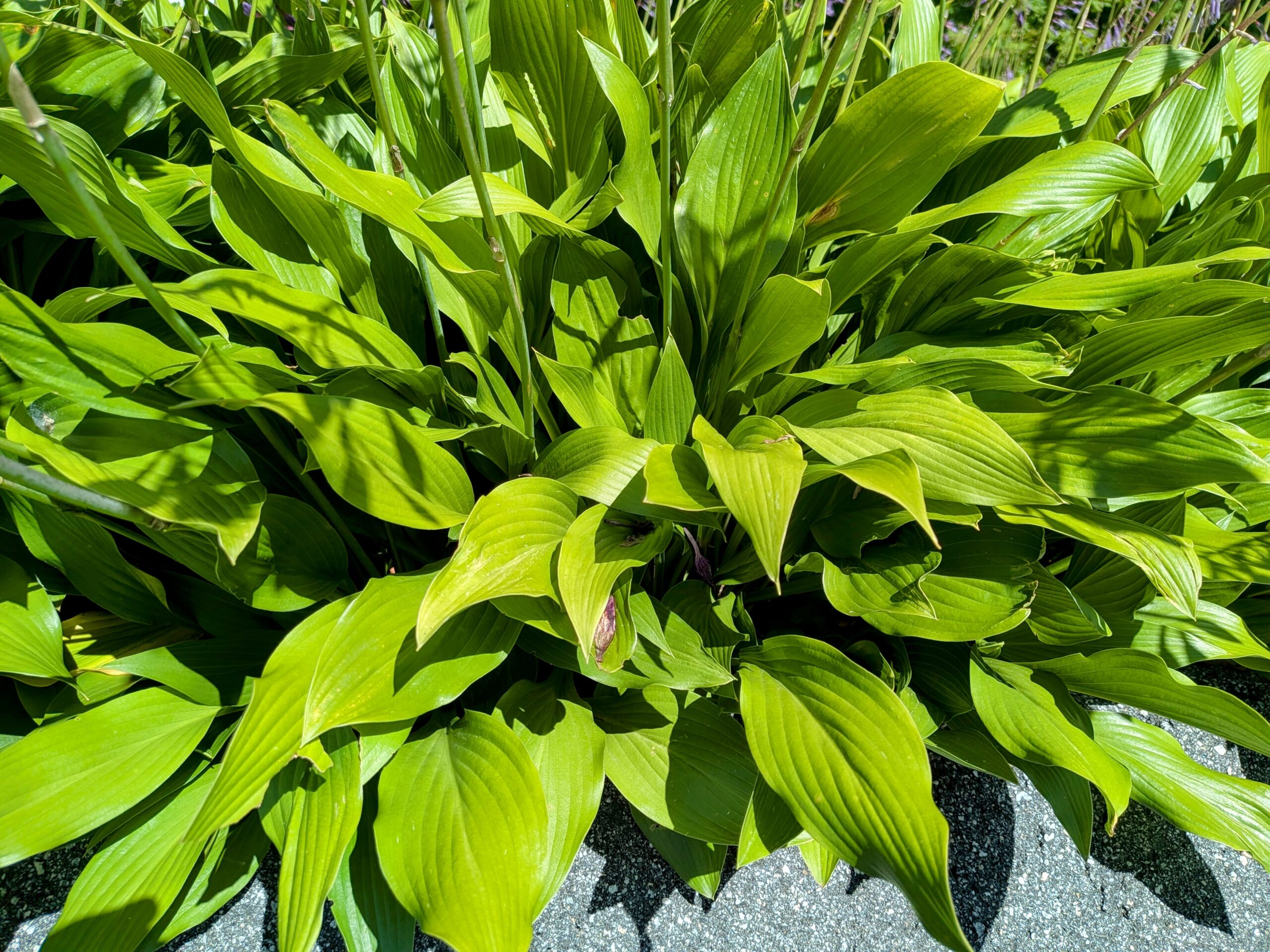
There is also a variety of Hosta clausa where the flowers do open, known as Hosta clausa var. normalis, but this variety is harder to come by in the nursery trade, and if you’re going to grow the species why not enjoy its most iconic trait. I think the perpetually closed flowers also taste better than many of the normal hosta flowers I’ve tried. Hosta venusta is another rhizomatous hosta species, endemic to Cheju Island off the coast of South Korea. This species is even smaller than Hosta clausa, reaching only 6 inches in height, making it hard to justify as an edible plant but interesting nonetheless.
I hope you’ve enjoyed this deep dive into some uncommon edible groundcover plants that you may consider for your future garden plantings. A strong groundcover layer can improve the health of all plants in your garden by retaining soil moisture, keeping weeds away, and increasing soil organic matter. By choosing the right plants, your groundcover layer can also be a great source of food! While most edible groundcover plants will provide greens, plants with edible flowers and fruits extend the season and can be productive if strategically placed. As always, if you have any questions feel free to ask in the comments below!

Leave a Reply