Blog

  • 10 Edible Groundcovers I’m Excited About in 2026

    Groundcover plants are important in any garden as they keep weeds at bay and help to retain soil moisture. The low groundcover layer in food forests is often relegated to vigorous but non-edible plants due to the difficulty of finding edible plants that fill this niche. As someone thoroughly obsessed with edible perennials, I found this arrangement unacceptable! So I began researching and experimenting with edible plants that can hold their own as base-layer groundcovers. Below are 10 of the edible groundcover plants that I’m most excited about this year.


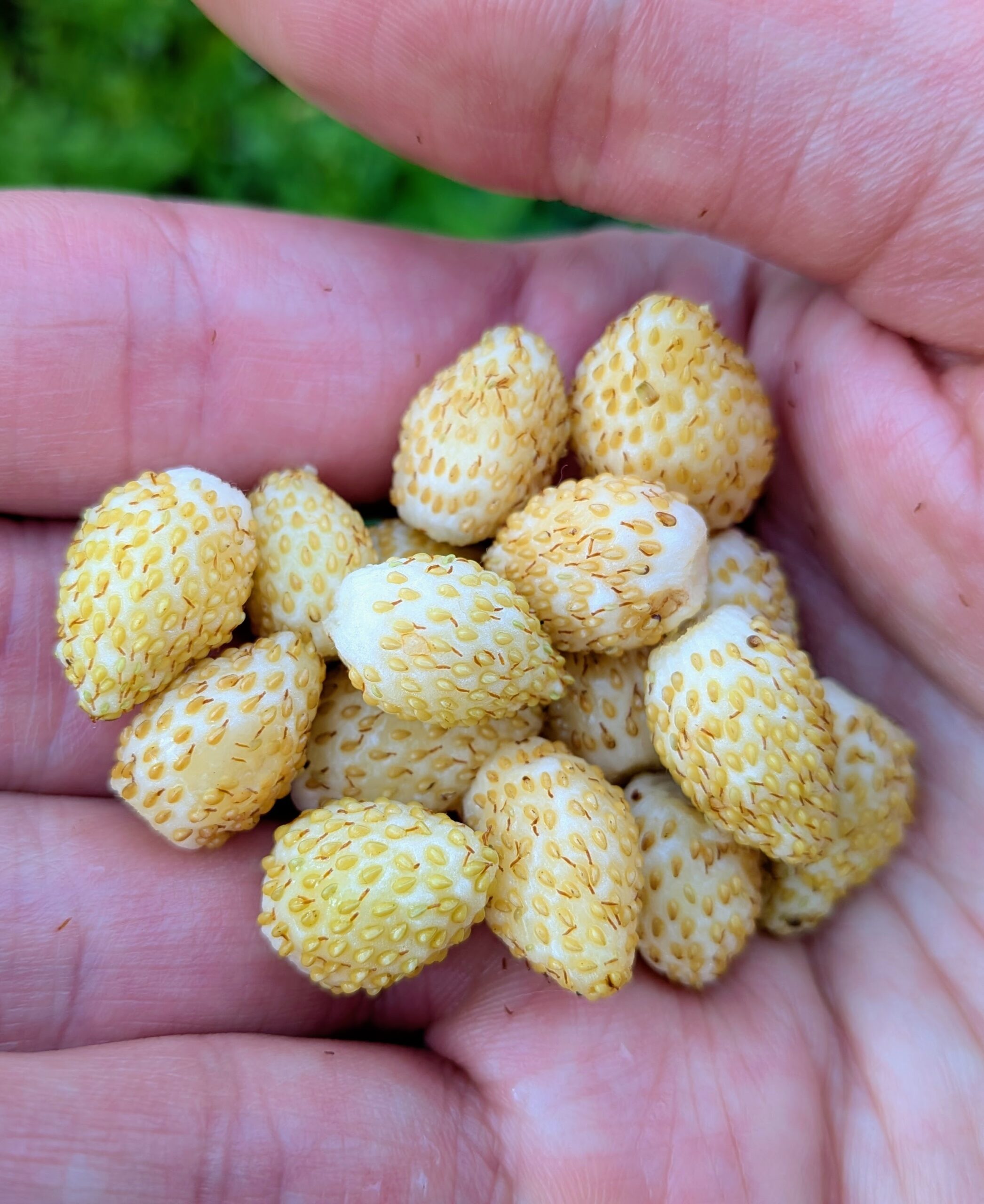
    Fragaria vesca subsp. vesca ‘Hawaii 4’
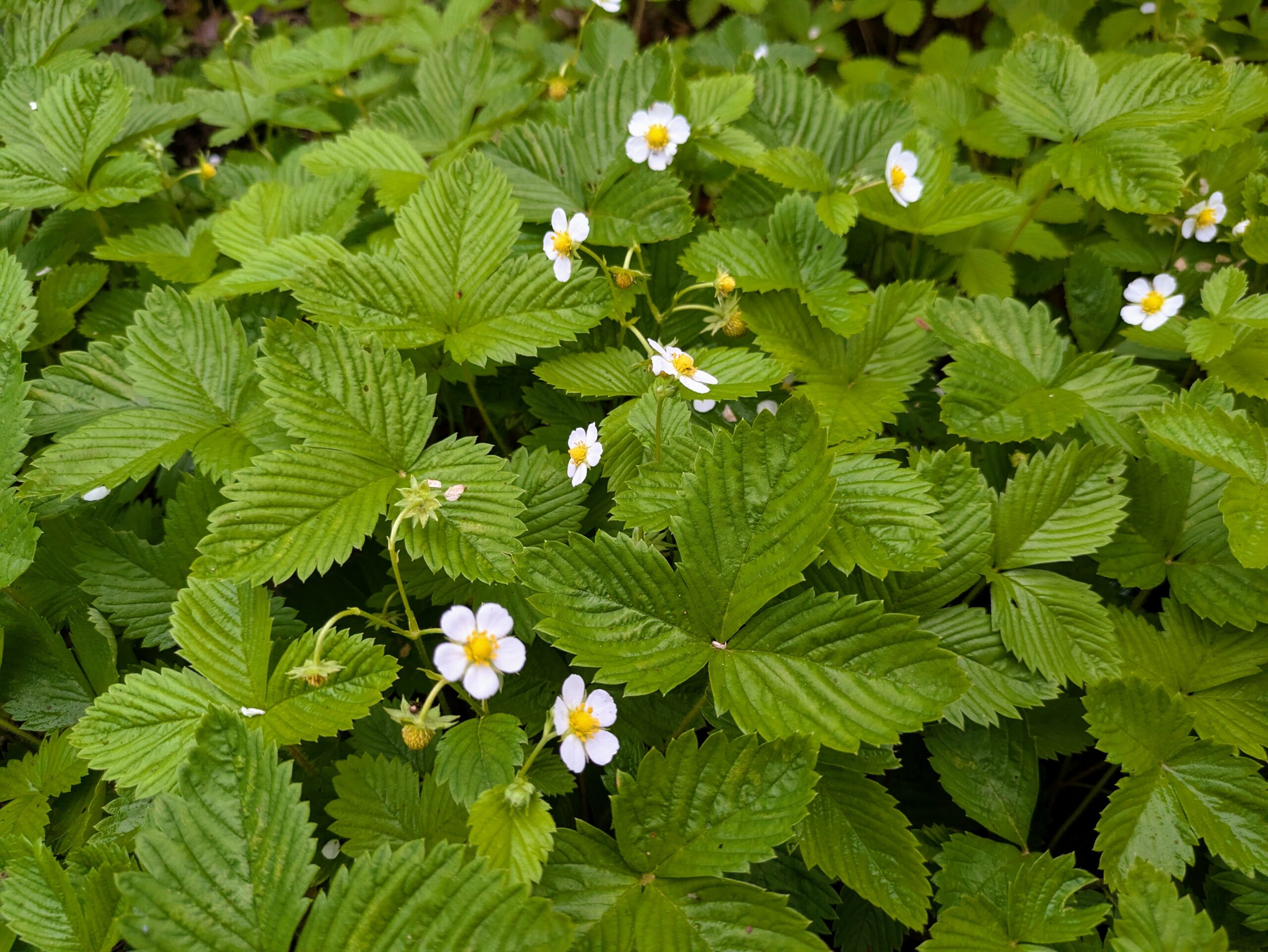
    This is far and away my favorite and most-used groundcover plant. ‘Hawaii 4’ is an unusual cultivar of woodland strawberry with a few unique features. This strawberry produces white fruits, spreads vigorously by runners, is day-neutral (fruits all year), and flowers and fruits on runners even before they root. All of these features combined make it a perfect groundcover strawberry in my opinion. The white fruits of the plant are completely ignored by birds and are borne all growing season long except in the intense heat of summer. The vigorous carpeting habit allows it to quickly fill in a large area, and the new plants begin fruiting immediately. The fruits are small but have a great pineappley flavor – everyone who has tried them in my garden has loved them. The plants are tolerant of full sun to quite heavy shade in all but the driest of soils.
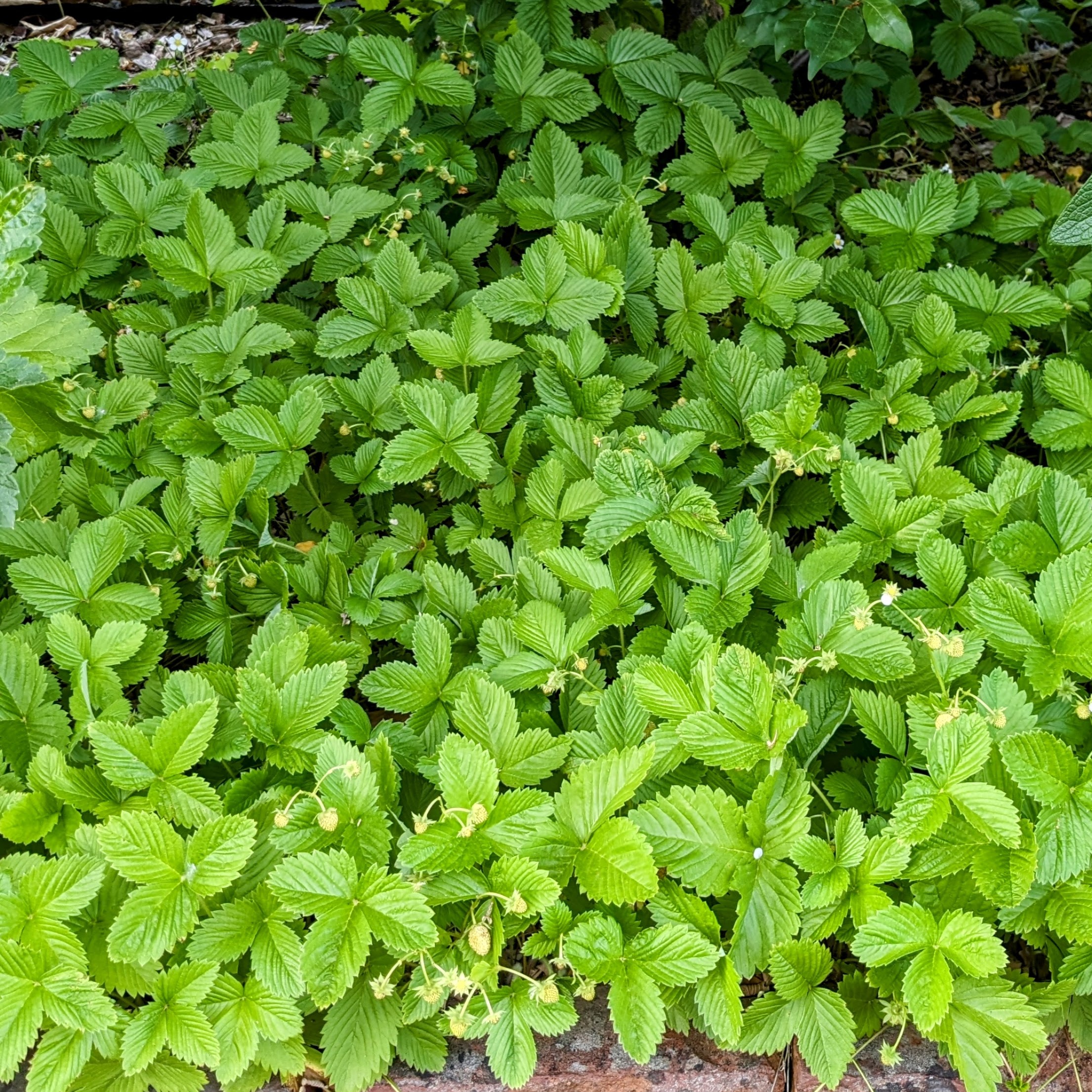
    ‘Hawaii 4’ strawberry forming a dense mat of foliage.

    The backstory of this plant is also very interesting. It was found growing wild on the volcanic slopes of Hawaii’s big island in 1983 by famed strawberry breeder Royce S. Bringhurst. It was then crossed with itself 4 times to create a stable cultivar, hence the name ‘Hawaii 4’. How exactly this wild European strawberry species made it to the big island of Hawaii in the first place is a mystery. Because the plant is genetically stable and extremely easy to propagate, it was chosen as the first strawberry to have its full genome sequenced and has also been recommended by NASA as a fruit to be grown on long space missions. The Strawberry Seed Store is the best place to get this rare variety in the United States.


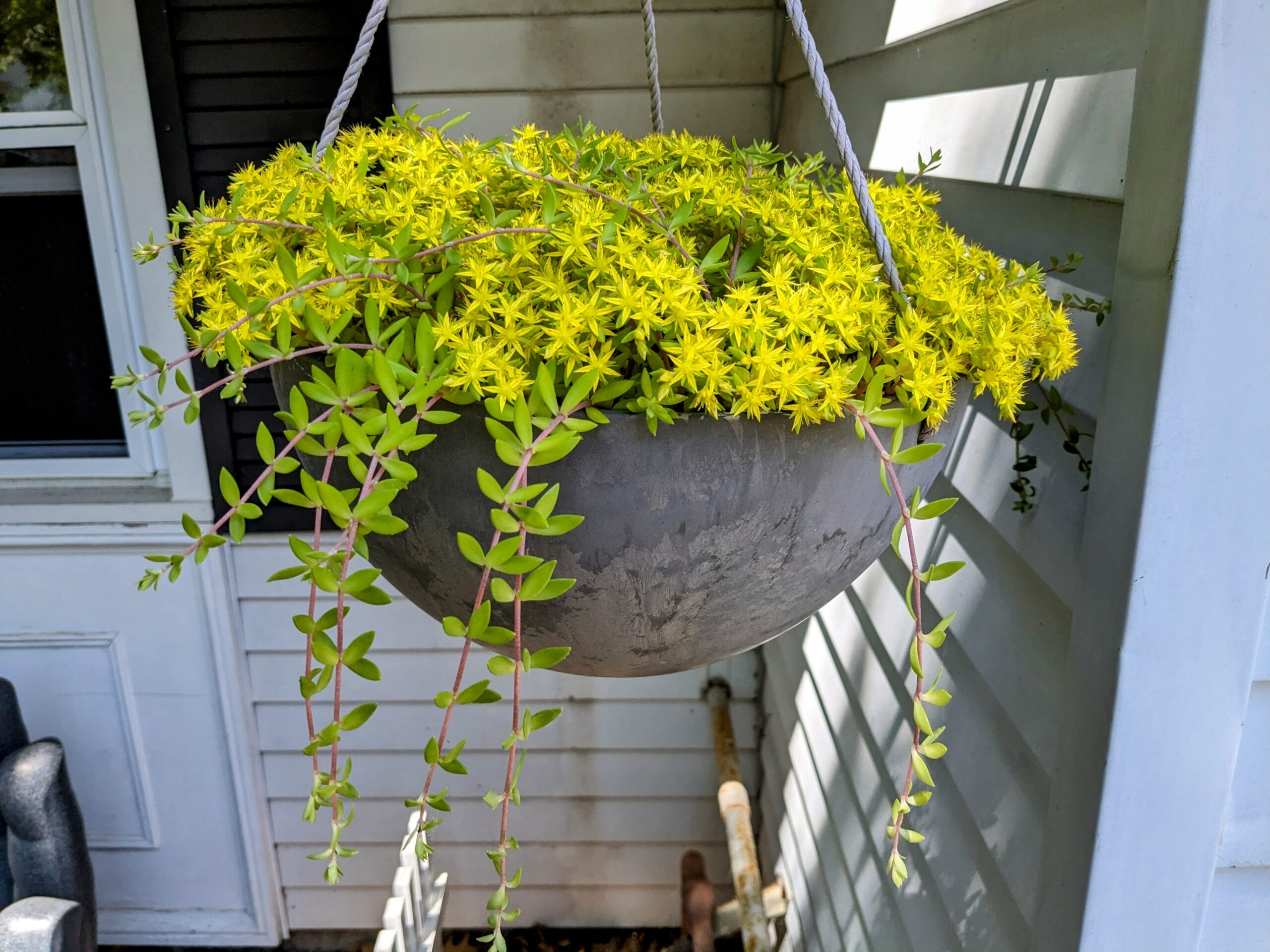
    Sedum sarmentosum
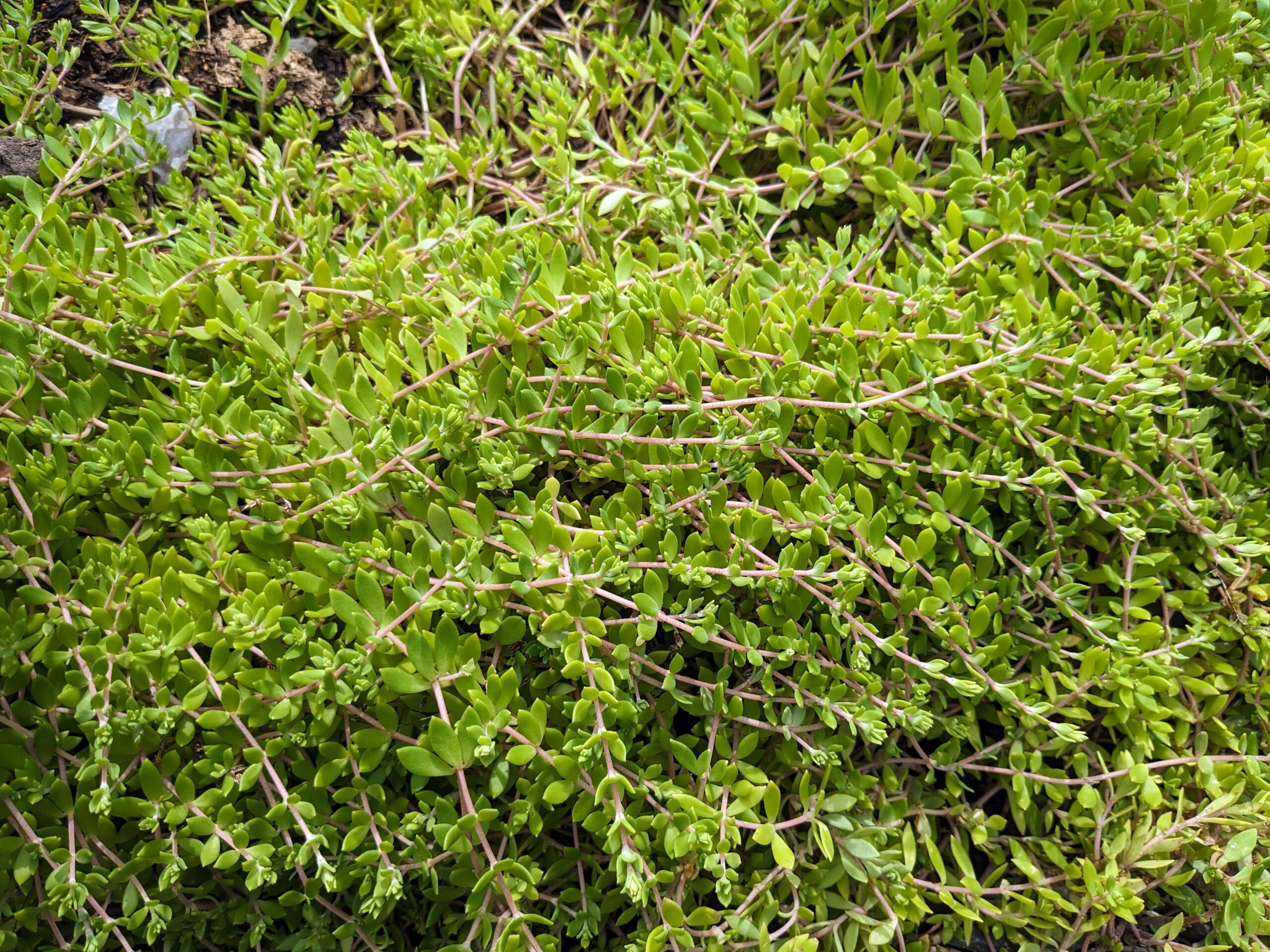
    I consider Sedum sarmentosum or stringy stonecrop to be the romaine lettuce of perennial vegetables – it has a mild flavor and succulent texture that make it an essential part of any salad. Native throughout East Asia, this species has been introduced to the United States where it has naturalized widely throughout the eastern half of the country. This is just about the easiest plant you could possibly grow, thriving in all but the wettest and shadiest of conditions. It has a very long harvest season because it grows continuously all year long. Known in Korea as dolnamul, it is typically served up chopped and dressed with a spicy-tangy dressing of gochujang, vinegar, sugar, garlic, sesame oil and sesame seeds – though I find that any salad dressing works just as well!
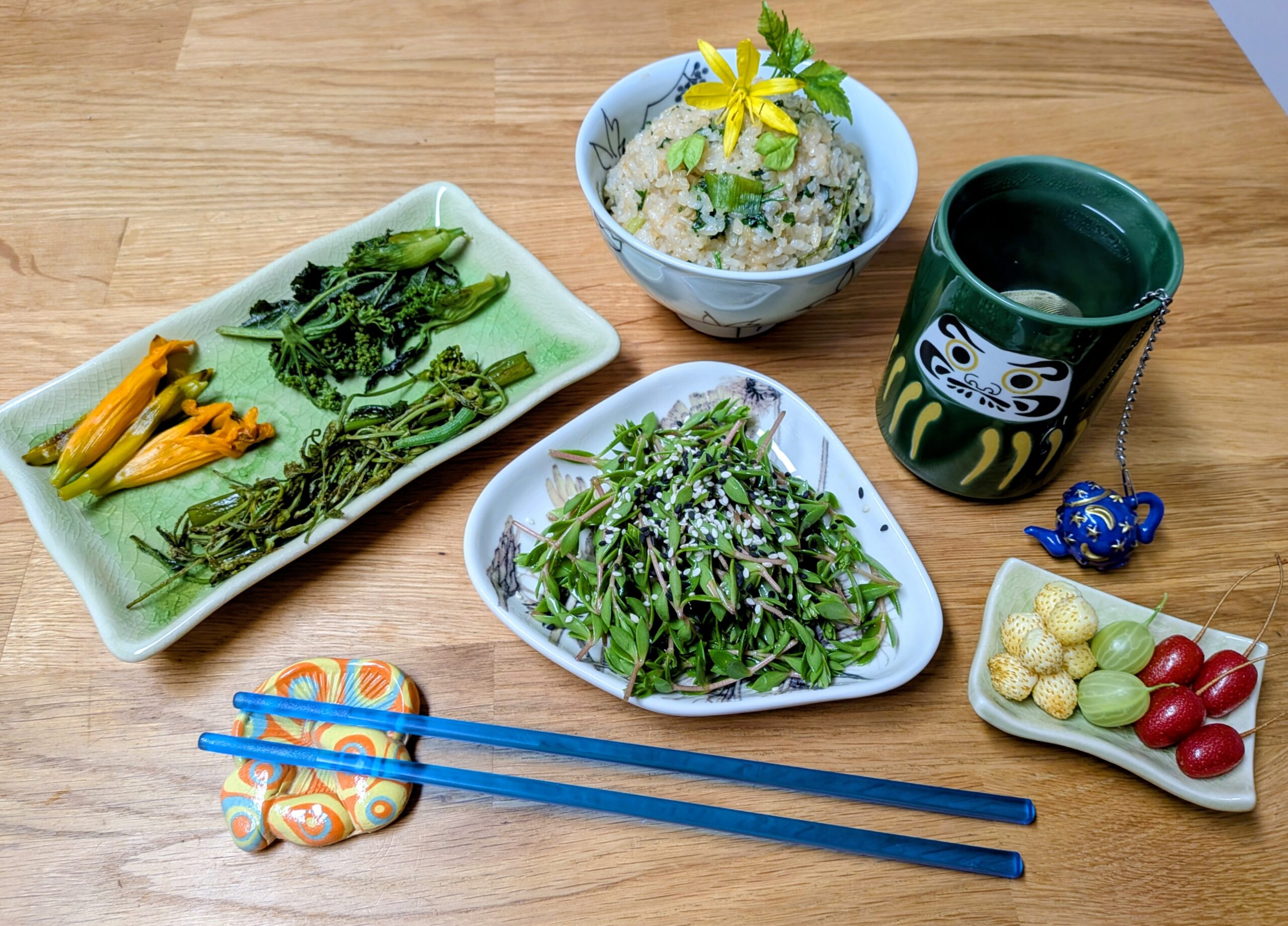
    An Asian-inspired perennial vegetable feast featuring a salad of stringy stonecrop at center.

    The name stringy stonecrop refers to the long shoots it produces. When harvesting I just go out with scissors and snip them off. Growing in a hanging basket or down a rocky slope can accentuate the best features of the species. Another common name for this plant is graveyard moss because it was once planted on top of freshly dug graves to quickly cover the soil. This plant can be extremely aggressive in the garden, and any planting should take this into account! I’ve given mine a large area to colonize. Any small piece of the plant that is cut off and laid on the soil is likely to root and form a new plant, and it can also spread by seed. I think this is the very best of the edible Sedum species, so having a lot of it around is fine by me!


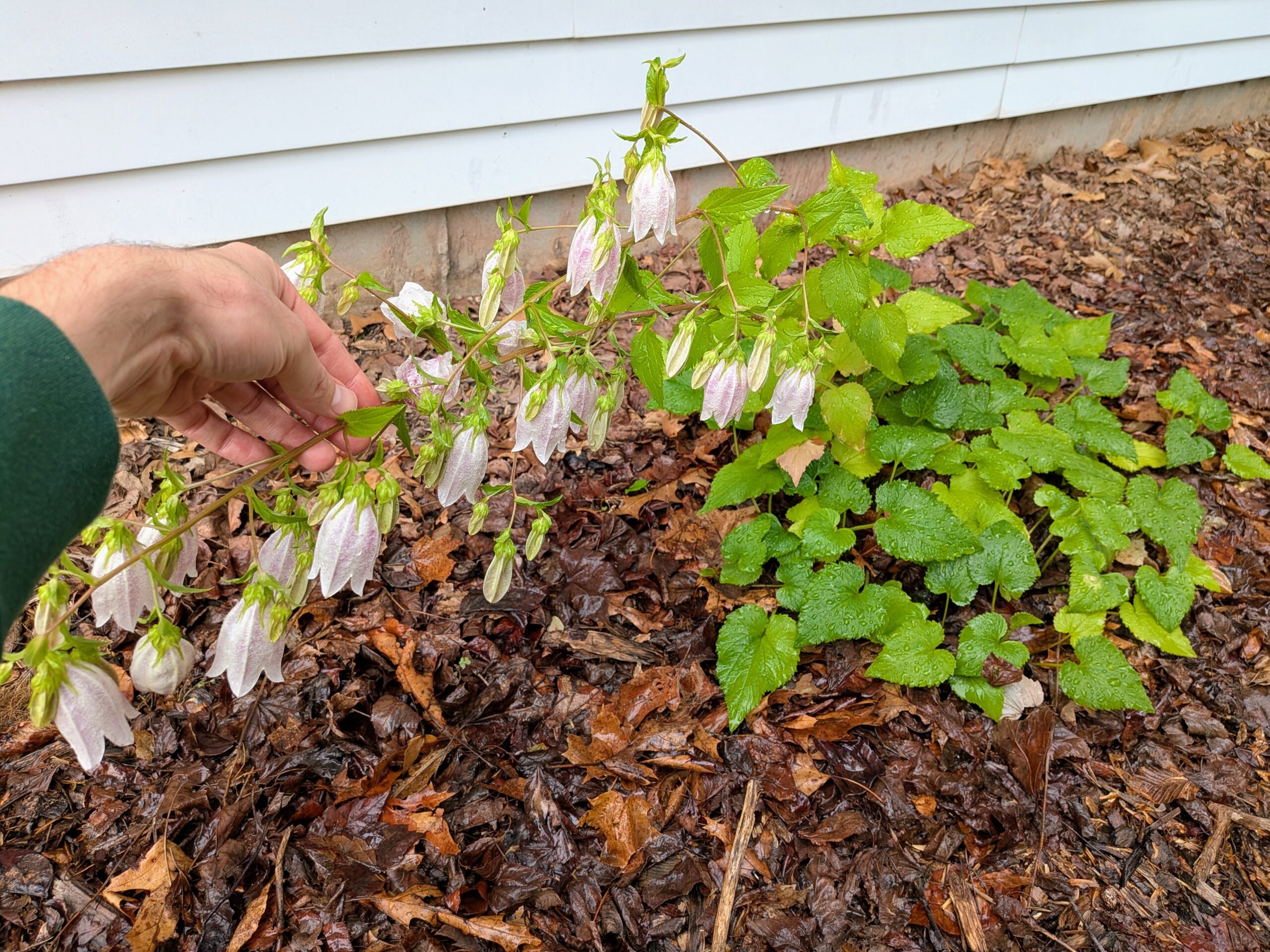
    Campanula takesimana
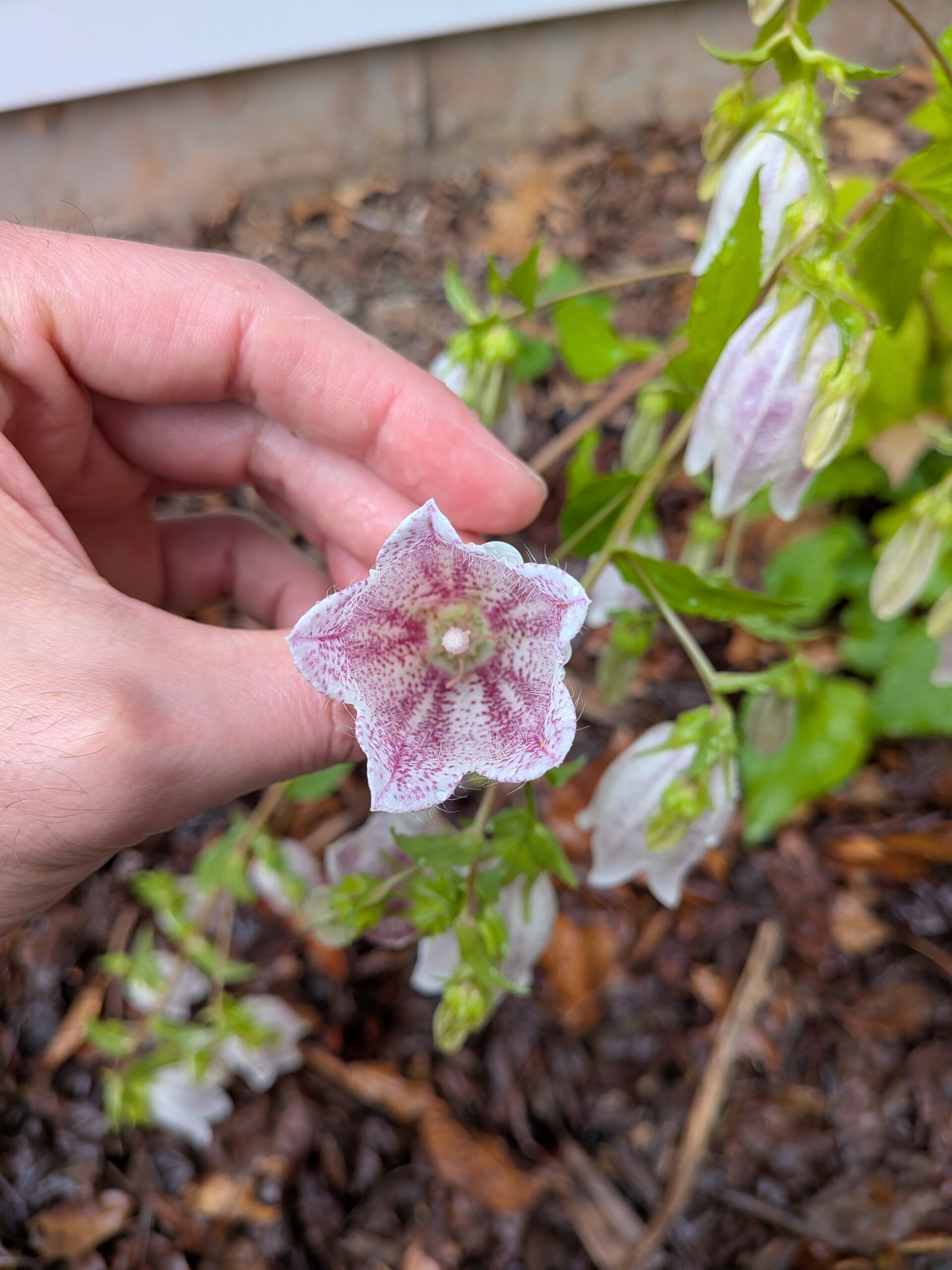
    Campanula takesimana or Korean bellflower, is an extremely vigorous bellflower species from Korea which can thrive in almost any garden conditions. While many bellflower species have hairy or tough leaves, Korean bellflower is exceptional in that its young leaves are smooth and succulent – excellent raw or cooked. In early summer the plant produces large pendulous bell-shaped flowers with beautiful pink speckled patterns on the inside. These flowers are also delicious and make a welcome addition to the salad bowl.
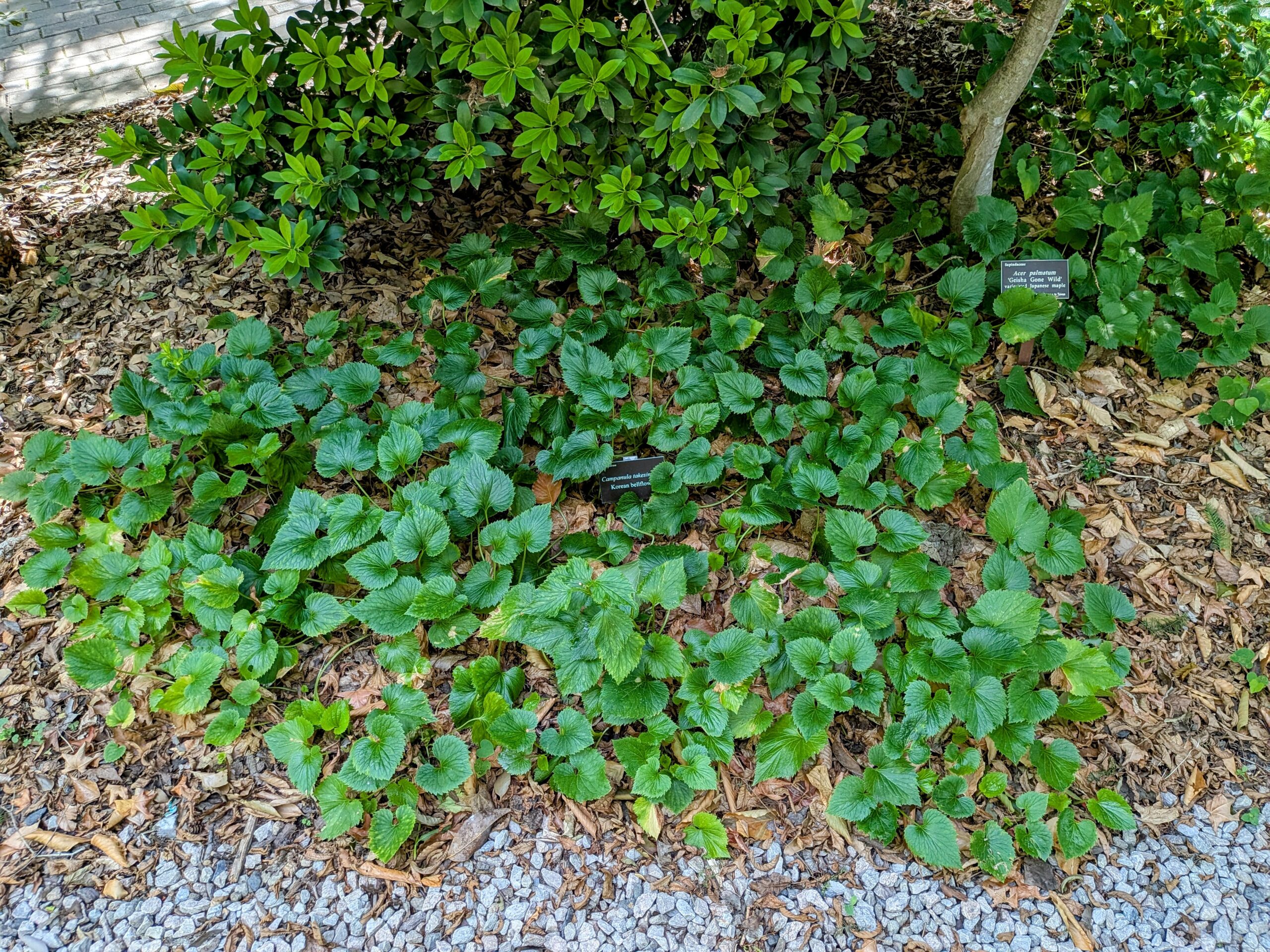
    A patch of Korean bellflower at the JC Raulston Arboretum.

    In my garden I grow this plant in heavy shade and very dry soils under an overhang and it seems wholly unfazed, spreading steadily by rhizomes each year. I recommend deadheading the flower stalks to prevent self-seeding unless you have a large area you’d like to fill. One cultivar, ‘Elizabeth’, is sometimes available. This variety is said to be more floriferous, with deeper pink flowers than the species.


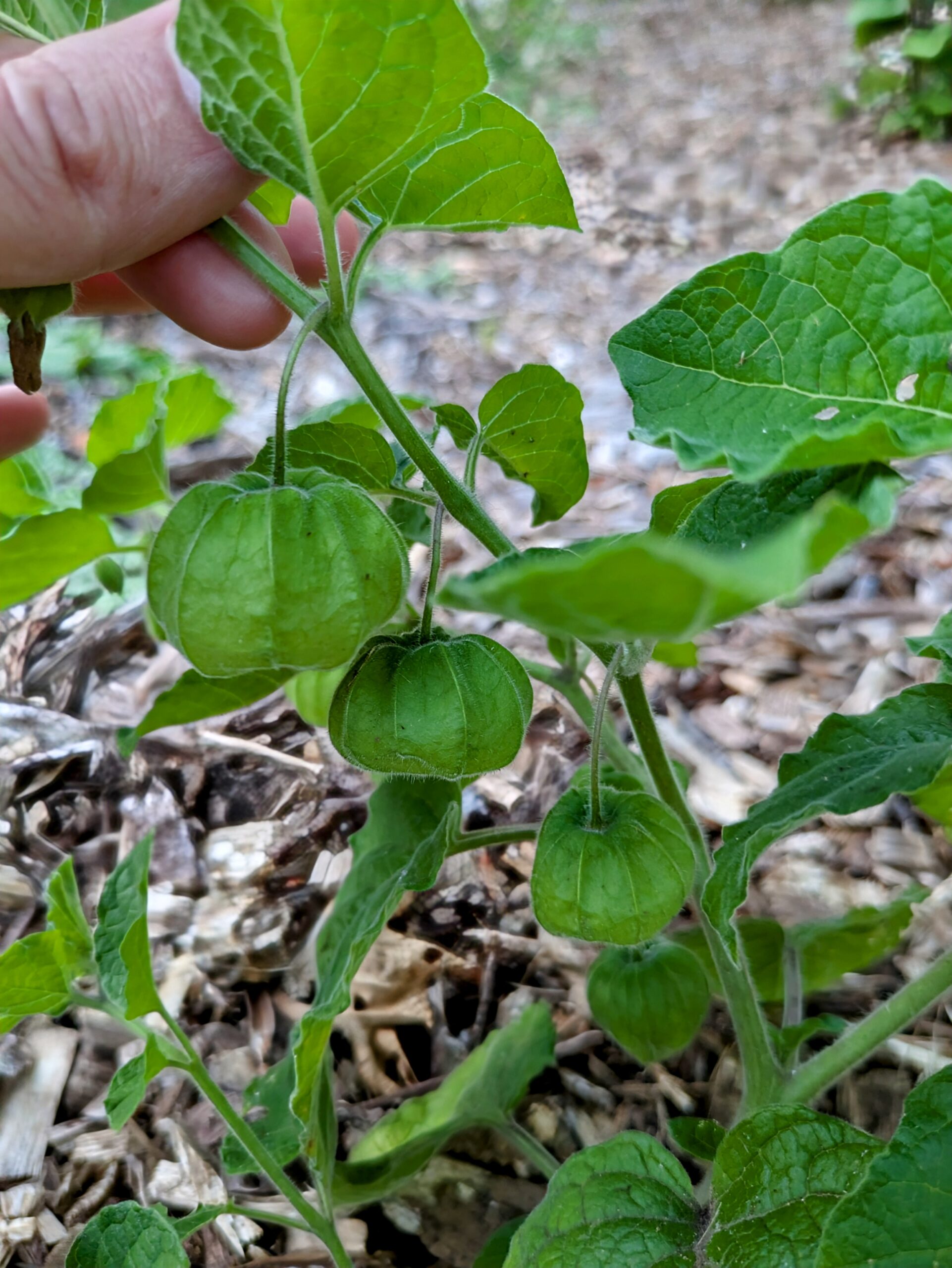
    Physalis heterophylla
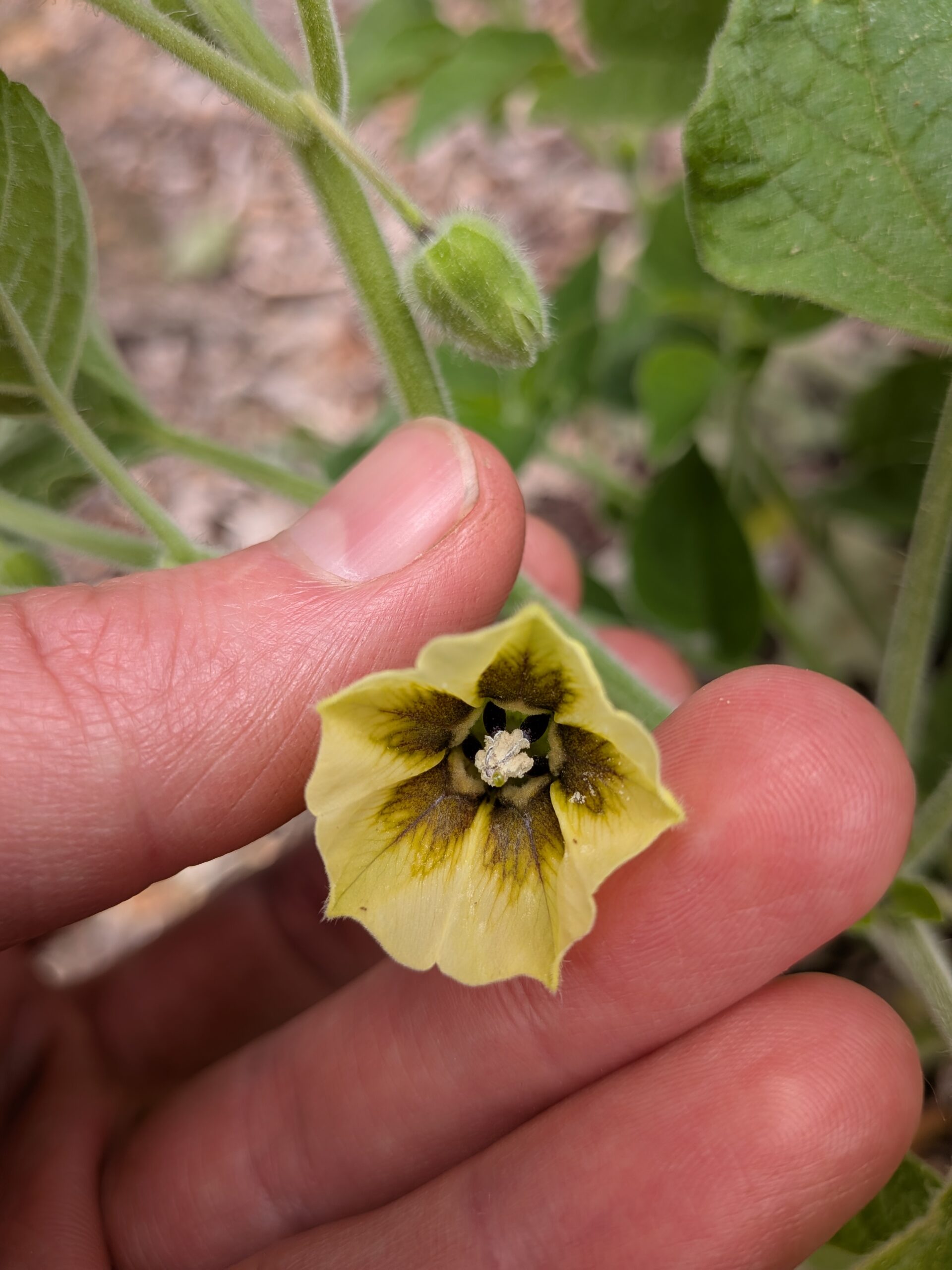
    The common name “clammy groundcherry” doesn’t exactly inspire confidence, but this Physalis species is a delicious and low-maintenance addition to the edible garden. A member of the nightshade family Solanaceae, this plant is native throughout the Eastern United States, where it can be found growing wild in dry, sunny places – meadows, roadsides, woodland clearings, etc. This species is said to have the largest and best tasting fruits of the many US native perennial Physalis species. I certainly find them delicious – they have a tropical pineapple flavor much stronger than the commonly available cape gooseberry Physalis peruviana. Of course the fruits of this species are smaller in direct proportion to the overall size of the plant, which only reaches about 1 foot (30 cm) tall in my garden.
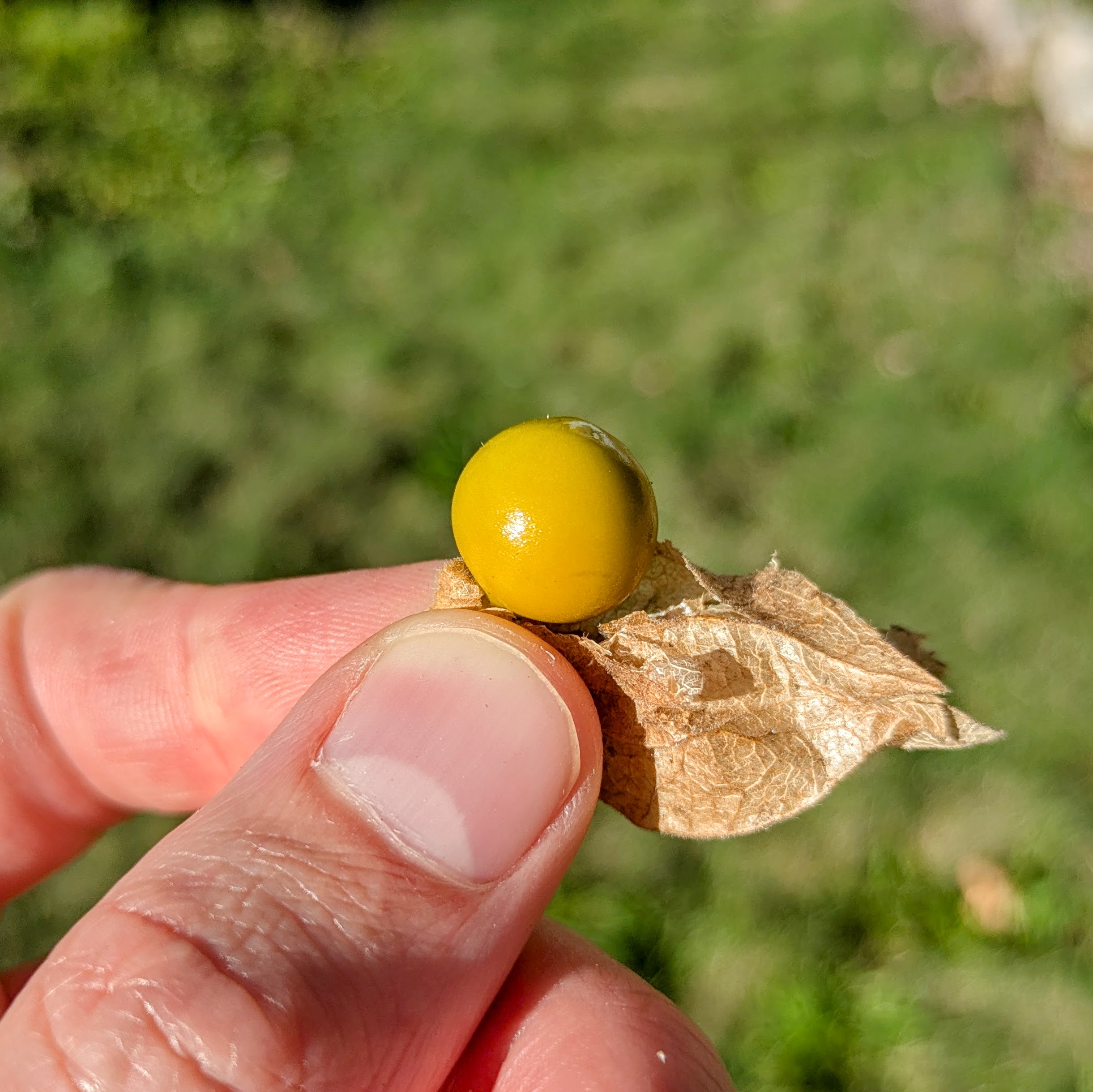
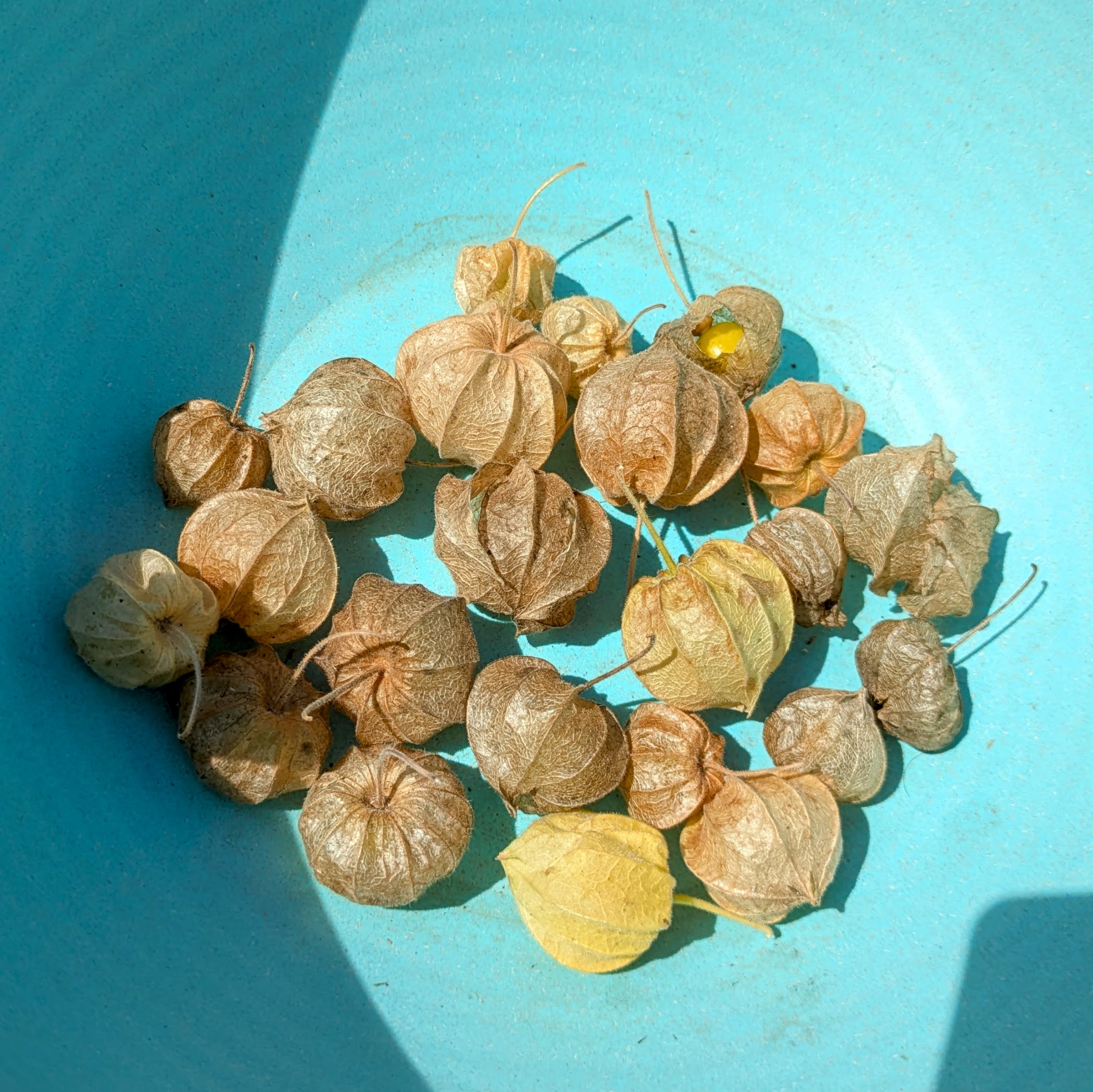
    The large fuzzy leaves and pendulous yellow flowers give some ornamental quality, but only for those who look closely. Each plant can produce a surprising quantity of fruits, which can be harvested late into the fall. These plants do spread by deep underground rhizomes, so their placement in the garden should take this into account. My patch is situated such that it has a mowed lawn on one side and the heavy shade of a tree on another, keeping it in check. Sourcing these plants can be difficult. I got mine purely by chance when visiting Eric Toensmeier‘s garden. He very kindly gave me a small tray of seedlings that he had propagated from a wild population. To find populations in your area, I recommend checking out iNaturalist.


    Rubus parvifolius ‘Lemon Lace’
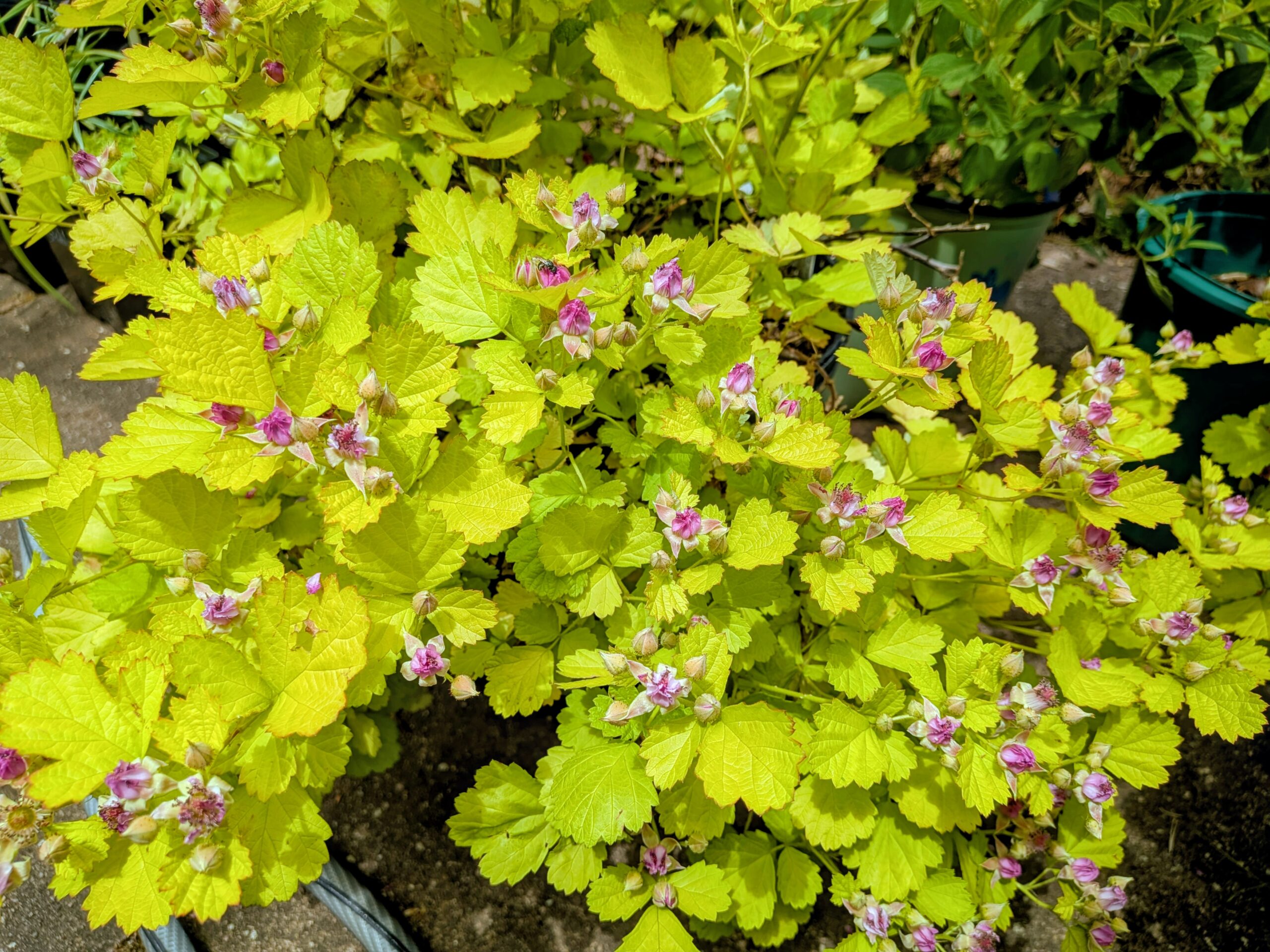
    For many years I’ve been jealous of the evergreen groundcover raspberries that can be grown in milder climates – plants like Rubus rolfei and Rubus tricolor. After trying a few of these species over the years and having them barely survive much less fruit, I’ve turned my attention instead to low-growing deciduous raspberry species, which tend to be much hardier and more vigorous. As luck would have it, my favorite local nursery Broken Arrow Nursery carries Rubus parvifolius ‘Lemon Lace’, a yellow-foliaged variety of this low-growing East Asian and Australian(!) raspberry species. This plant is a thorny deciduous shrub with prostrate stems that lay along the ground, only reaching a maximum of 3 feet (1 m) tall. The yellow foliage is extremely striking in the spring, eventually fading to a bright chartreuse, and the cheery pink flowers in summer eventually give way to small red fruits.
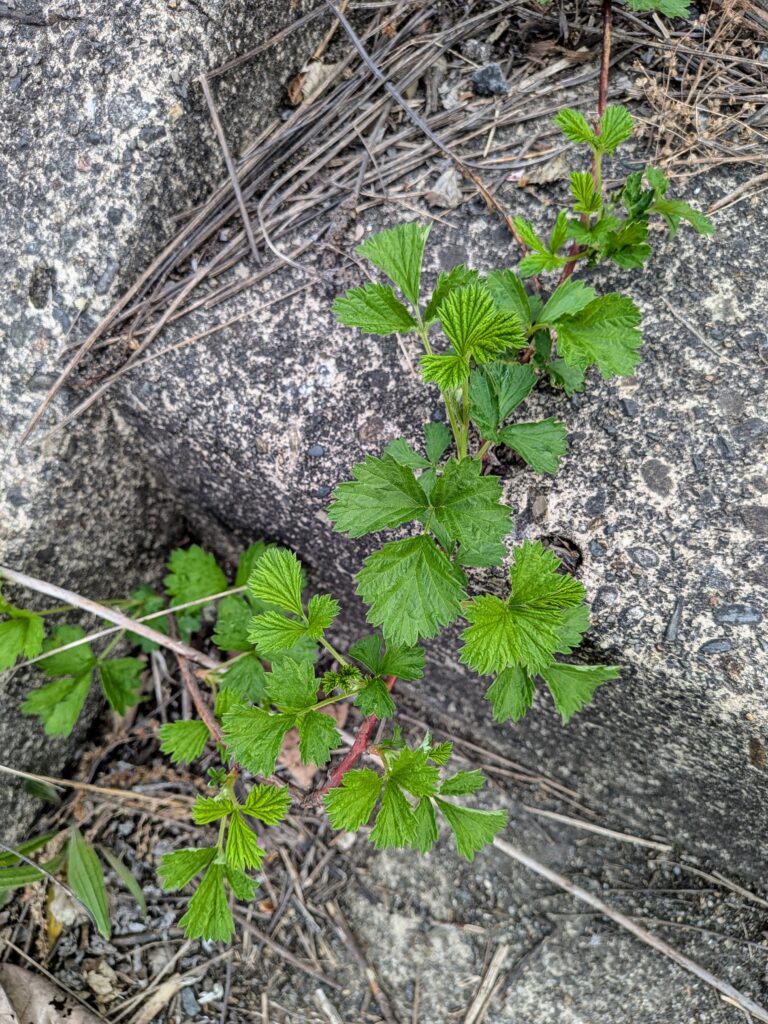
    A straight species Rubus parvifolius I spotted scrambling down some steps in Yonezawa, Japan.

    The fruits of this species are collected and eaten on a small scale in Korea, Japan, and Australia. While the plant is quite thorny, it’s not worse than any other raspberry species. Notably Rubus parvifolius seems to be at least partially self-fertile, unlike the other common groundcover raspberry species. There is some concern about invasiveness of this plant, as localized populations have sprung up in Boston and parts of Missouri. In my own garden I’ve actually struggled to get it established for the last few years! It’s hard to deny the ornamental qualities of the bright yellow foliage and unique pink flowers. I’ve given this plant a large area in the far end of my yard where it will be free to spread.


    Pachyphragma macrophyllum
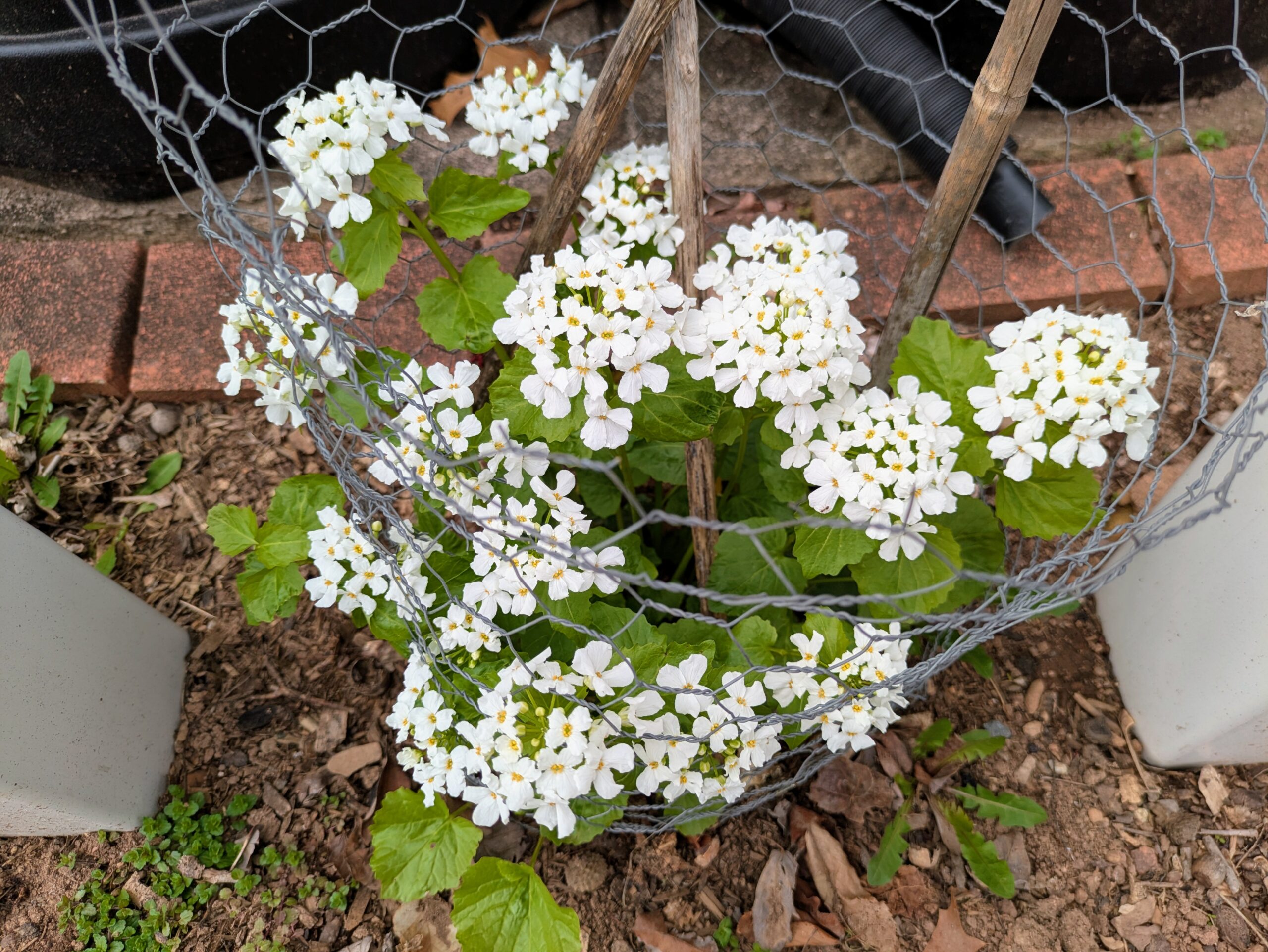
    Pachyphragma macrophyllum blooming in the author’s garden – caged for protection from rabbits.

    Sometimes known as Caucasian pennycress, Pachyphragma macrophyllum is a member of the cabbage family (Brassicaceae) which is as resilient as it is beautiful. This short plant to about 1 foot (30 cm) tall features rounded leaves in bright green and large white flower clusters in the spring with yellow centers and an intoxicating aroma. I enjoy eating the young leaves, which taste similar to garlic mustard (Alliaria petiolata), the flower “broccolis”, and the flowers themselves after they open. This plant is tough as nails and actually seems to prefer dry shade, though it doesn’t spread too aggressively. What else could you ask for in an edible groundcover plant?
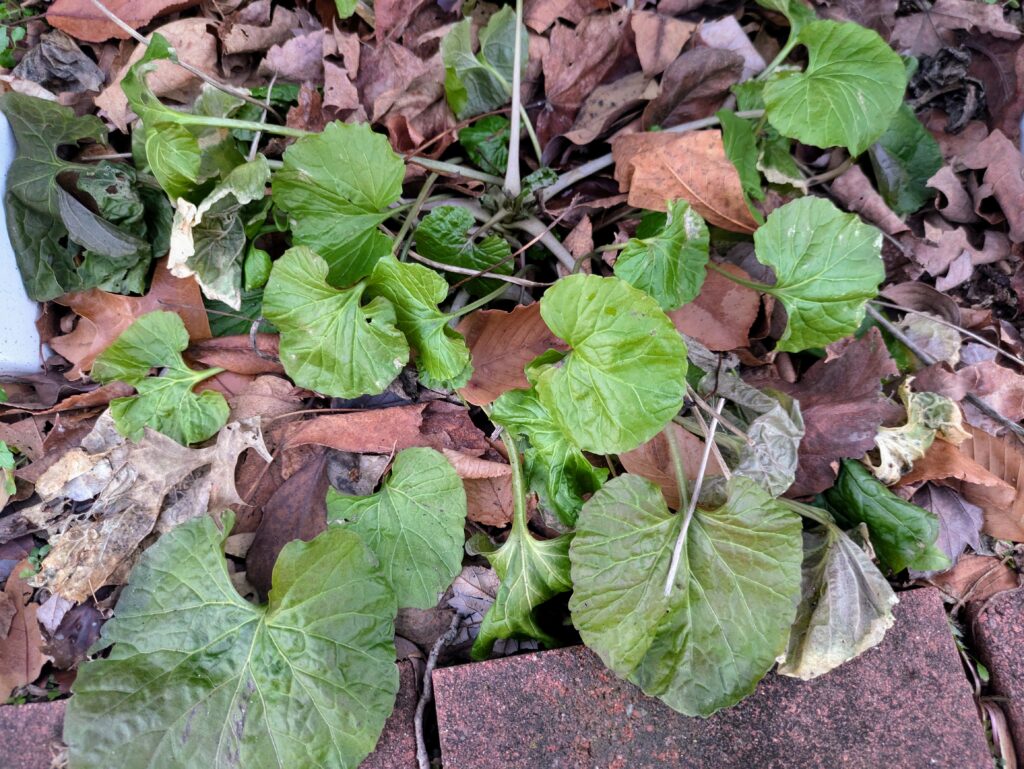
    Pachyphragma macrophyllum leaves are still green in January in New England!

    Pachyphragma macrophyllum is said to have been one of famed English plantswoman Beth Chatto’s favorite plants, and it is much more widely planted in the UK than here in the States, though it actually originates in the Caucasus mountain range. I was surprised to discover that it is actually evergreen in my garden, though it can get a bit tattered in cold winter conditions. Those in the US who are looking for plants to try can find them at Far Reaches Farm and Keeping It Green Nursery, both located in Washington state but shipping nationwide.


    Aralia nudicaulis
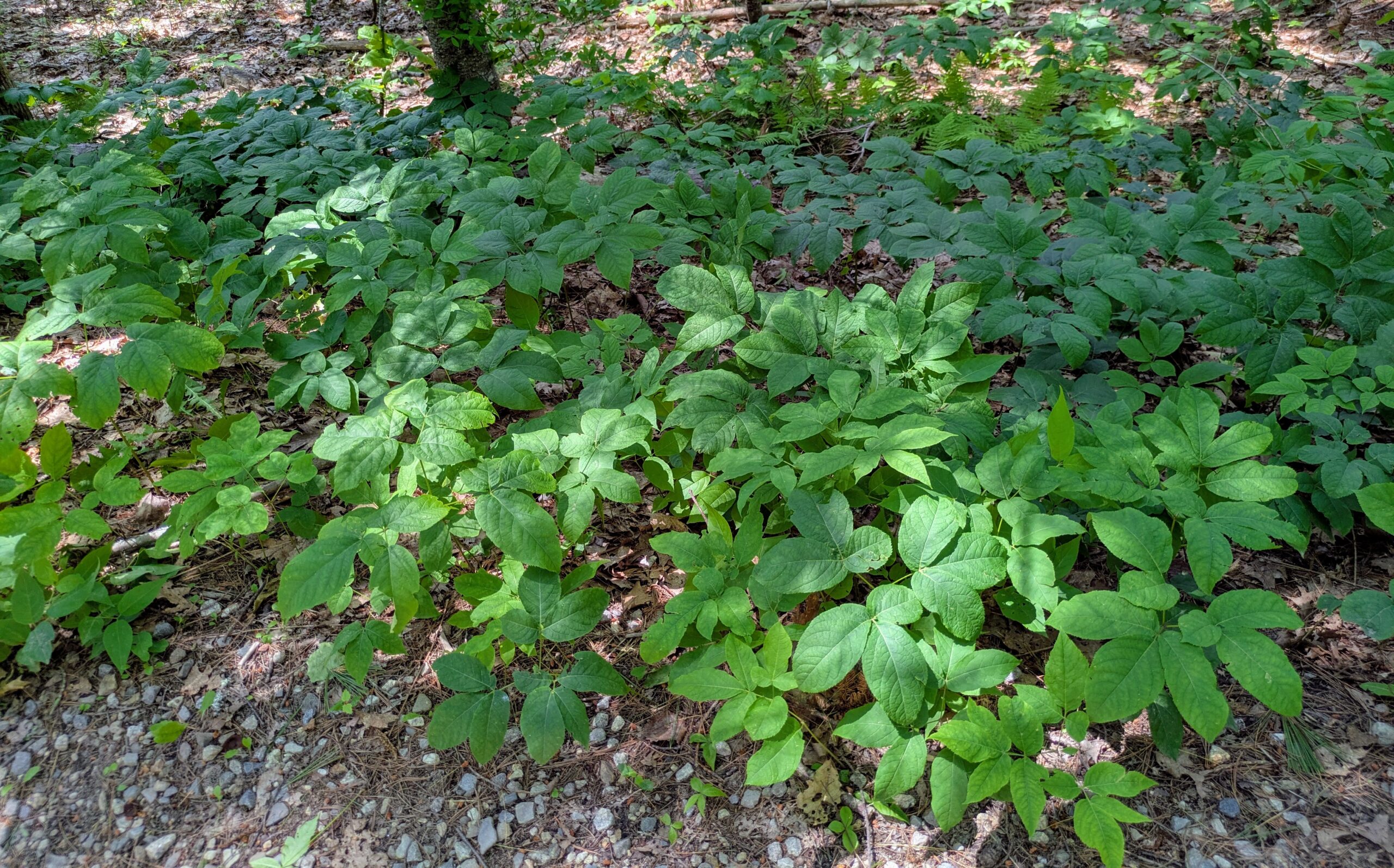
    A nice groundcover of Aralia nudicaulis in Maine.

    Given my interest in the ginseng family Araliaceae, it shouldn’t be too surprising that I would like wild sarsaparilla, Aralia nudicaulis. Commonly seen in dry forests throughout New England, this is perhaps one of our most common native plants. Its ubiquity shouldn’t dissuade you from including it in your garden though, as this is an excellent native plant for dry shade where few other plants will grow. While traditionally the root is used medicinally and for making root beer, I find the young shoots in spring to be the most delicious part, either raw or cooked. When they first emerge, the shoots are maroon, fading eventually to green as the leaves expand. This color change makes it easy to see which shoots are best to harvest, and large colonies can provide quite a lot of food, though the harvest window is short.

    Aralia nudicaulis at the base of a tree, showing young leaves at different levels of maturity.

    Plants are dioecious, spreading mainly by thick underground rhizomes to form large colonies in upland forests. Flowers are borne in small spherical clusters at the base of the plant, with pollinated female plants forming small black berries. The berries are edible but small and somewhat bitter so hardly worth eating, though they are attractive to birds. While colonies can often be sparse, they can form a nice dense groundcover of about 2 feet (60 cm) tall in good garden conditions. I encourage anyone in this plant’s native range to give it a taste and consider growing it in the drier, shadier parts of your garden!


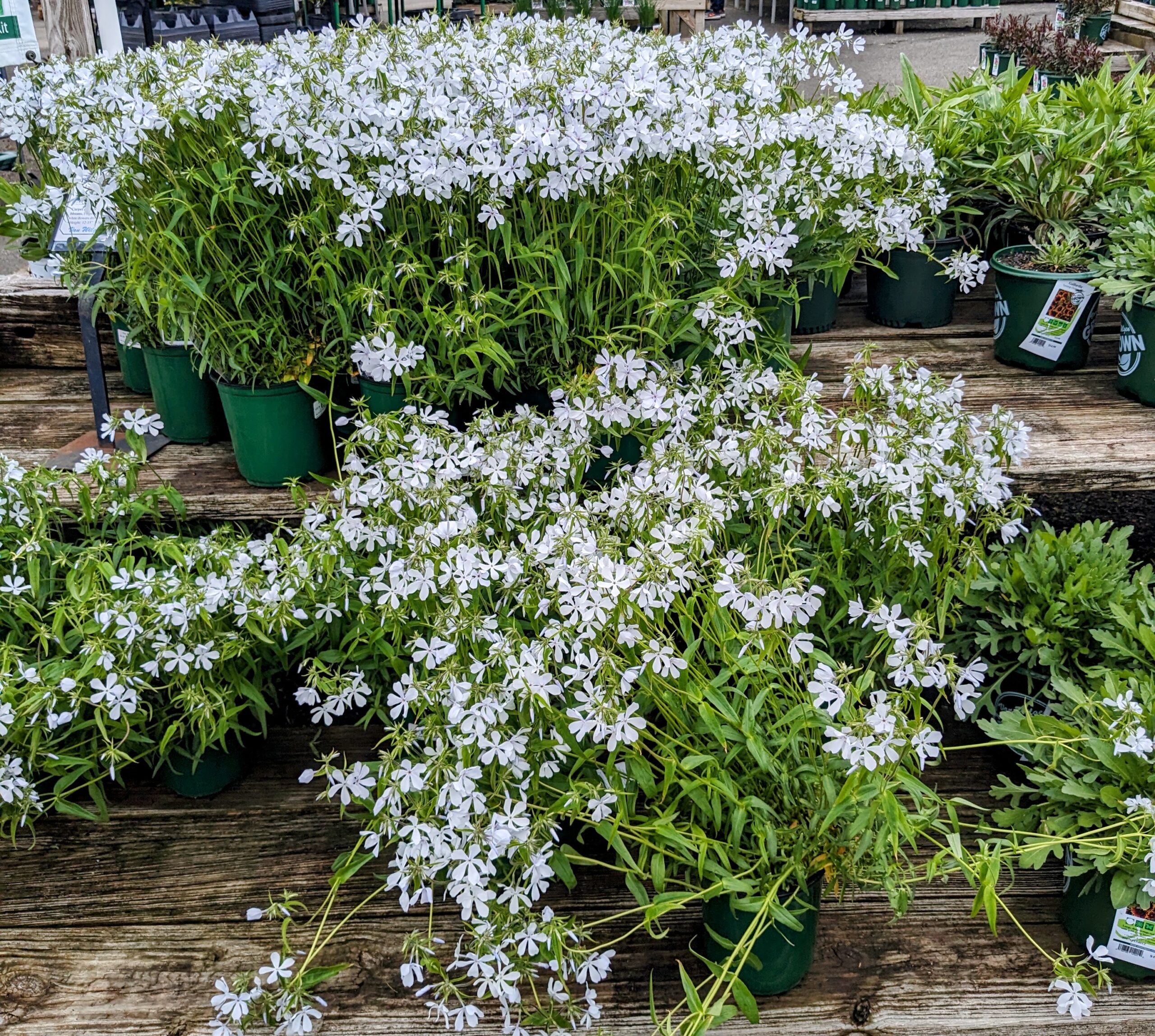
    Phlox divaricata
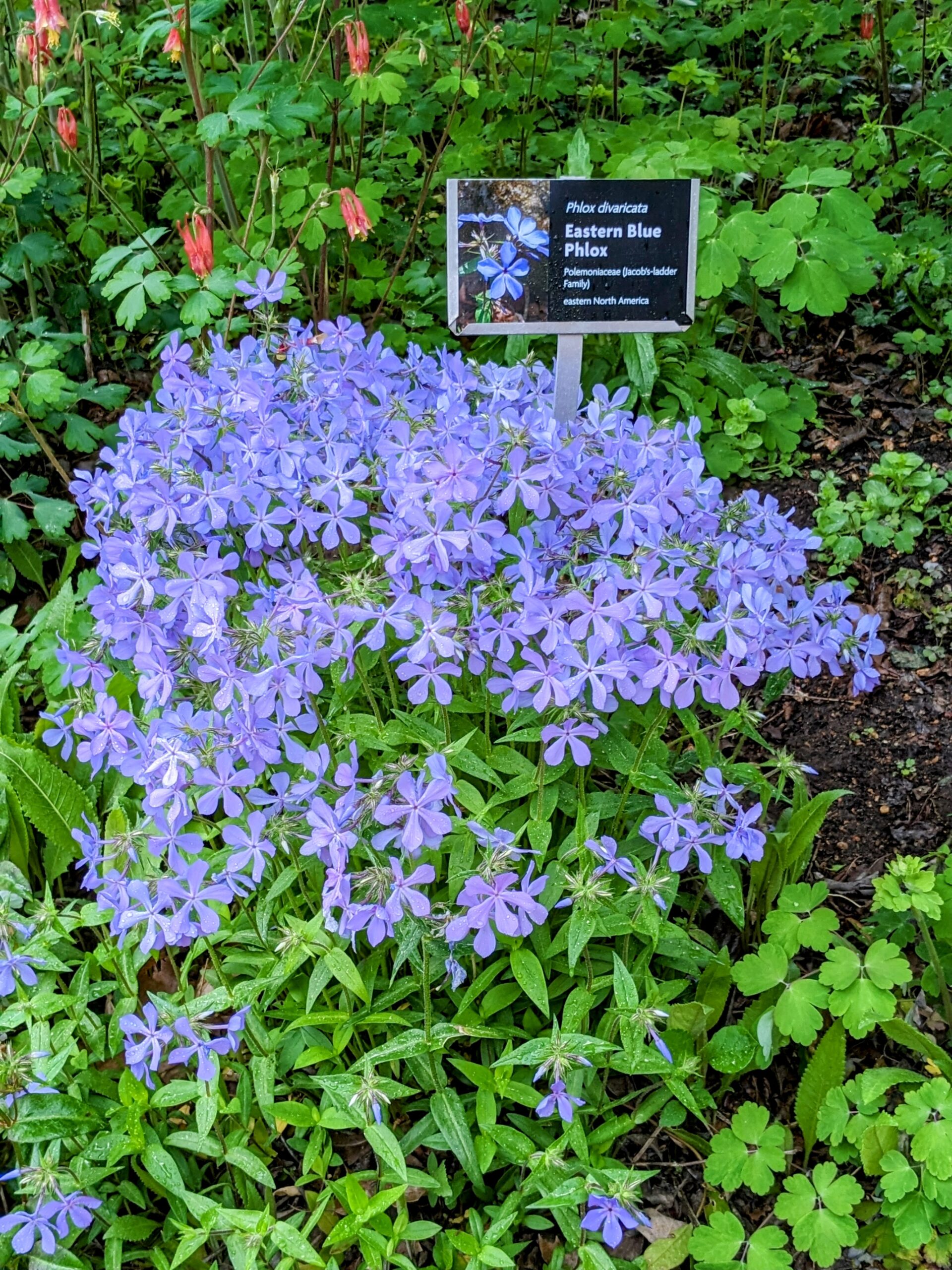
    I was quite surprised to learn in Sam Thayer’s incredible Field Guide to Edible Wild Plants of Eastern & Central North America that the common woodland phlox, Phlox divaricata, is not just edible but pretty tasty! The young leaves and stems are eaten in the spring before flowering and have a mild pleasant flavor and succulent texture either raw or cooked. Later in the season the flowers can also be eaten and make a nice colorful garnish in salads or on top of cooked dishes. This native species is very shade tolerant but prefers some soil moisture. The showy flowers and sturdy disposition make it a superstar of the edimental shade garden.
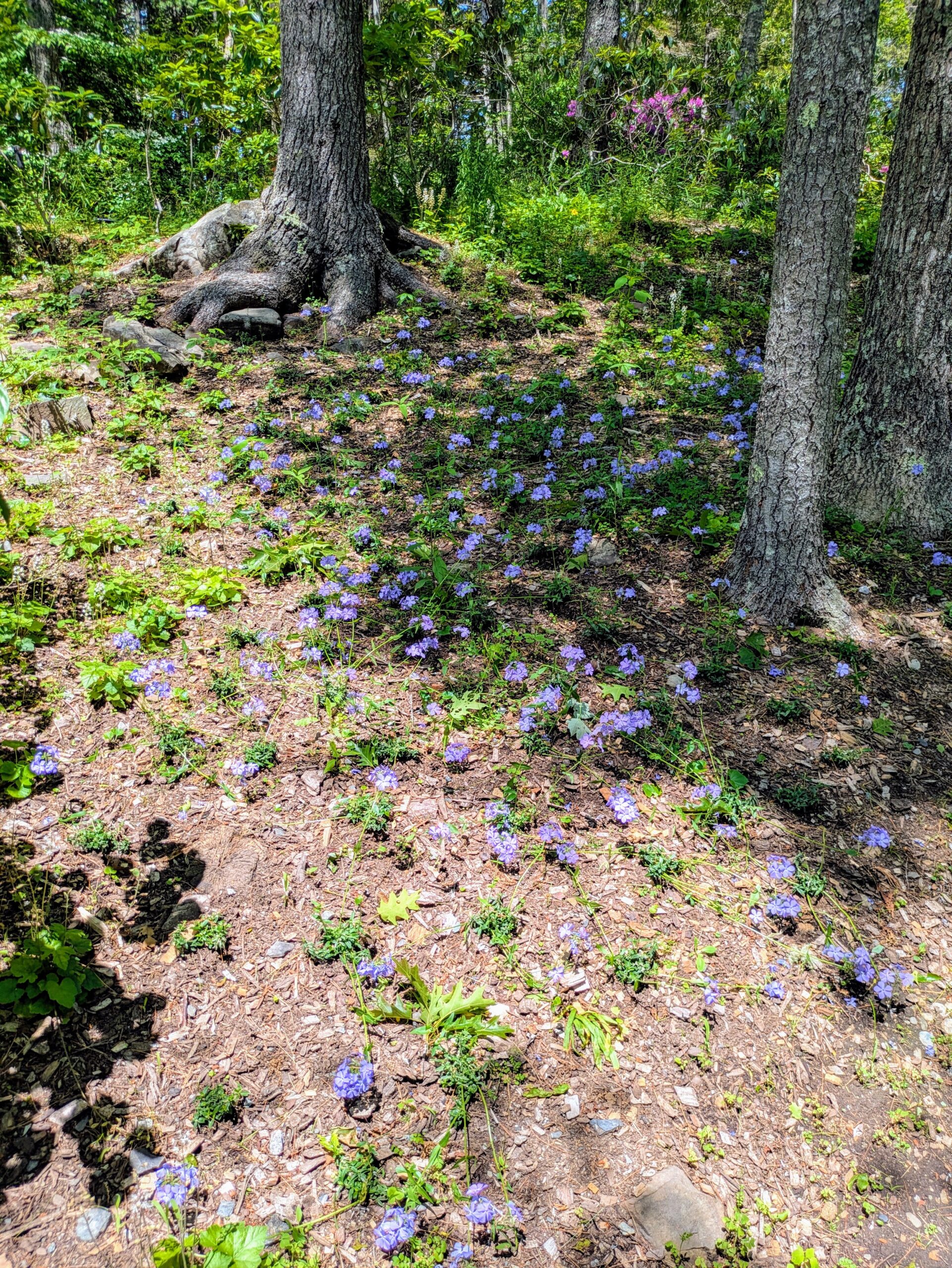
    A young groundcover planting of Phlox divaricata plugs at the Coastal Maine Botanical Garden.

    If you can’t find the straight species, the cultivar ‘Blue Moon’ is widely available and performs well. The cultivar ‘May Breeze’ is a bit taller and has white flowers, so can be used to provide contrast both in the garden and on the plate. After flowering the plants can look rather shabby, so I recommend cutting back the flowering stems, which can also cause a nice flush of new edible stems. This plant is widely available in garden centers throughout its native range, making it an easy plant to source and add to your garden.


    Trachystemon orientalis

    A patch of Trachystemon orientalis at the Atlanta Botanical Garden in late June.

    My first exposure to Trachystemon orientalis or early-flowering borage was in early April of 2024 when I visited the Cornell Botanic Gardens in Ithaca, NY on my way north to see the solar eclipse. Amongst the flowers of the cornelian cherries and hellebores I spotted these unusual large leaves emerging. The nearby sign said “Early-flowering borage” which turns out to be an appropriate name. Had I been there a few weeks later I would have seen the incredible electric-blue flowers. Trachystemon orientalis is a rhizomatous perennial plant in the borage family Boraginaceae closely related to the comfreys (Symphytum spp.) and true borage (Borago officinalis). It hails from the Black Sea region where it grows on dry wooded slopes. The young flowering shoots are a common food in Turkish markets each spring.
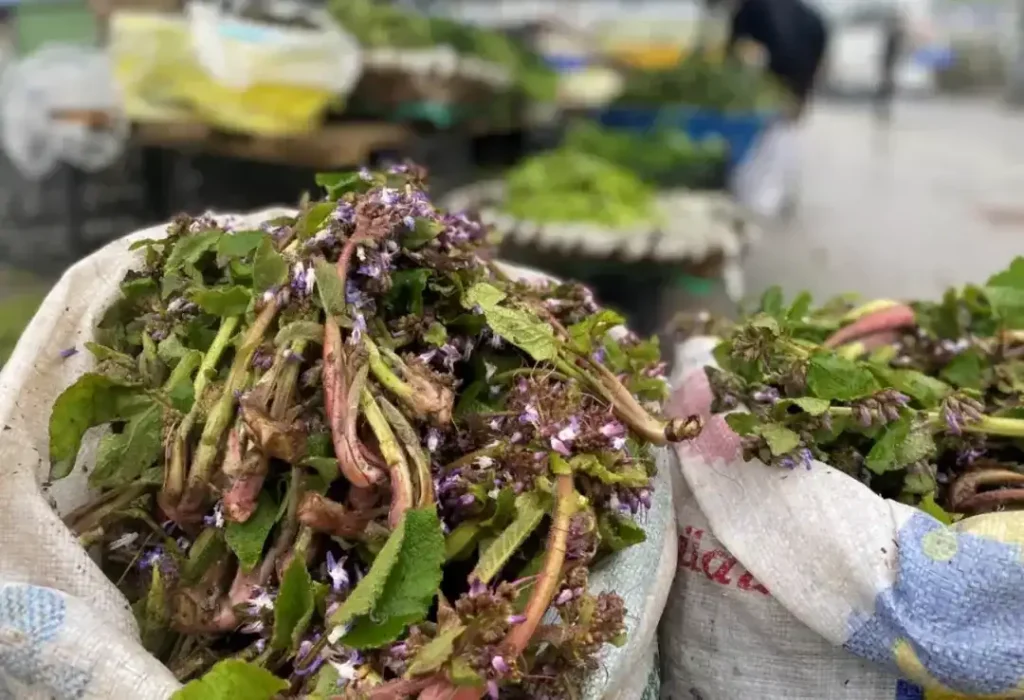
    Kaldirik (Trachystemon orientalis) for sale in a Turkish market.

    This is another plant that spreads by underground rhizomes, so treat it like running comfrey when choosing a location. As with other plants in the borage family, there is some concern about hepatotoxic pyrrolizidine alkaloids in the leaves, but so far there has been no research done on the subject. Because the plants are so widely eaten in Türkiye, I personally consider them safe to eat until I learn otherwise. The main edible use is the young flowering stalks, cooked, though there is some evidence that all parts of the plant are edible. There are two good cultivars of Trachystemon orientalis available in the nursery trade that expand its ornamental uses. ‘Kiwi Sun’ is a Dan Hinkley selection with chartreuse foliage, and ‘Sundew’ is a Plant Delights Nursery selection with true gold/yellow foliage.


    Hosta clausa
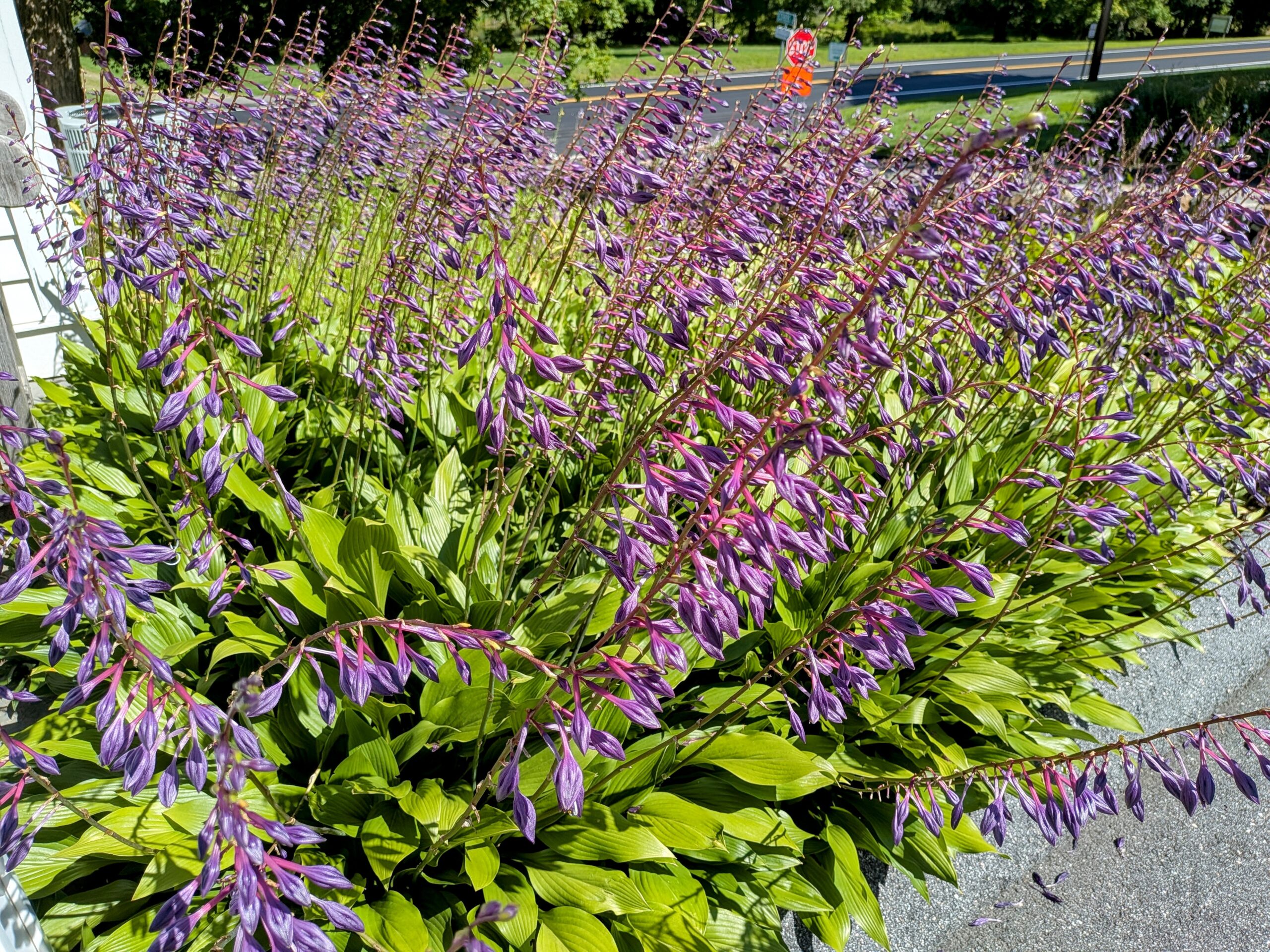
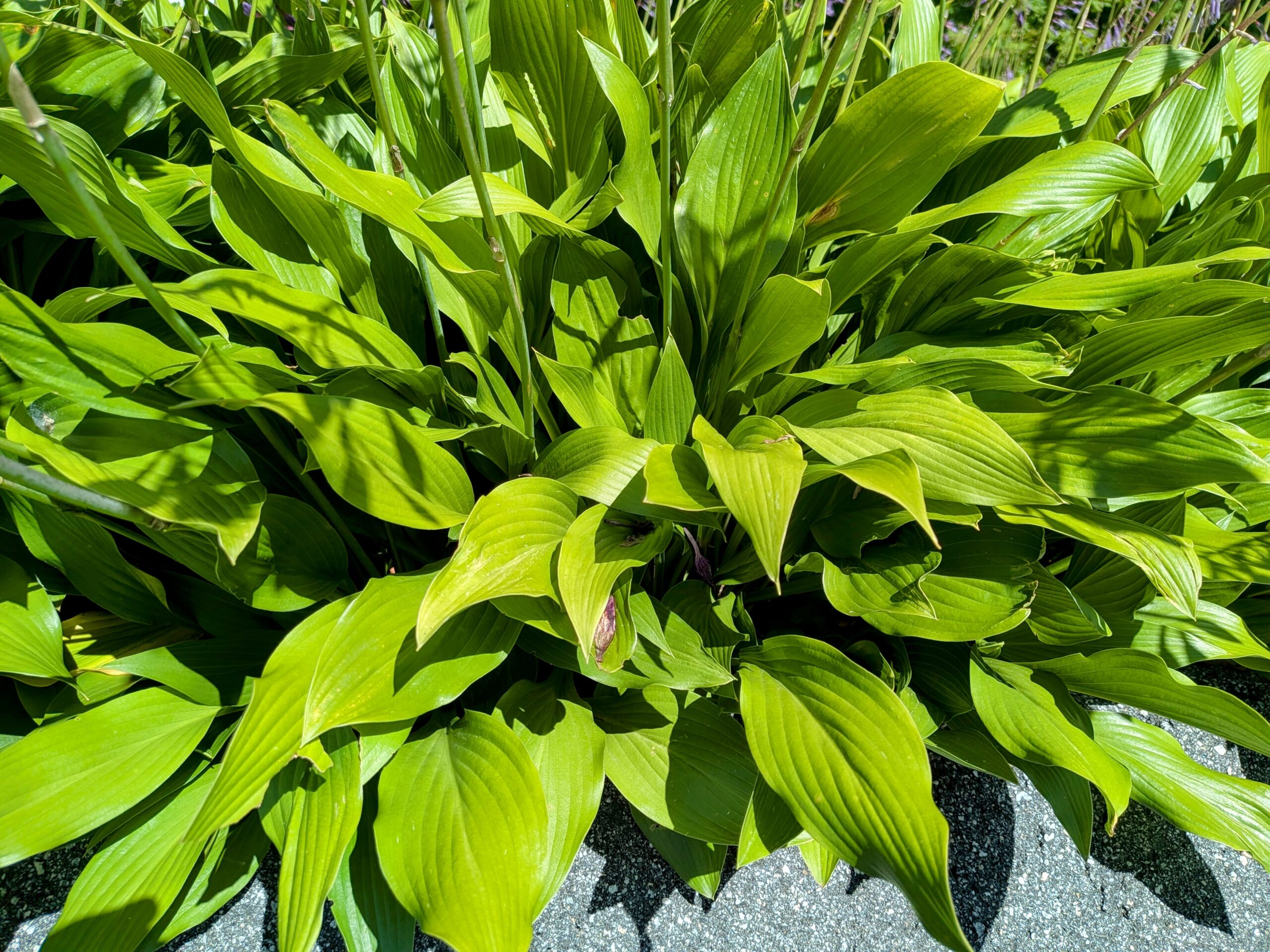
    Hosta clausa is a medium-sized hosta with shiny green leaves.

    I was very surprised recently to learn that there are Hosta species which spread by rhizomes. Of these, Hosta clausa is the most promising as an edible groundcover plant. Hosta clausa is a Korean hosta species with the unusual trait that its flowers never open, hence the Latin name “clausa” or closed. It is said to be the most vigorously spreading of all rhizomatous hostas, and is also large enough at 1 foot (30 cm) tall to be worth eating. Despite never opening, the flowers certainly aren’t lacking in ornamental appeal! The bright purple flower buds are borne in abundance on 2 foot (60 cm) tall stalks, and each flower bud features a ring of hot pink around the base!
    Closeup of the permanently closed flowers of Hosta clausa.

    There is also a variety of Hosta clausa where the flowers do open, known as Hosta clausa var. normalis, but this variety is harder to come by in the nursery trade, and if you’re going to grow the species why not enjoy its most iconic trait. I think the perpetually closed flowers also taste better than many of the normal hosta flowers I’ve tried. Hosta venusta is another rhizomatous hosta species, endemic to Cheju Island off the coast of South Korea. This species is even smaller than Hosta clausa, reaching only 6 inches in height, making it hard to justify as an edible plant but interesting nonetheless.
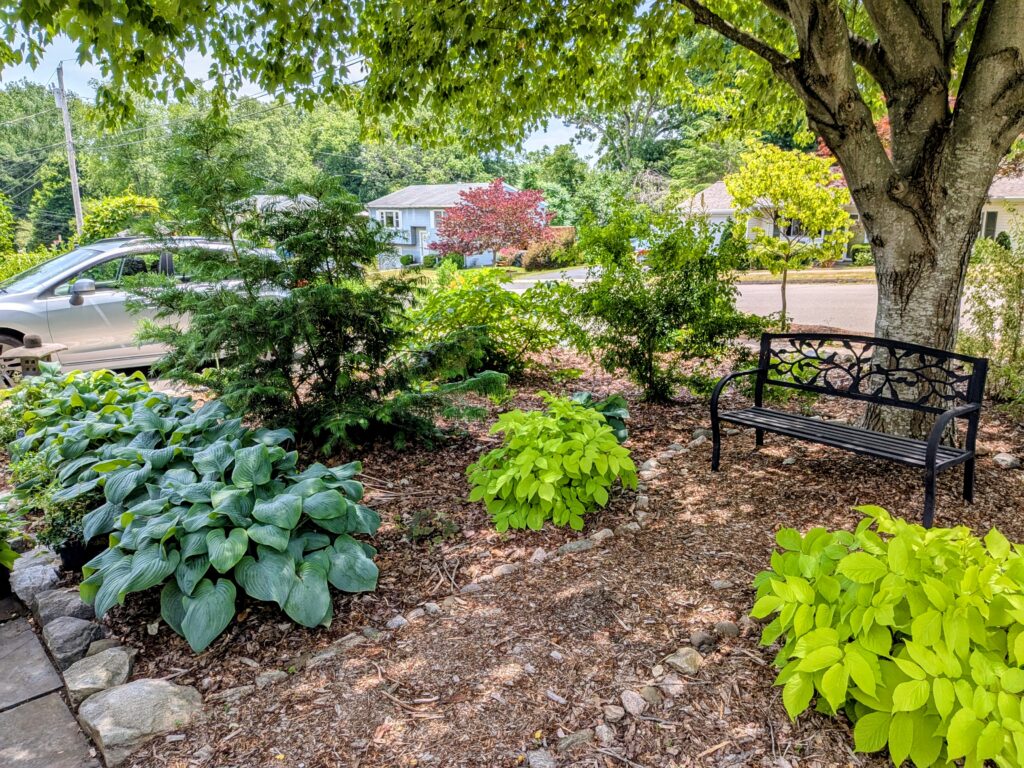

    A glimpse of the author’s edible dry shade garden.

    I hope you’ve enjoyed this deep dive into some uncommon edible groundcover plants that you may consider for your future garden plantings. A strong groundcover layer can improve the health of all plants in your garden by retaining soil moisture, keeping weeds away, and increasing soil organic matter. By choosing the right plants, your groundcover layer can also be a great source of food! While most edible groundcover plants will provide greens, plants with edible flowers and fruits extend the season and can be productive if strategically placed. As always, if you have any questions feel free to ask in the comments below!
  • Koshiabura – The Elusive “Queen of Sansai”

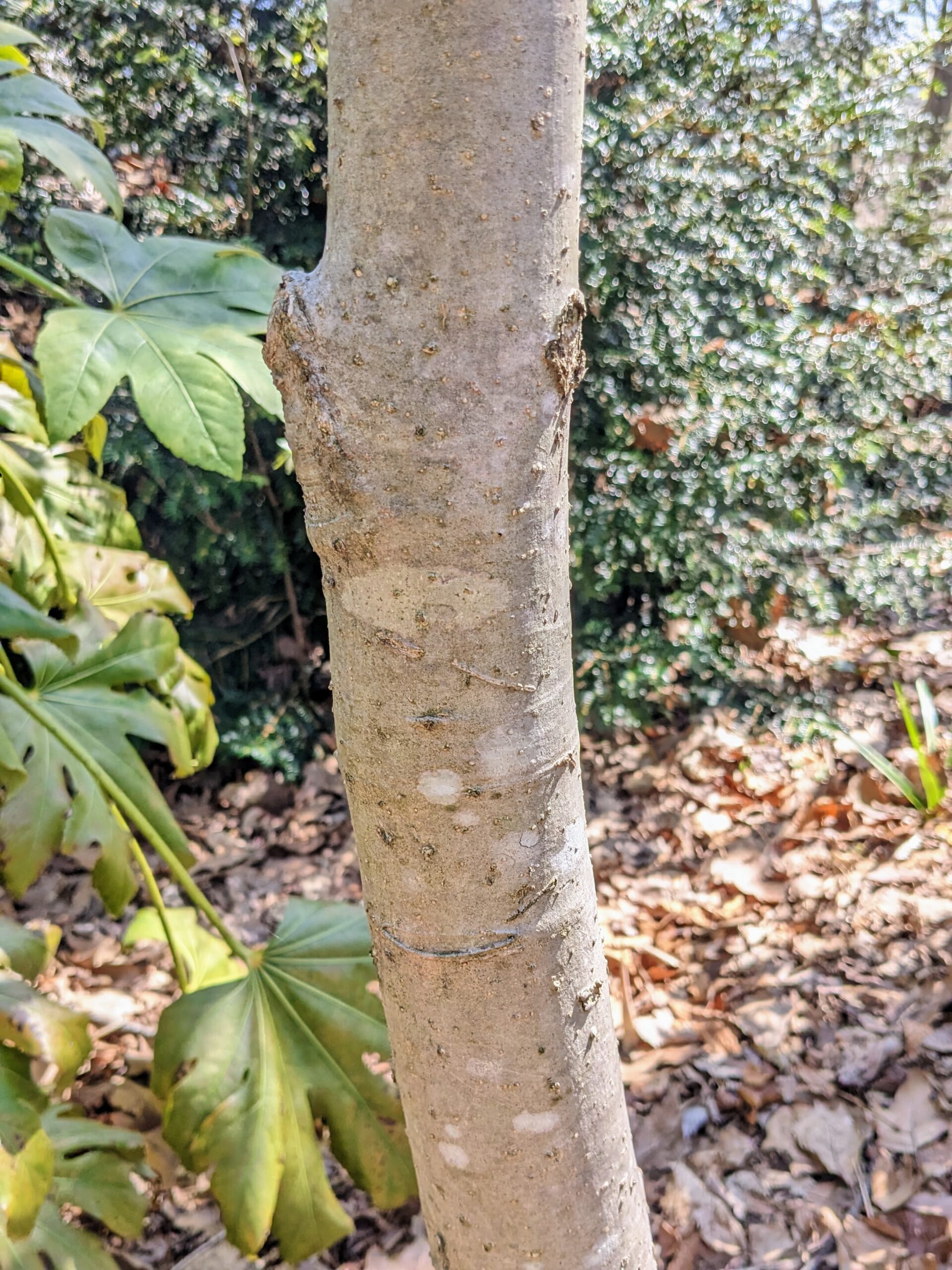
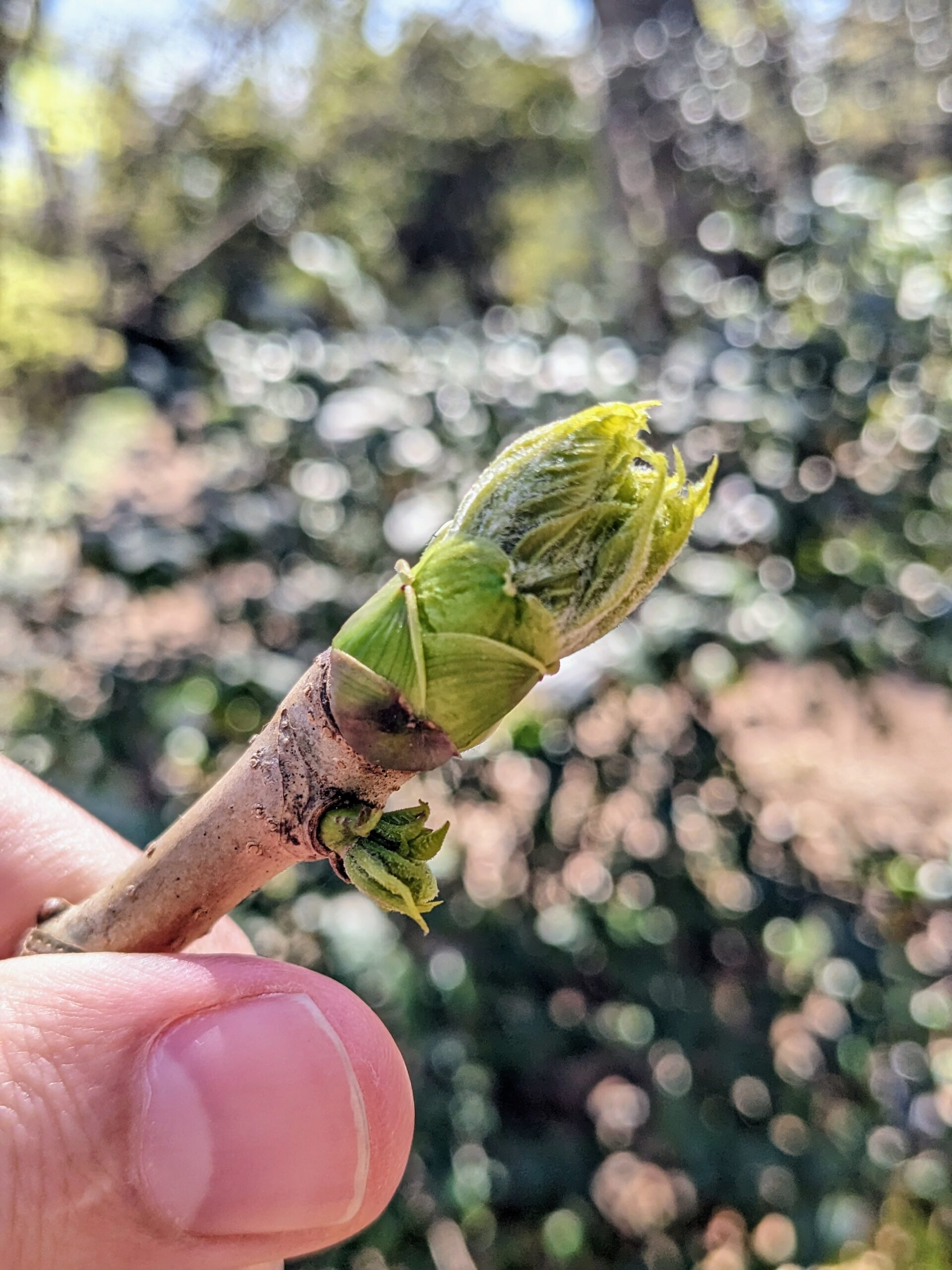
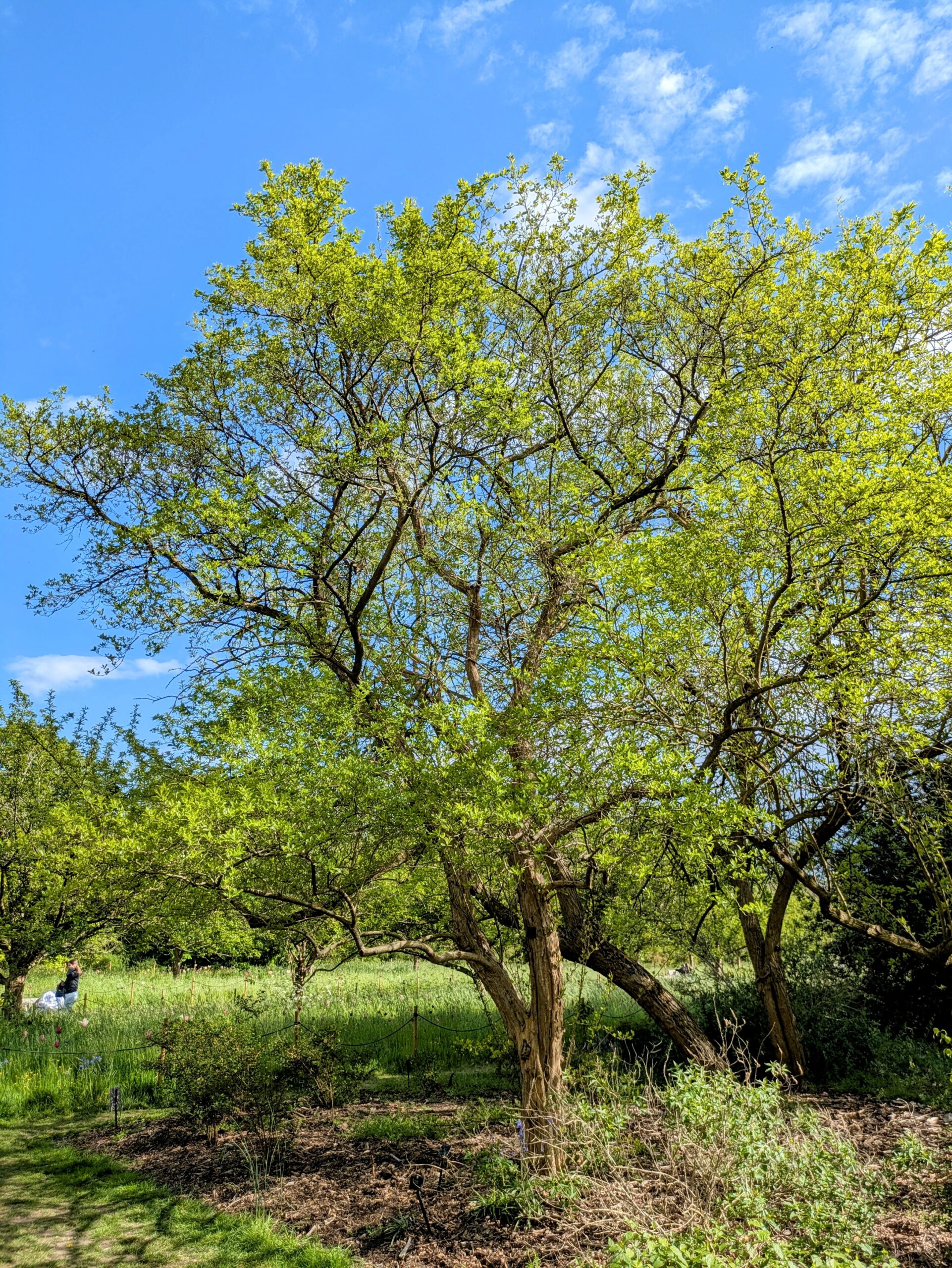
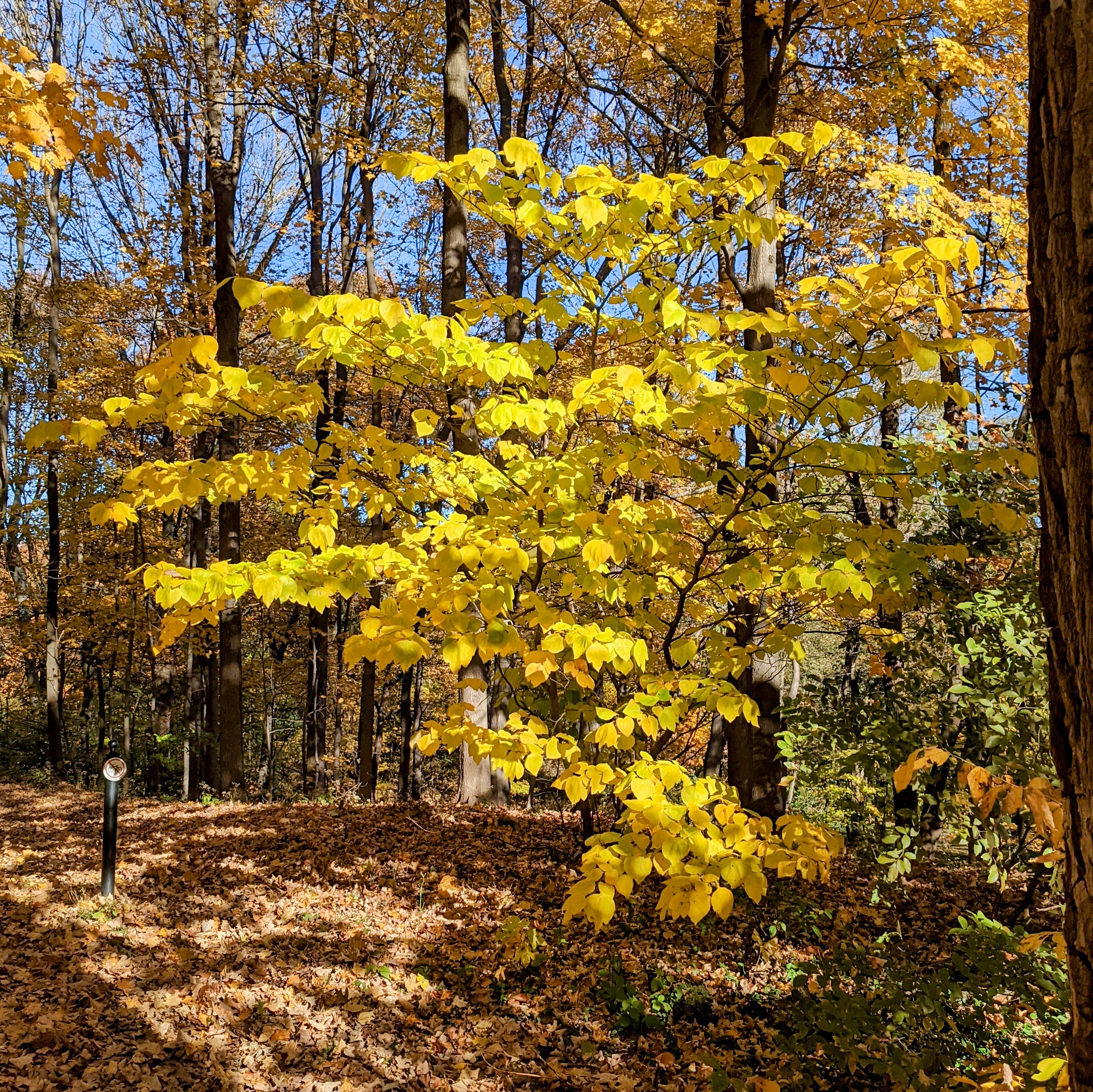
    When it comes to plants that I seem destined never to acquire, the koshiabura tree Chengiopanax sciadophylloides is surely at the top of the list. This small tree in the ginseng family Araliaceae is an endemic Japanese species which is revered as a spring vegetable. Koshiabura grows along the full length of Japan from the mountains of Hokkaido to Kyushu in the south. It likes to grow along sunny woodland edges on mountain slopes.

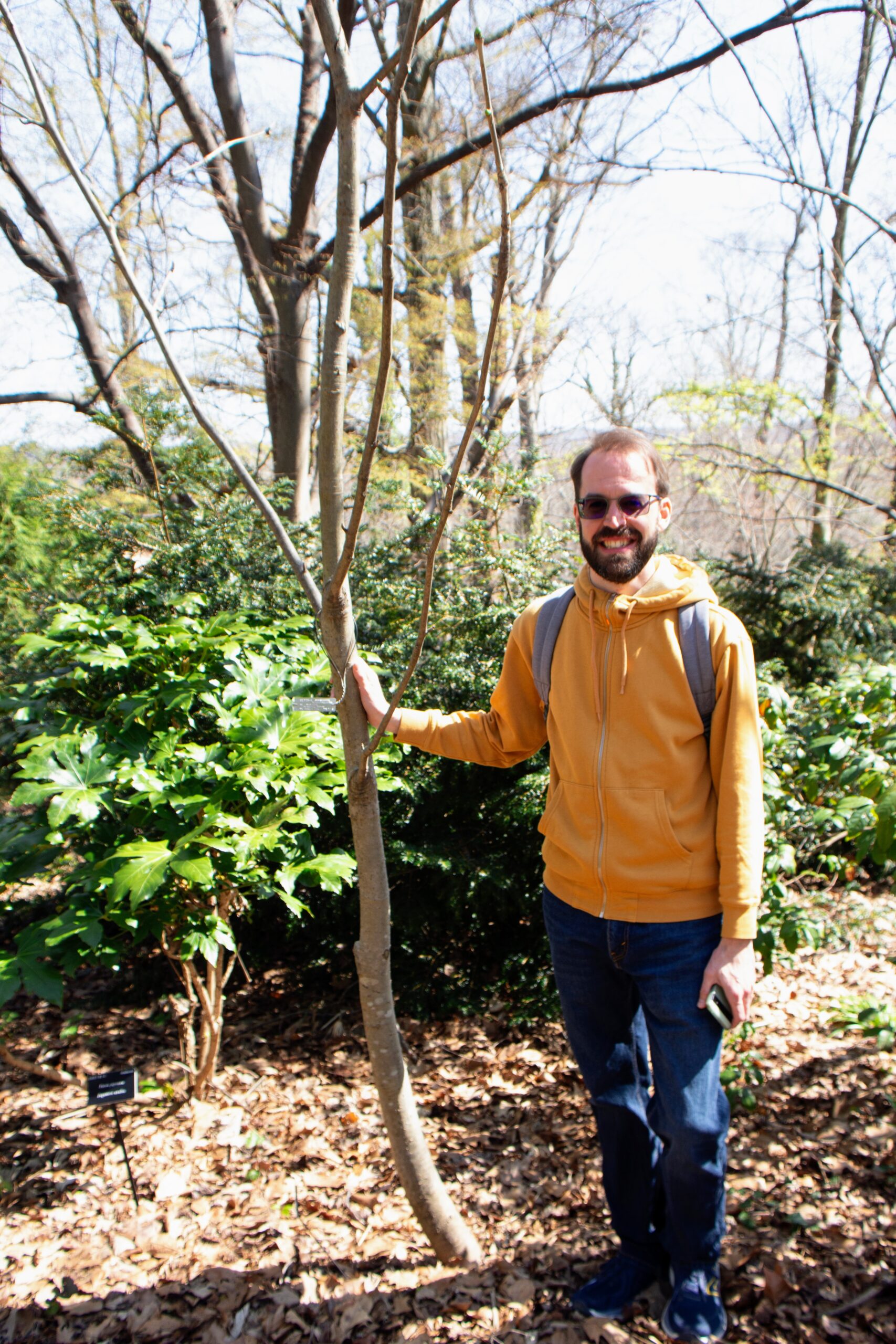
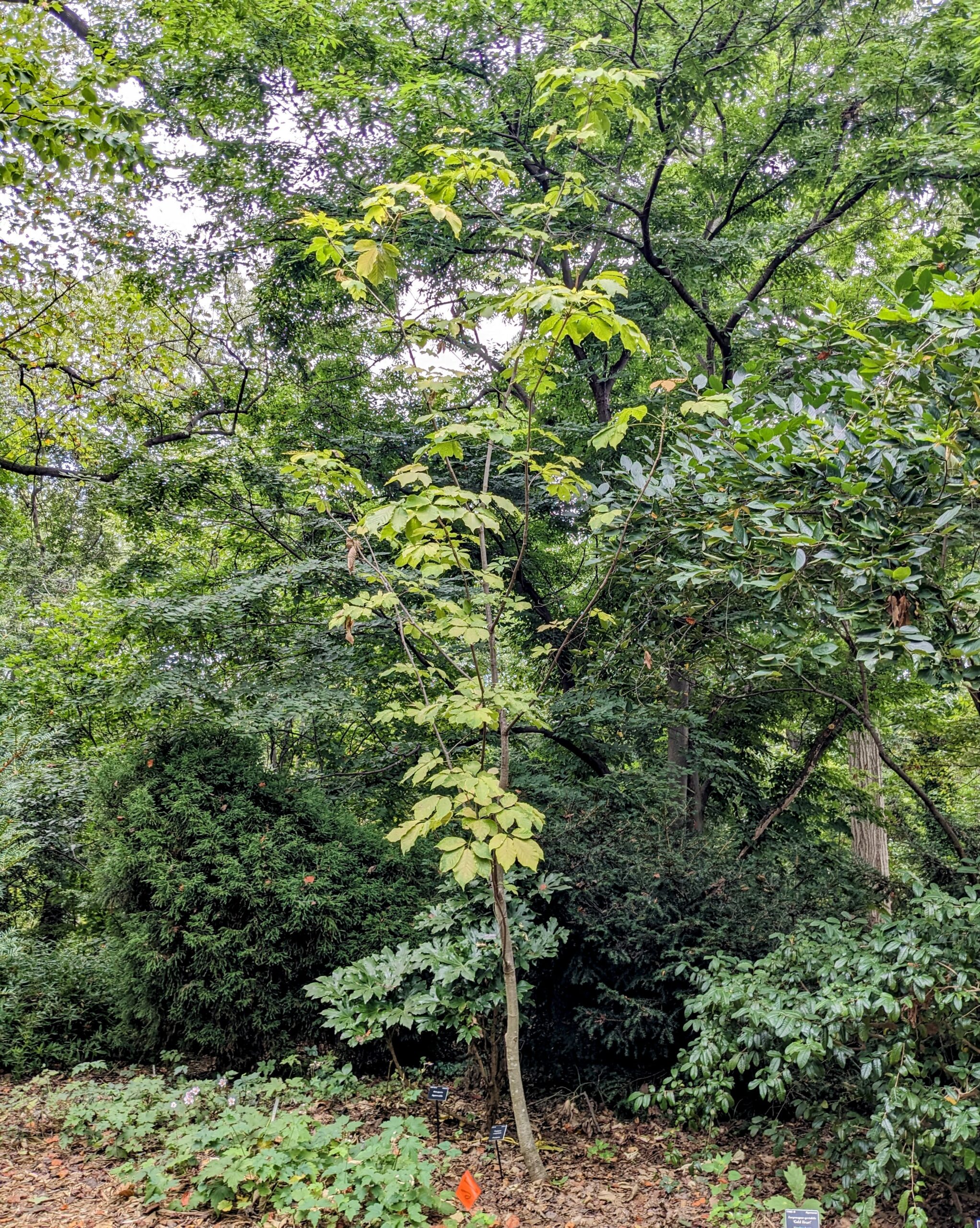
    A lone koshiabura tree growing at the US National Arboretum in Washington DC.

    Wild vegetables in Japan are referred to as “sansai”, which translates literally as “mountain vegetables”. The koshiabura tree is so revered as a wild food in Japan that it has earned itself the title of “queen of sansai”. (The “king of sansai” is the closely related Aralia elata) The young shoots of the koshiabura tree are harvested in the spring and are boiled to serve in a variety of dishes, or fried up raw as vegetable tempura. They are grown commercially on a small scale and can even be found in Japanese grocery stores when in season. It is said that koshiabura trees growing along mountain paths are often stunted due to excessive harvesting of the shoots!

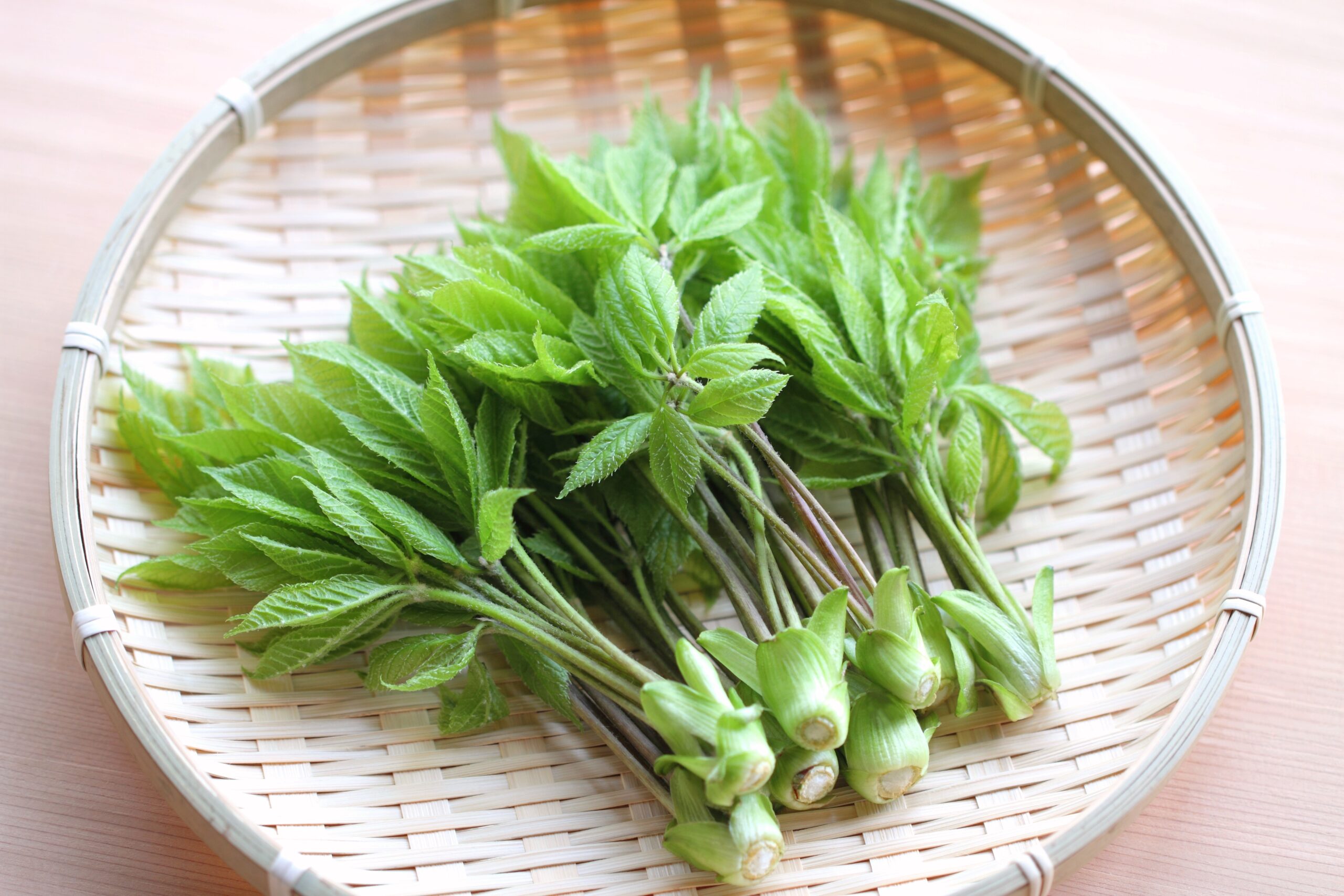
    Koshiabura shoots ready to cook.

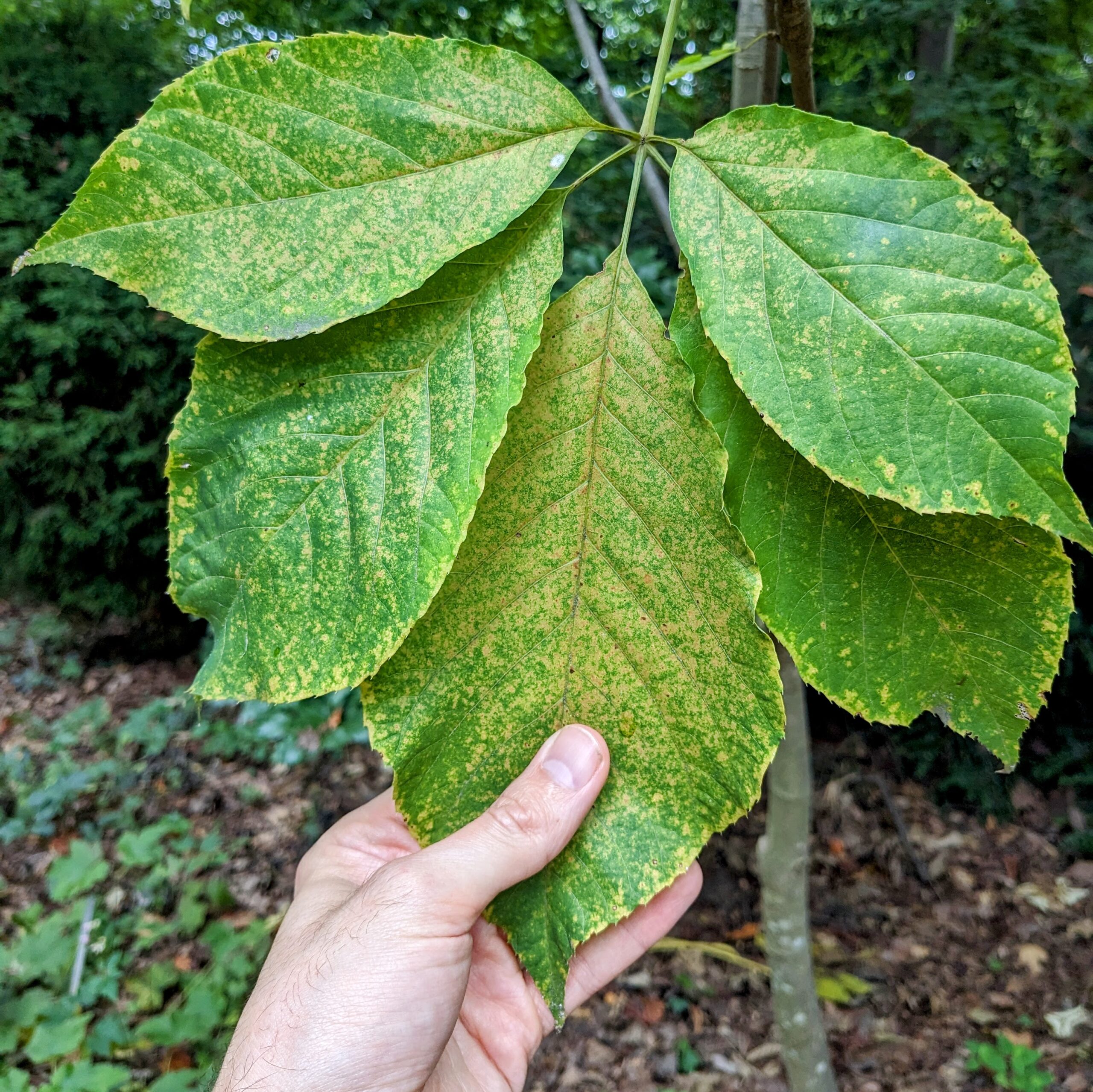
    The young shoots of many trees and shrubs in the ginseng family Araliaceae are eaten as sansai in Japan. These include Aralia elata, Kalopanax septemlobus, a few Eleutherococcus species, Gamblea innovans, and finally Chengiopanax sciadophylloides. There are two attributes which make koshiabura especially desirable among this group. First of all, unlike most of the other species, which are viciously thorny, koshiabura is completely free of thorns. Second, the plant has a milder flavor than most other Araliaceae species, free of the harsh bitterness found in some of the species listed above. In a 2004 paper, David Brussell, an American ecology professor living in Japan, stated that koshiabura shoots were his favorite of the many sansai he tried during his stay, describing them as “delicious”.

    Of course, I can’t personally comment on the flavor of the plant, as I’ve been completely unable to source one! As far as I know, the only koshiabura tree growing in the United States at present is a single small specimen growing in the Asian Collections at the US National Arboretum in Washington, DC. Unfortunately the species is dioecious, with separate male and female plants, so the tree in Washington DC will never produce seed for further propagation. Readers in the UK can get this plant from Crûg Farm in Wales. As for the rest of us, we’ll have to import seeds or plants directly from Japan – a difficult process any way you look at it. Some research has shown that the koshiabura tree can accumulate manganese from the soil into its leaves, potentially reaching hazardous levels. Sometimes I’ll use this fact to make myself feel better about not being able to obtain this plant!

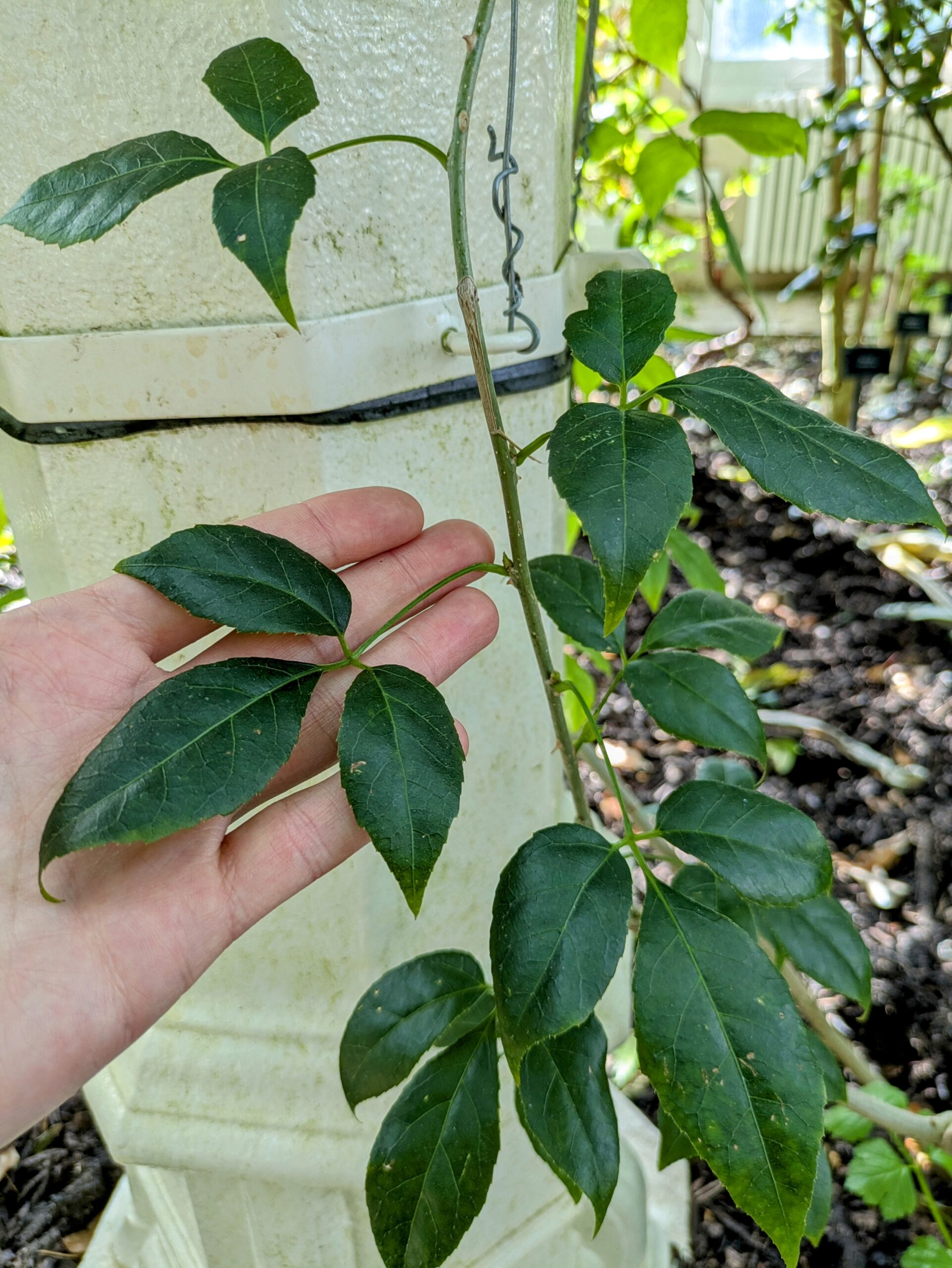
    The large leaves have five leaflets on a long petiole. This leaf is just starting to show its yellow fall color.

    The name “koshiabura” might sound odd to English speakers, but the tree has no English common name as it is only found in Japan. “Koshiabura” translates to “strained oil” in Japanese – a reference to one of the historical uses of the tree. By straining the resin found in the tree, a prized lacquer called “gonzetsu” is obtained. This lacquer was famous among Japanese and Chinese nobility for its glossy golden color and high durability, actually becoming harder when exposed to ultraviolet light. Koshiabura and the closely related Gamblea innovans were used for this purpose until the Heian period (794 to 1185 CE) when it was discovered that the faster-growing Toxicodendron vernicifluum could be used instead.

    The author with what is likely the only koshiabura tree in the United States.

    There are a lot of unknowns when it comes to the koshiabura tree. How large will it grow outside of its native range? Japanese sources list it as growing from 5 to 18 meters tall. What are its actual hardiness limits? The Arnold Arboretum in Boston, Massachusetts has attempted to grow it several times, but none of the trees have survived to the present. There is also a Chinese species, Chengiopanax fargesii, which is even more obscure but is likely to have all of the same useful properties. I hope to one day grow one of these obscure edible trees in my own garden so that I can answer some of these questions for myself! If you are able to get your hands on this species, by all means please let me know!
  • A Visit to Kew Gardens

    I had the great pleasure of visiting the Royal Botanic Gardens, Kew in London during my recent trip to the UK. I’ve compiled a collection of photos I took there showing my favorite hardy (and some not so hardy) edible plants. Descriptions are below each set of photos. You can click the individual photos to see the full-sized versions. Enjoy!
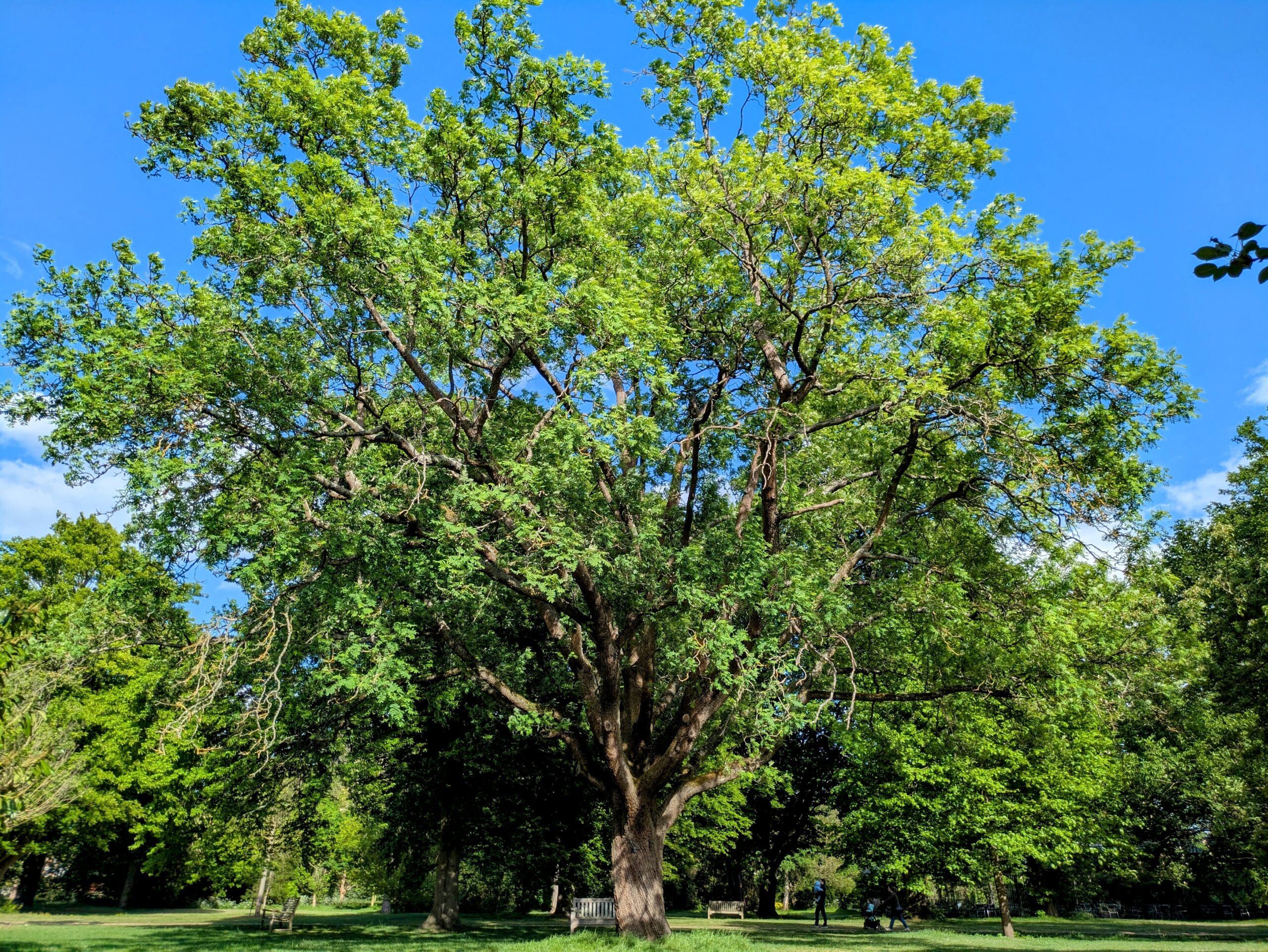
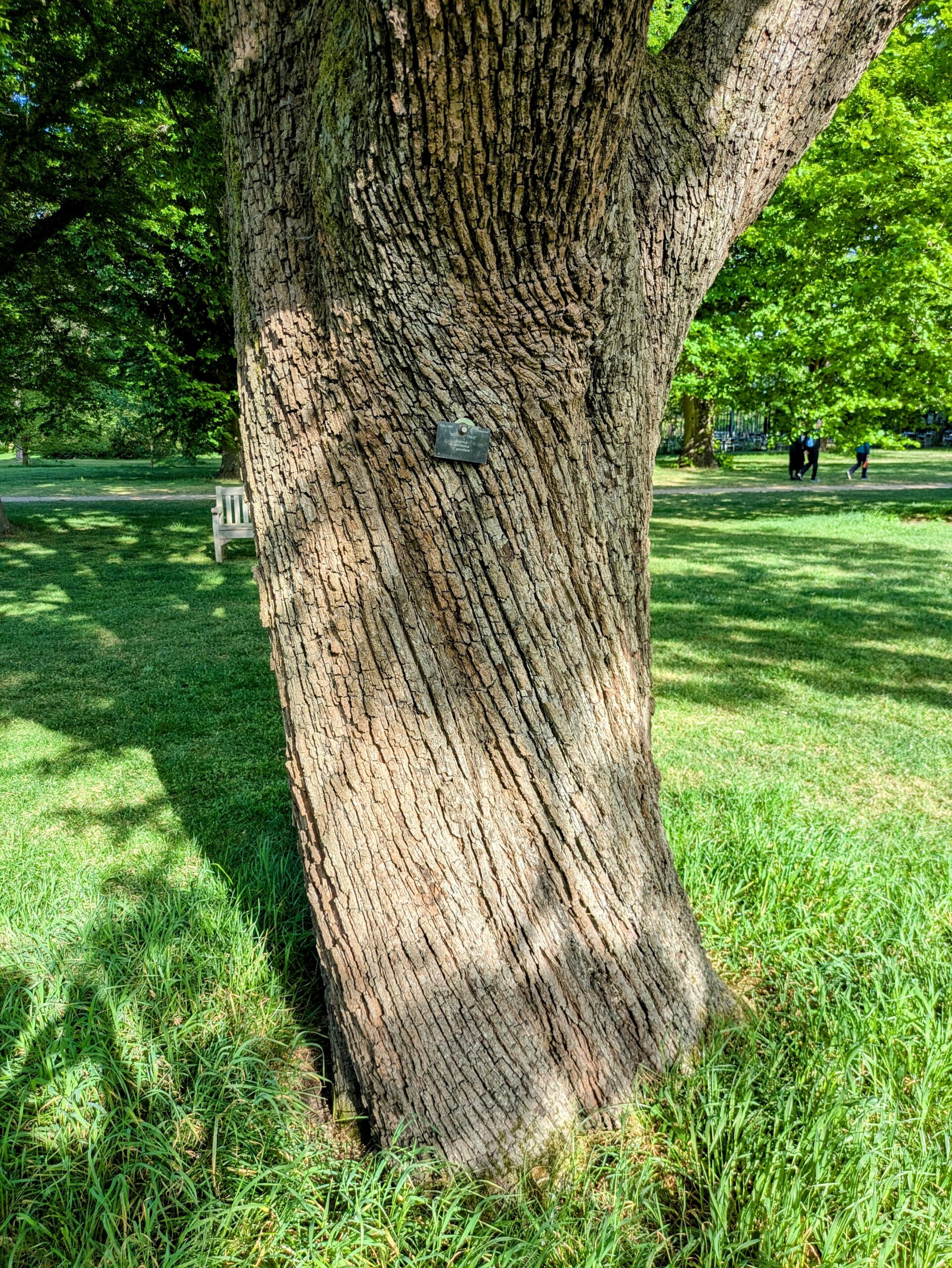
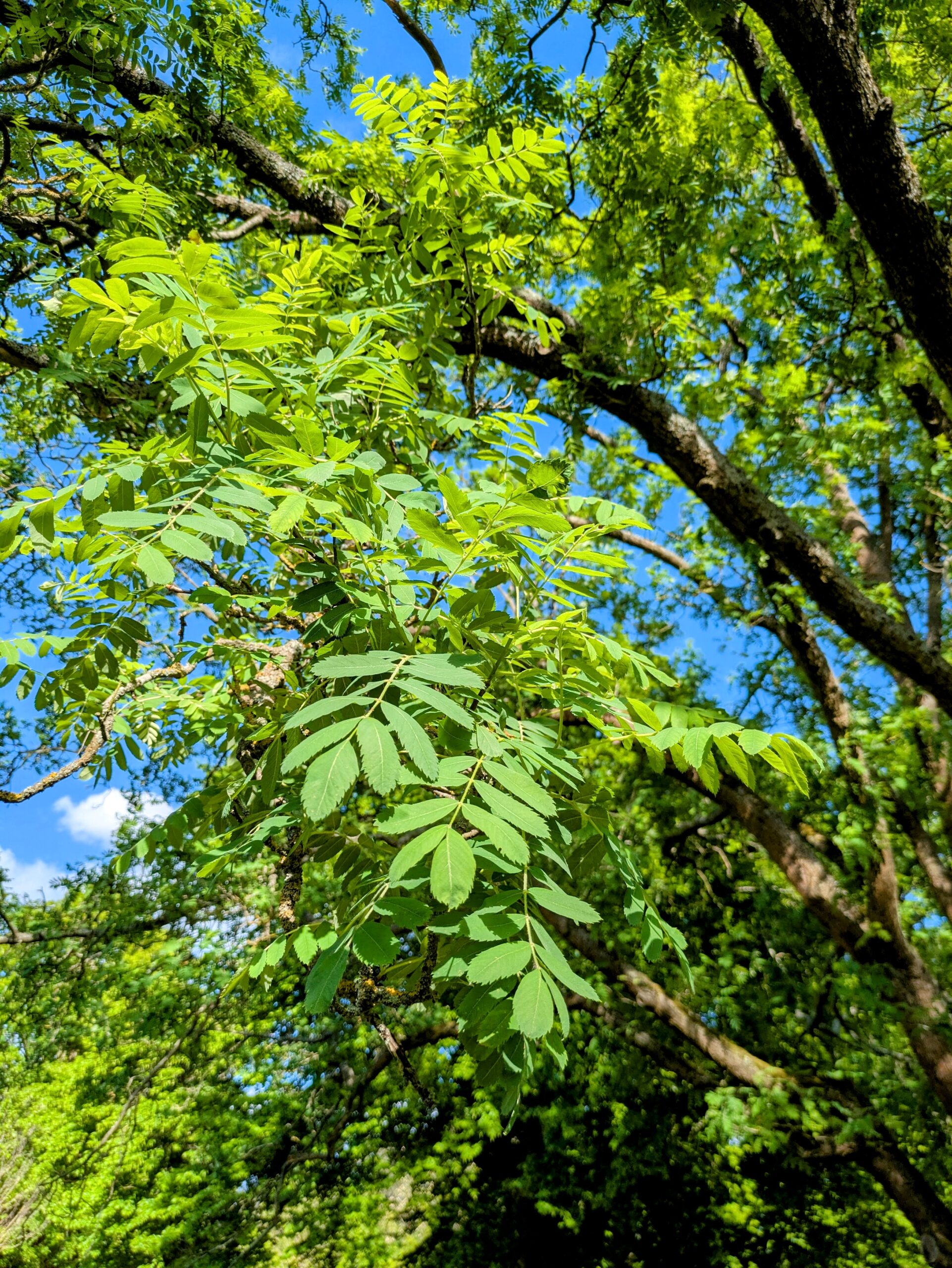
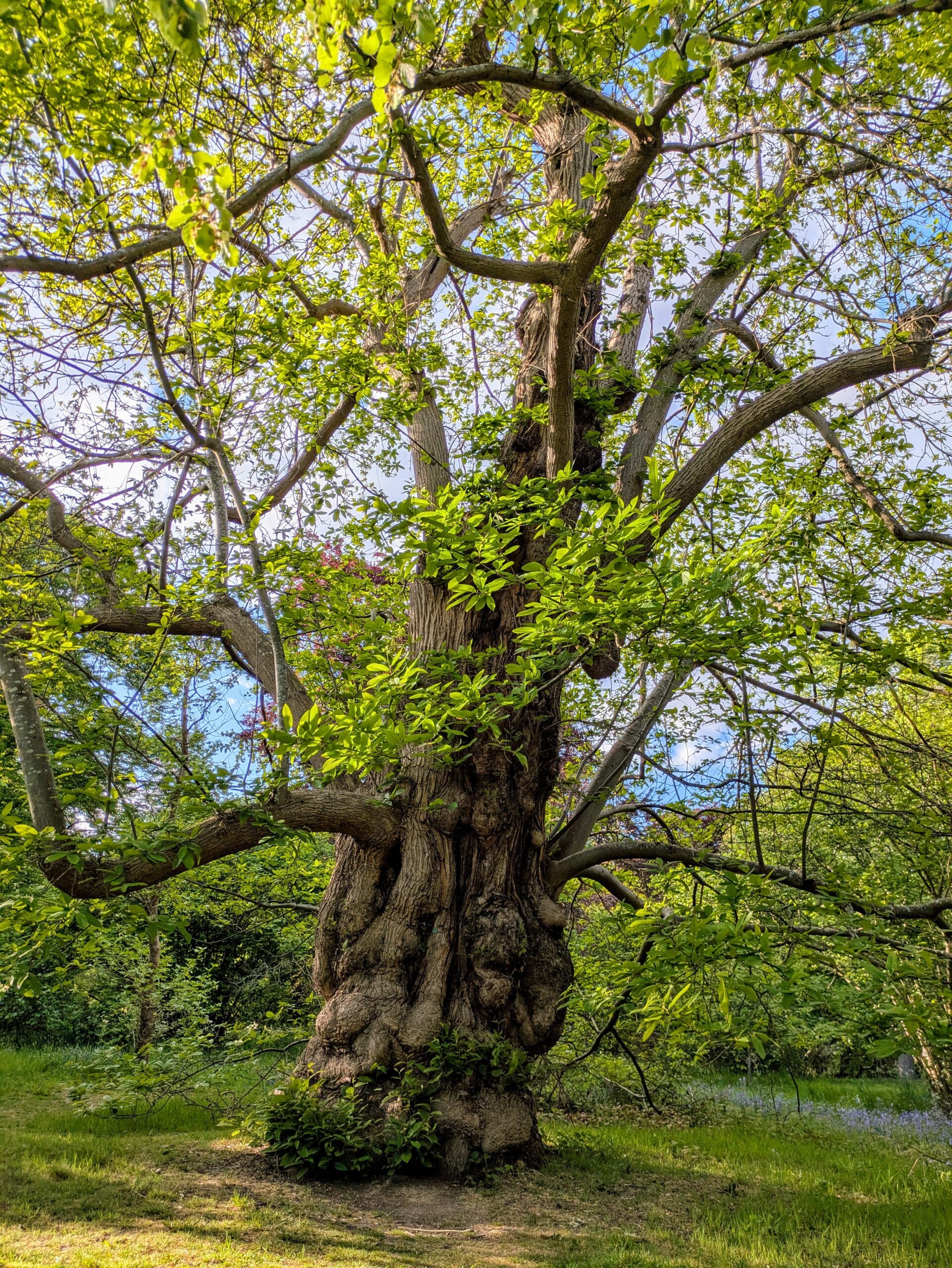
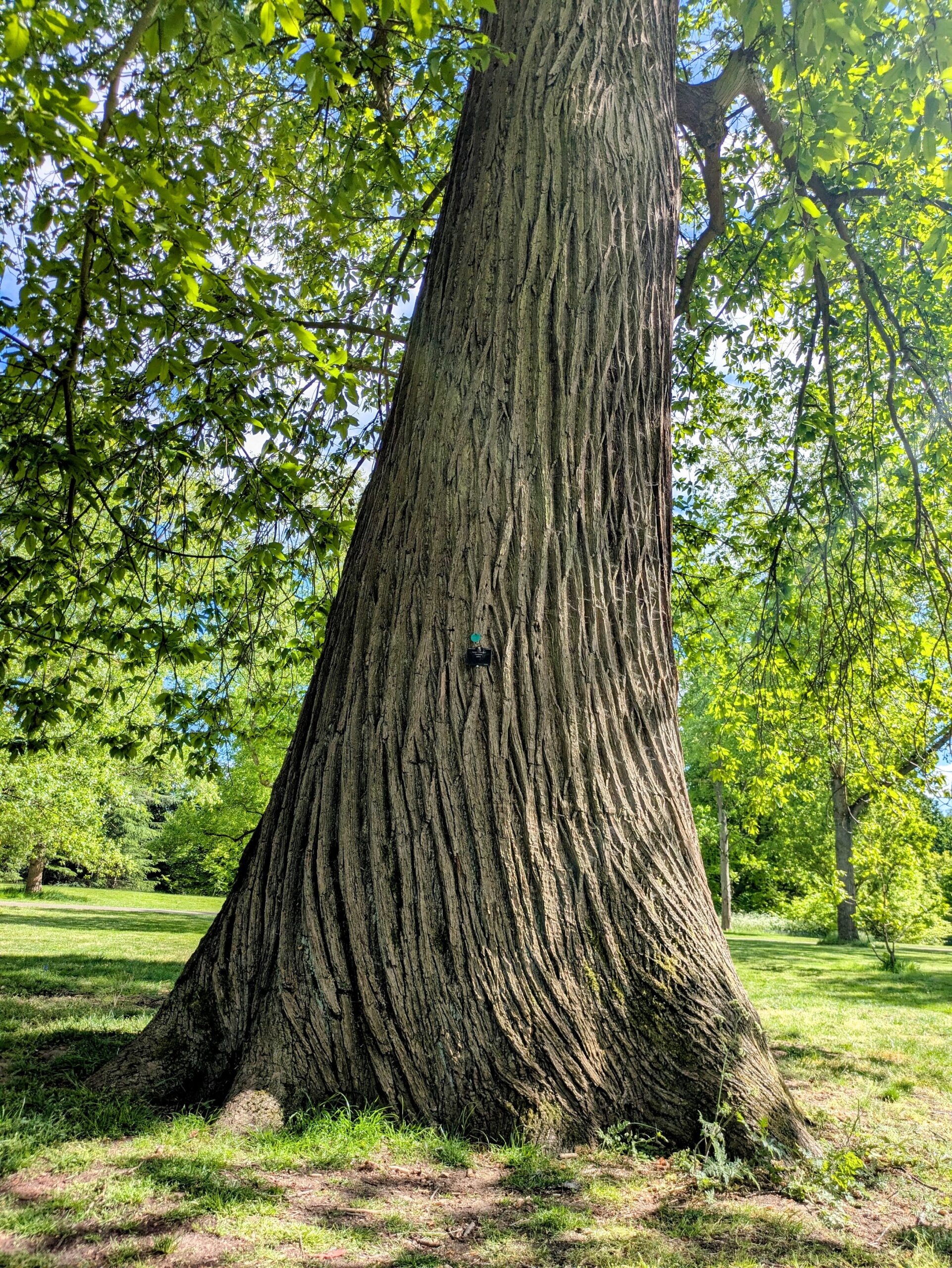
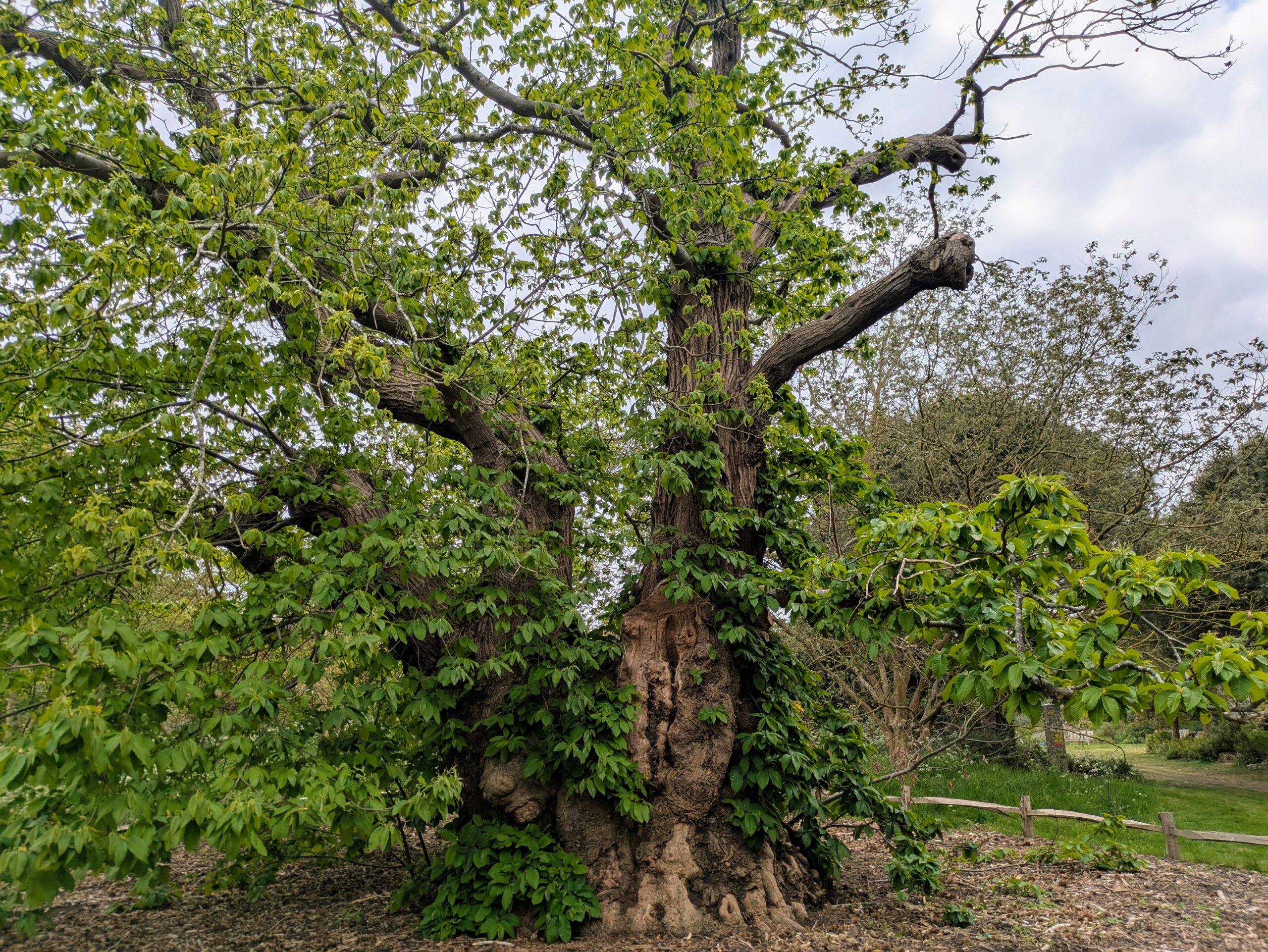
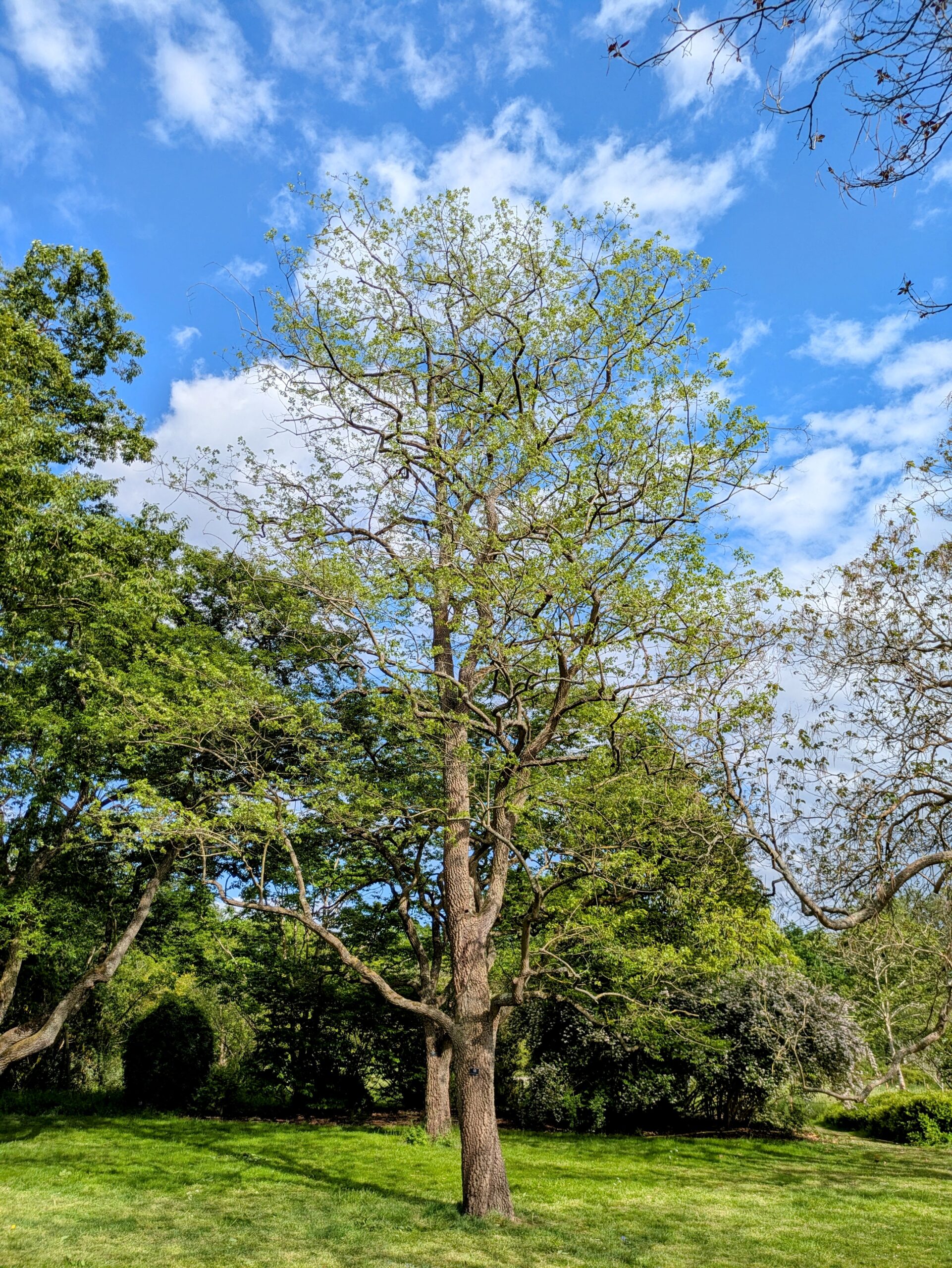
    A magnificent old specimen of servicetree, Sorbus/Cormus domestica. This is a rare European tree which produces an abundance of small delicious fruits in the fall. The fruits look like tiny apples or pears, and must be eaten overripe or “bletted”. They taste like apple or pear sauce, but with complex tropical fruit flavors as well. I think this tree has incredible potential in agroforestry systems because its pinnate foliage lets plenty of light through to the understory. The fruit is easy to harvest despite the large size of the tree because it falls freely when ripe. The main downside of growing this tree is that it can take several years to begin fruiting!

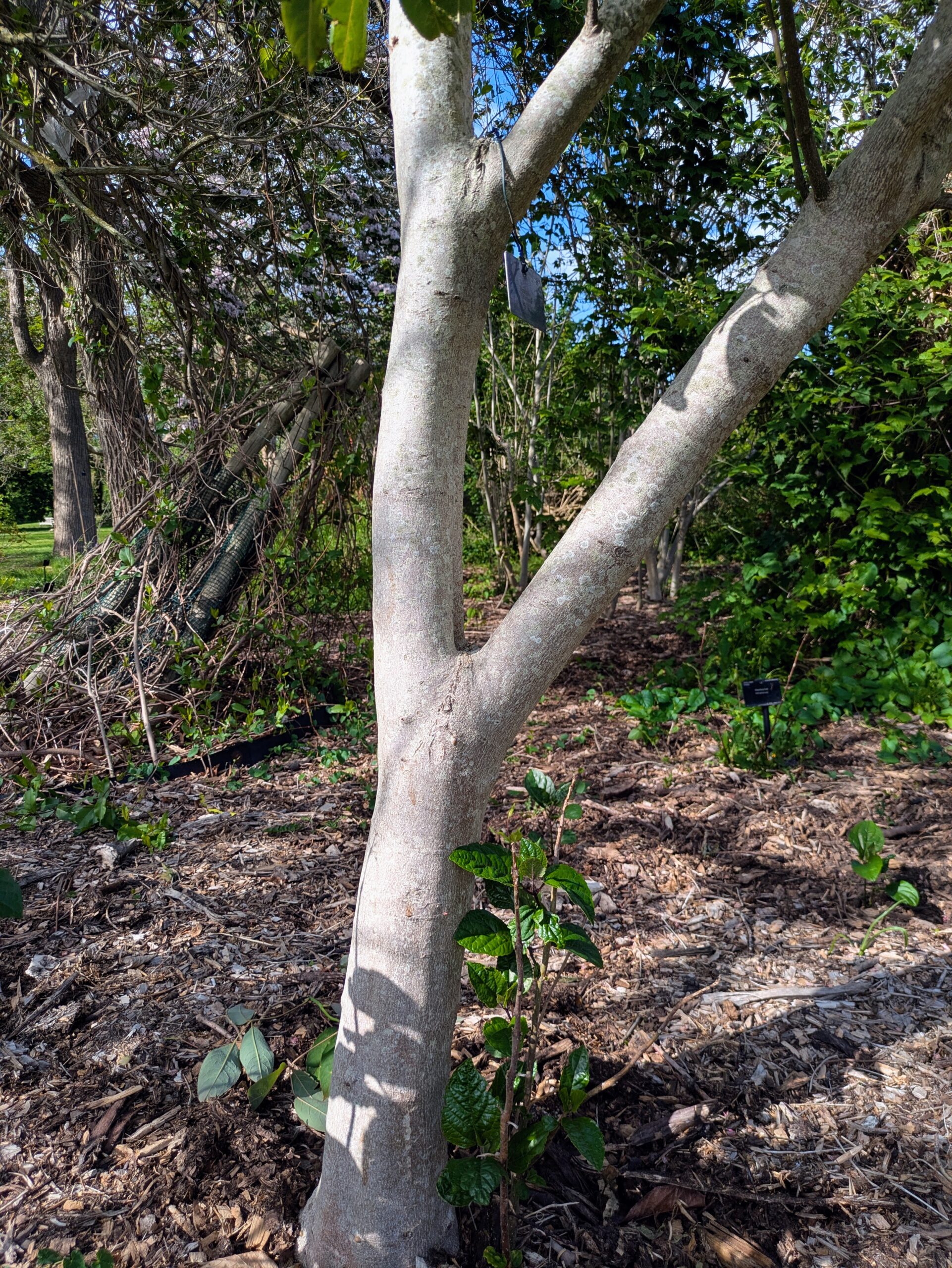
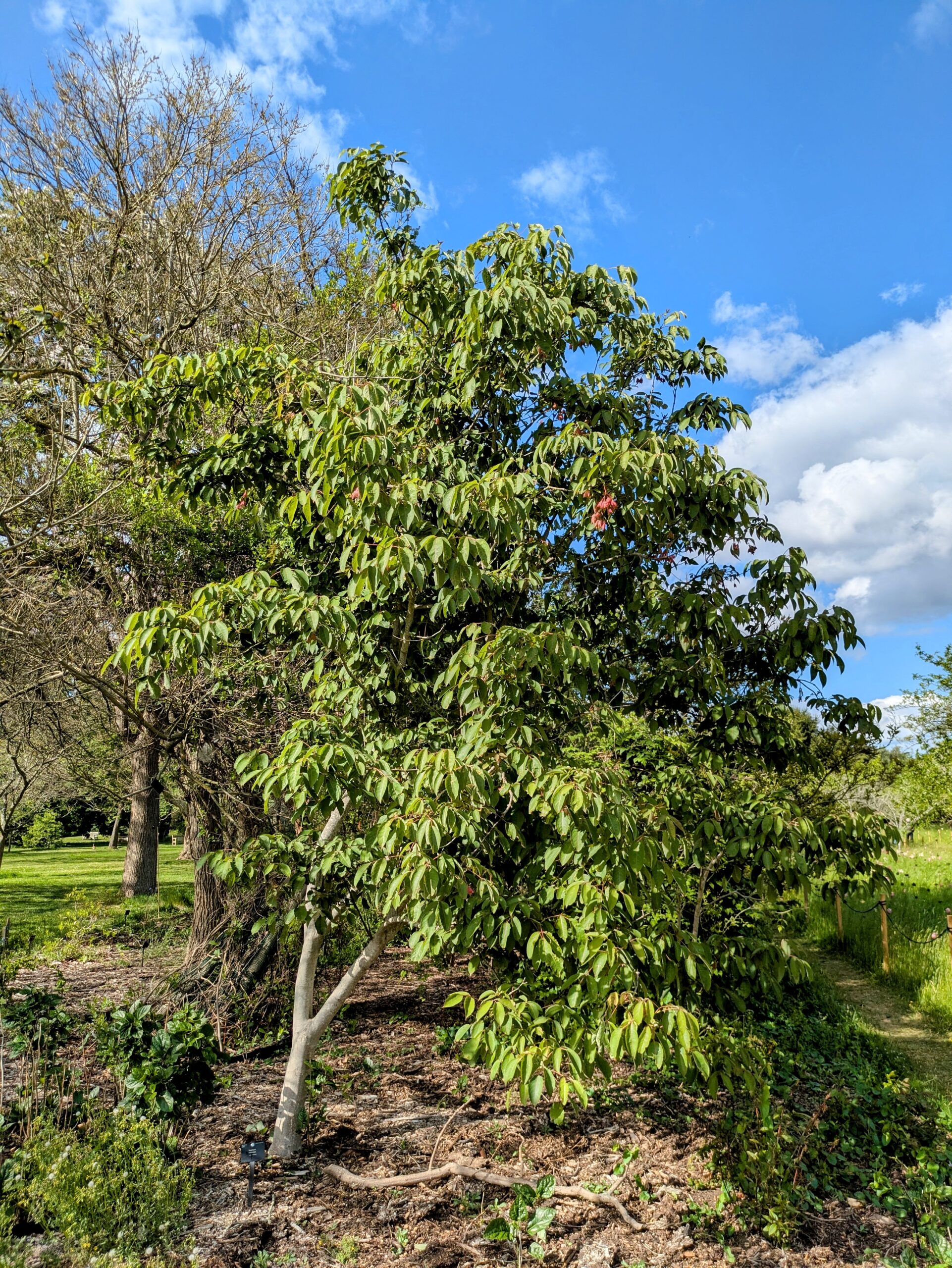
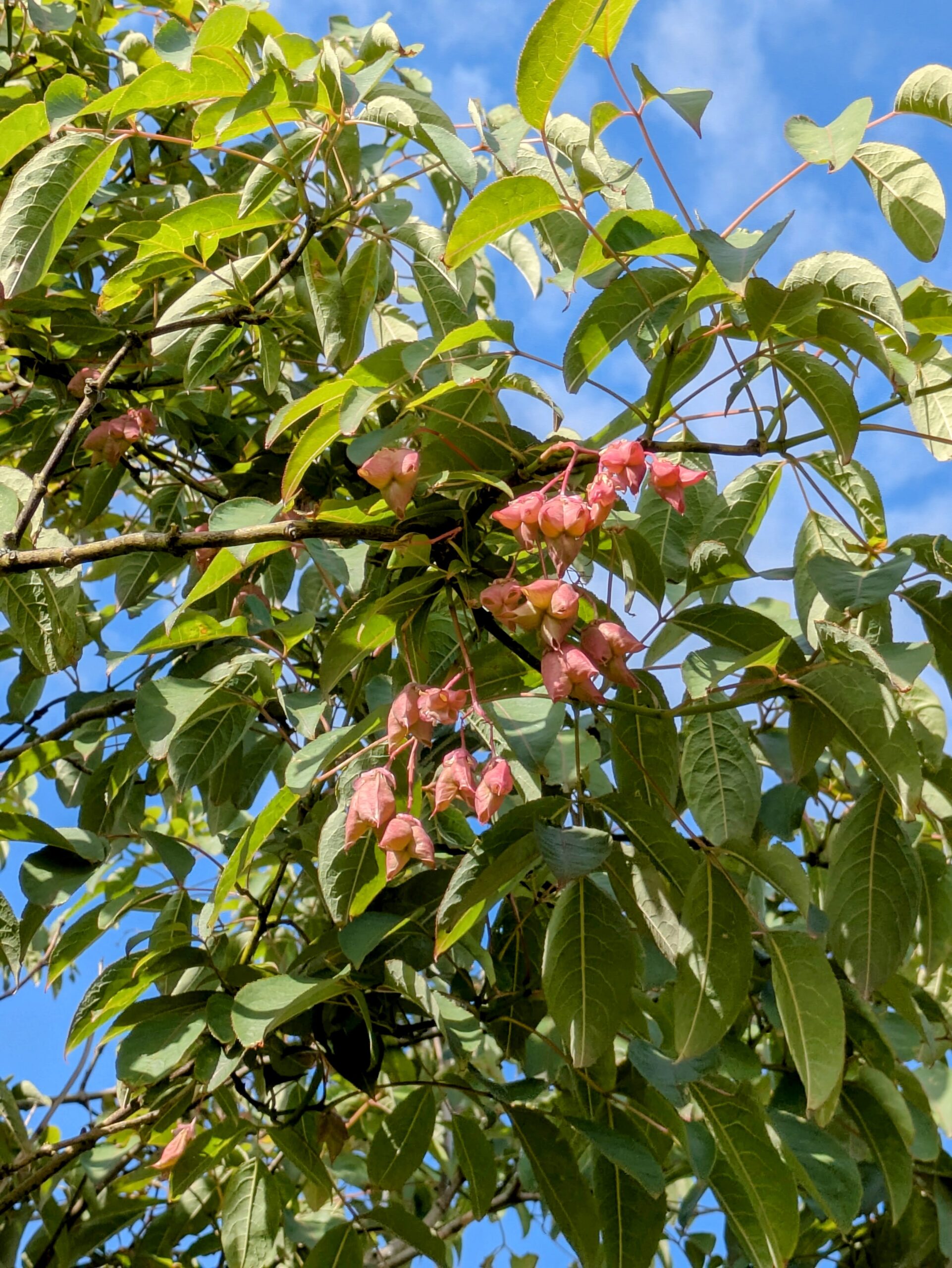
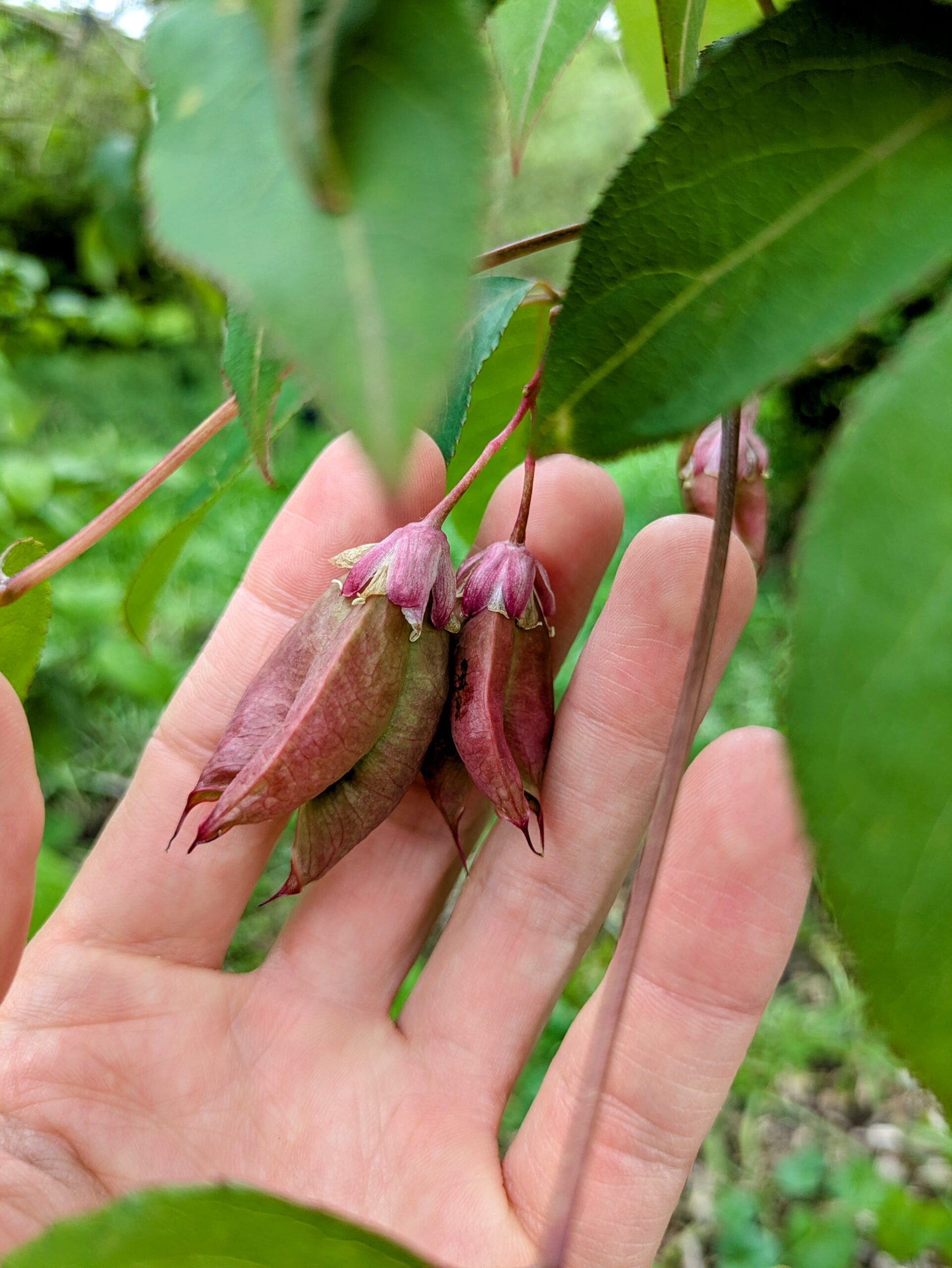
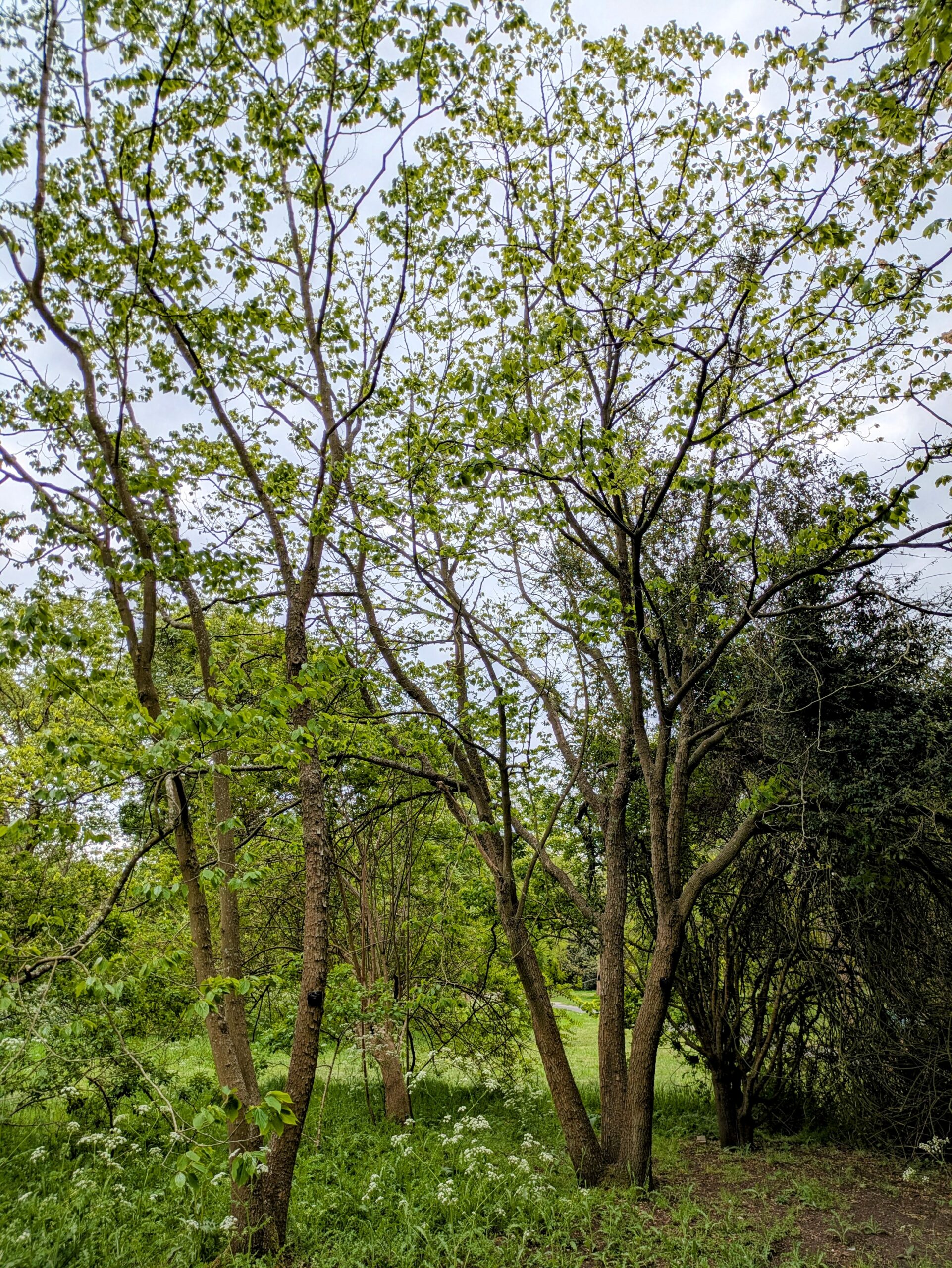
    The incredible gray-white bark of this tree caught my eye from a distance, so I had to investigate! Upon looking closer, I realized that it’s actually one of my favorite trees with edible leaves – Staphylea holocarpa var. rosea, a pink-flowered form of Chinese bladdernut. You can read my full write-up about the bladdernuts here for more information about the many species and their edible uses. Note the pink-tinged seedpods characteristic of this variety in the last two photos. As far as I’m concerned this is easily the most ornamental of the bladdernuts!

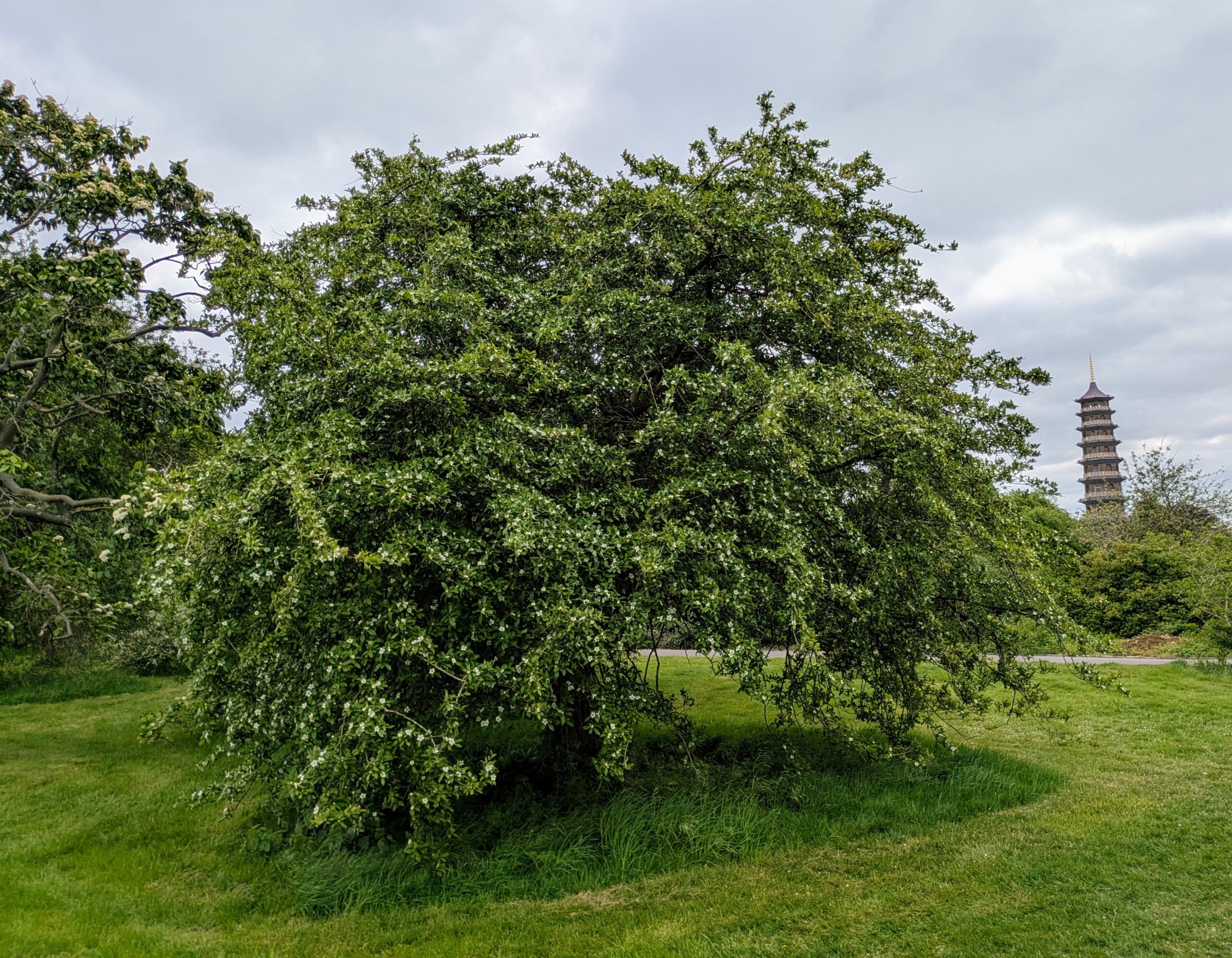
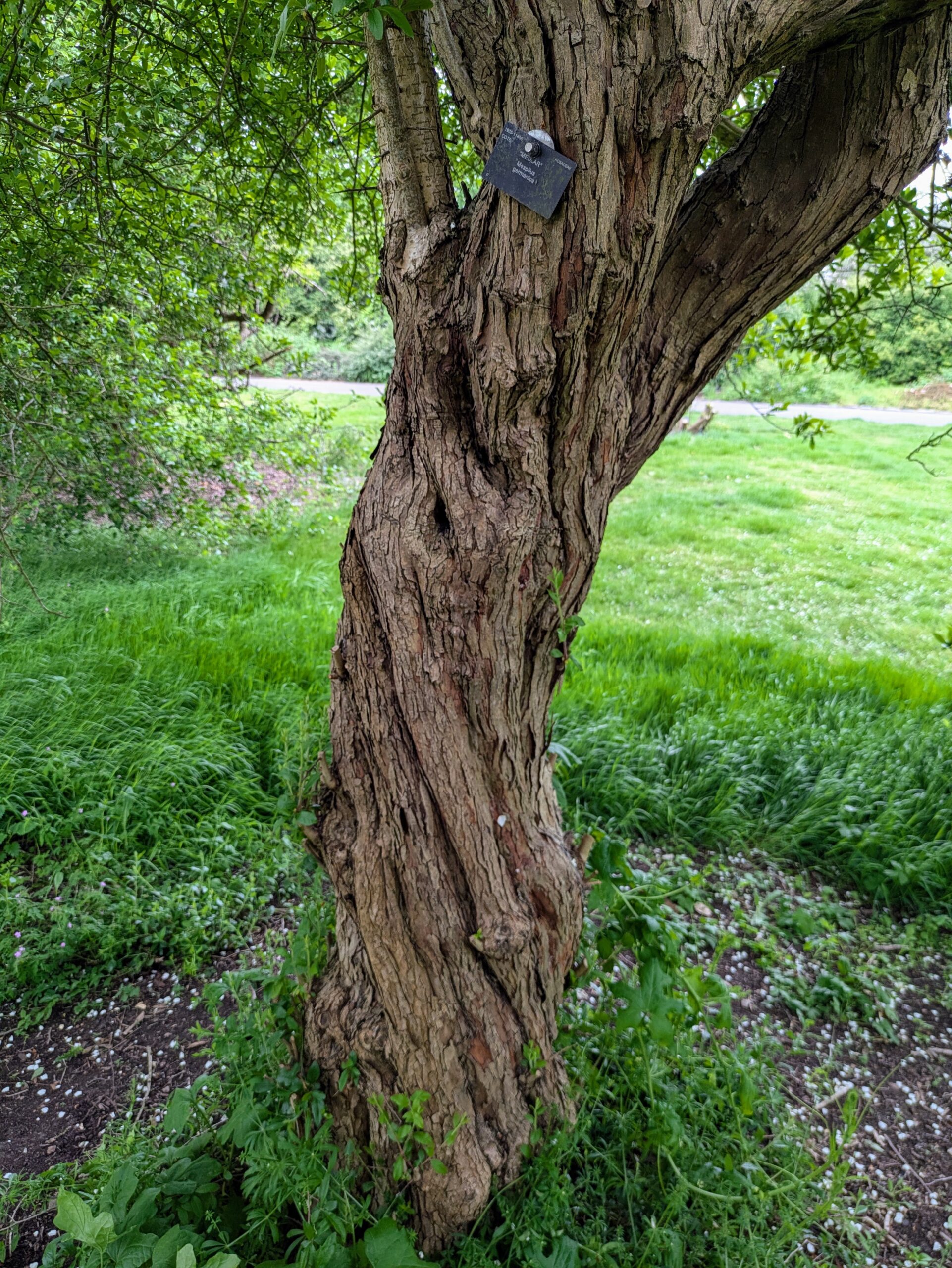
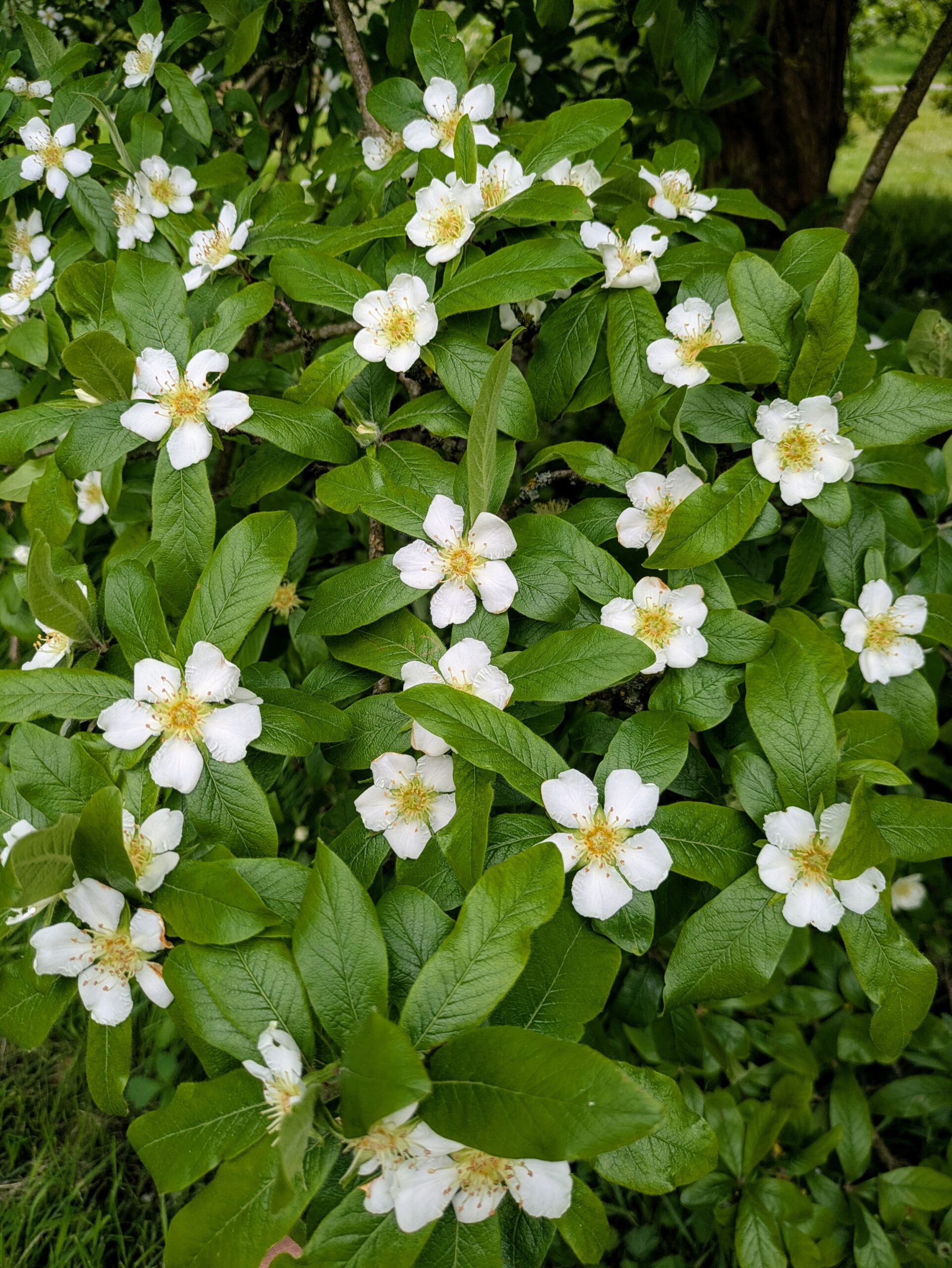
    A beautiful old medlar tree, Mespilus germanica, planted in 1935. The medlar is a close relative of the hawthorns in the genus Crataegus. It produces an unusual fruit in the fall with a large open calyx on one end. The fruits must be eaten when overripe or “bletted” and when perfectly ripe taste like spiced apple sauce. In my garden the best time to harvest them is between Thanksgiving and Christmas, when few other fruits are available. The large white flowers and long fuzzy leaves lend an aristocratic look to this uncommon fruiting tree.

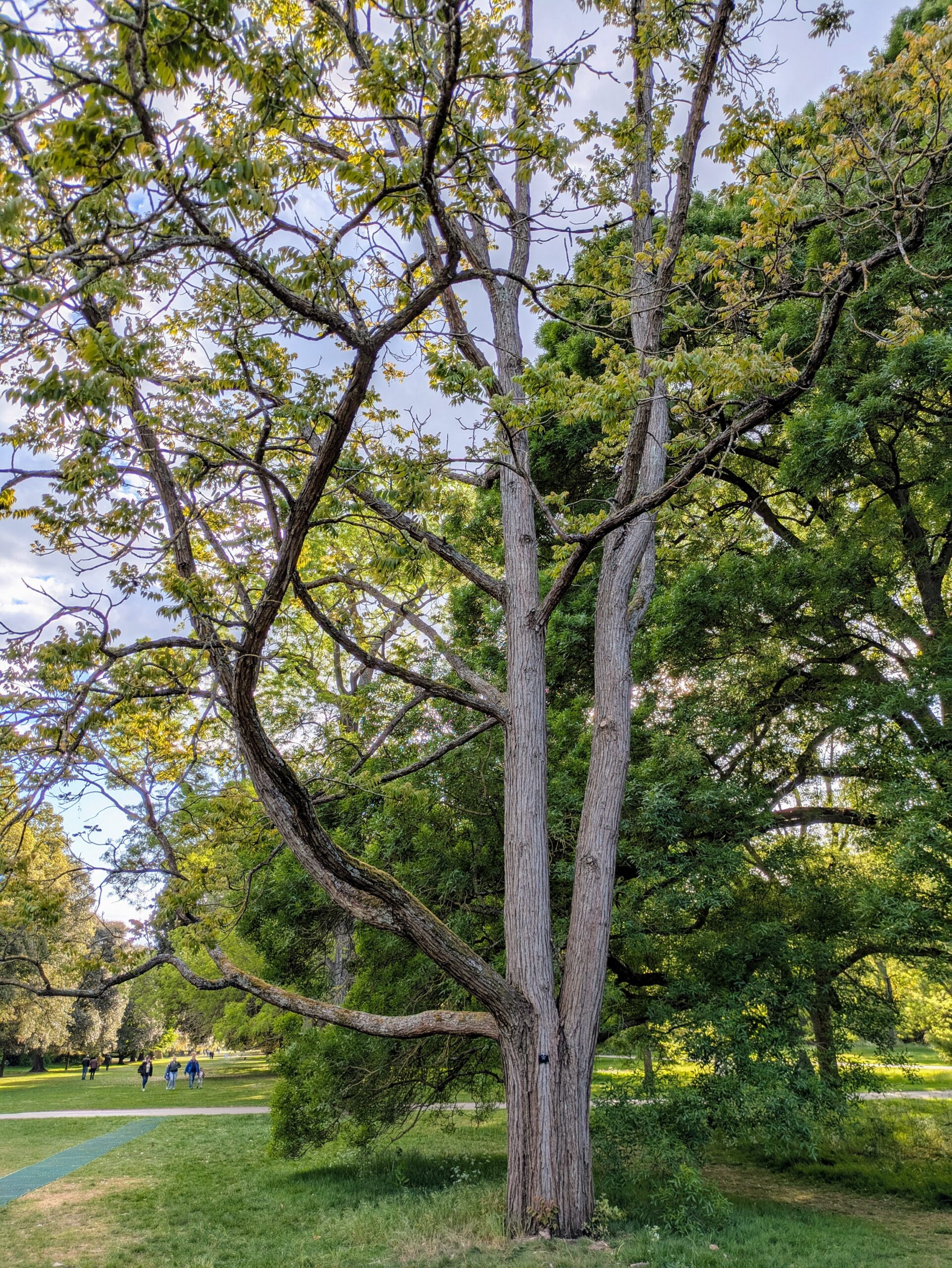
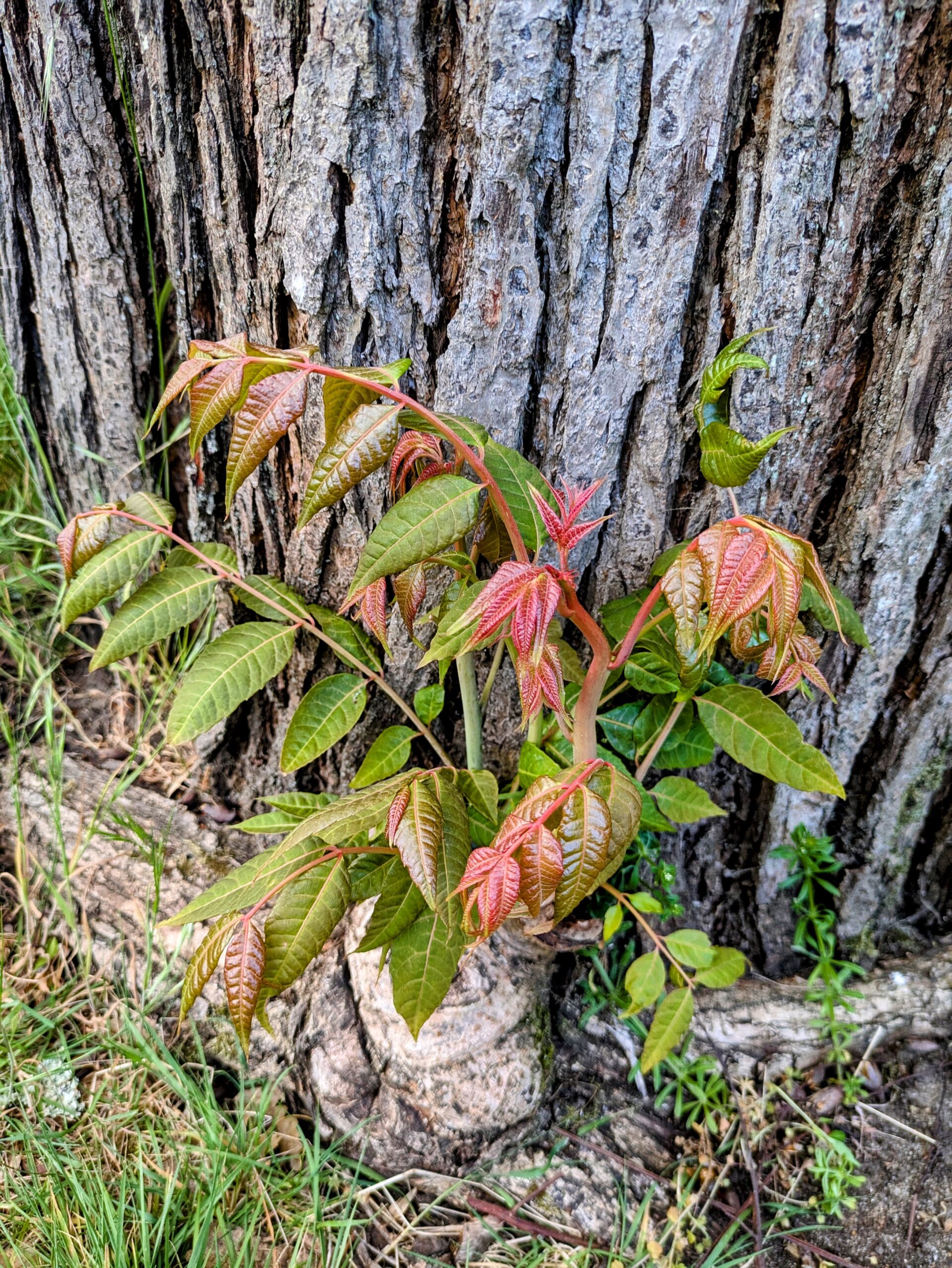
    A large Chinese toon tree, Toona sinensis, planted in 1959. This tree is revered in China for its edible young leaves, which taste of vegetable stock or beef and onions. These trees tend to sucker a lot in the Eastern United States, but this one had only a few small suckers around the base. It’s possible that the garden staff removes them judiciously. Note the pinkish hue of the young leaves at right.

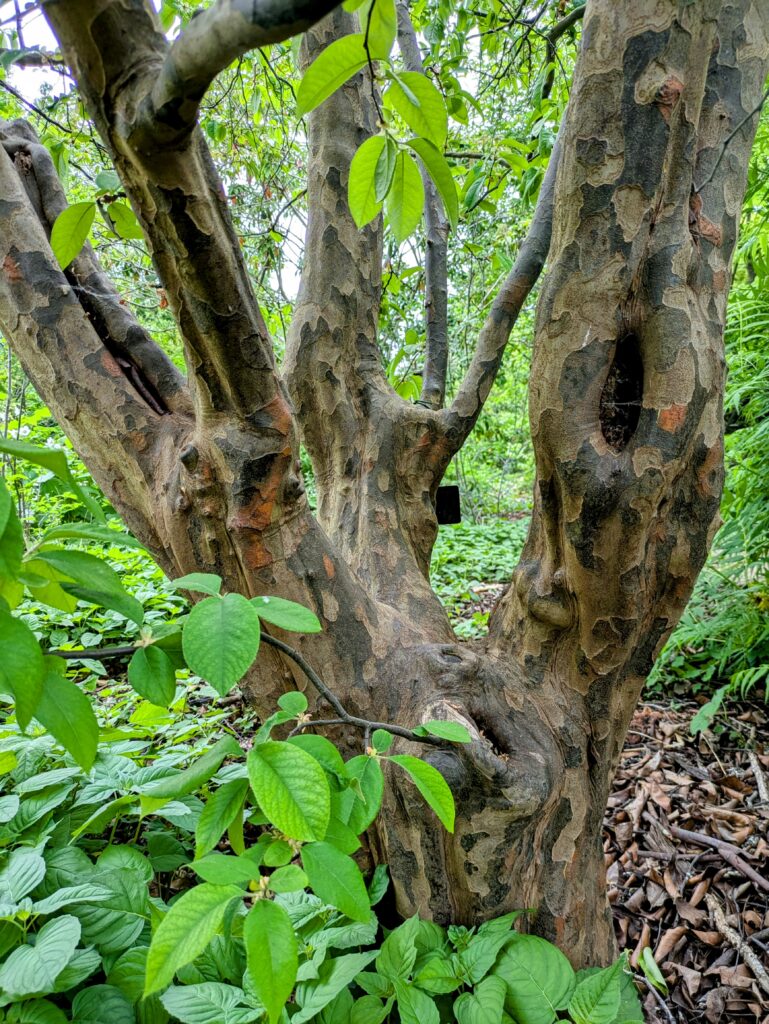
    The captivating exfoliating bark of a Chinese quince tree, Pseudocydonia sinensis. This is a relative of the true quince, Cydonia oblonga, that produces even larger fruits! Chinese quince fruits can be up to 7 inches long and 5 inches wide, and are exceptionally fragrant. They are a bit harder than the fruits of true quince, but can be used in all the same ways. The Chinese quince has attractive pink flowers in the spring, but its main claim to fame is the incredible multicolored peeling bark. This tree is hardy to zone 6b, but can suffer from fireblight in warmer and wetter climates.

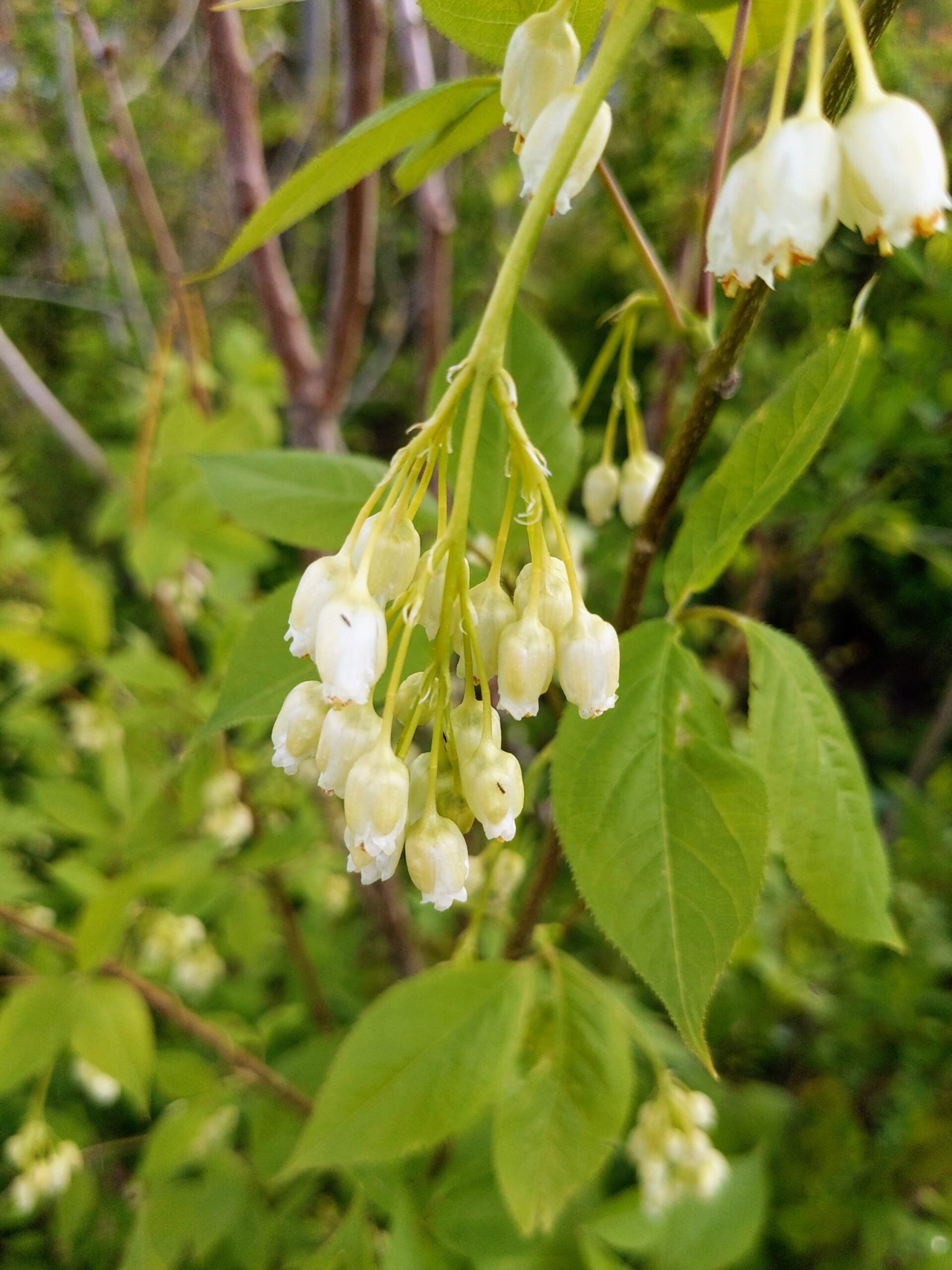
    The delicate white flowers of Bumald’s bladdernut, Staphylea bumalda, growing in a shaded area near the redwood grove. This 6 foot (2 m) shrub native to China, Korea, and Japan, has delicious flowerbuds and young leaves. It is the main subject of my bladdernut article. It’s called “tree cauliflower” in parts of China!

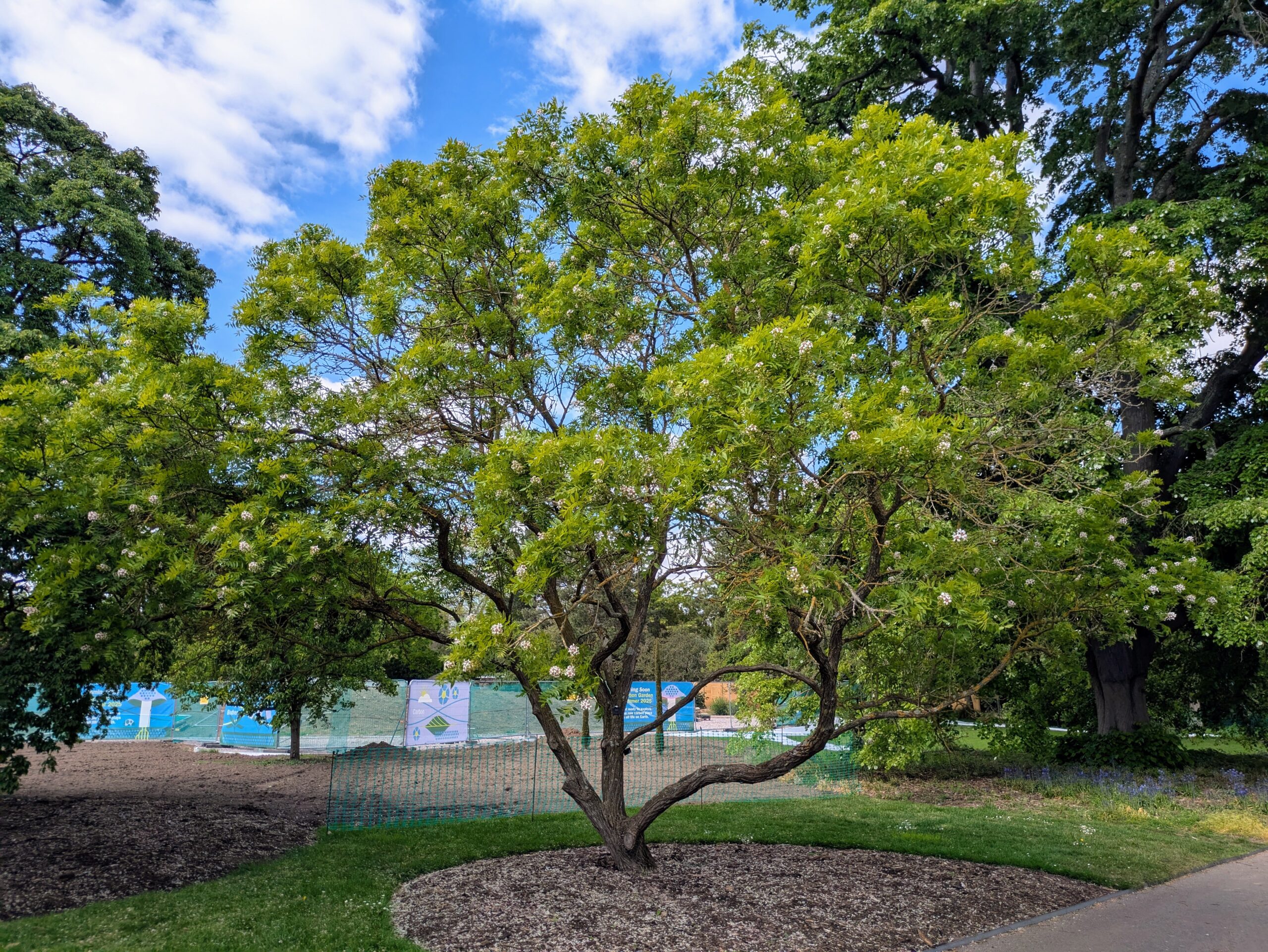
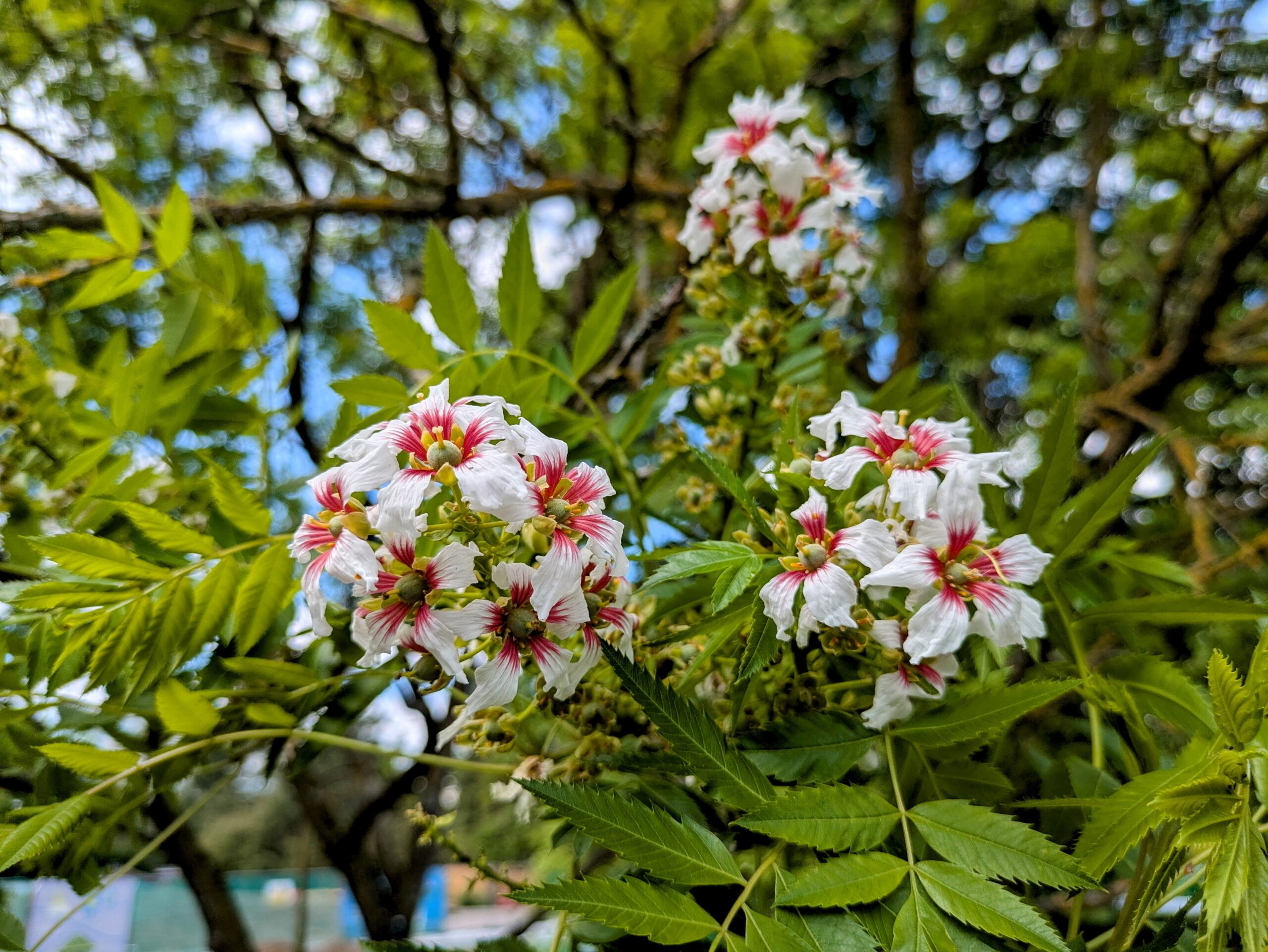
    Yellowhorn, Xanthoceras sorbifolium, is an unusual small nut tree from China with beautiful flowers and pinnate leaves. This is by far the largest yellowhorn tree I’ve ever seen, planted in 1977. The nuts, which form in a funky pod resembling an ackee fruit (to which it is related), are edible but bitter. Traditionally the nuts are pressed to produce a cooking oil. This tree is adaptable and easy to grow and its small size makes it easier to manage than larger nut trees. It could be a great way to produce cooking oil in small spaces or areas with soil too poor for other species to grow.

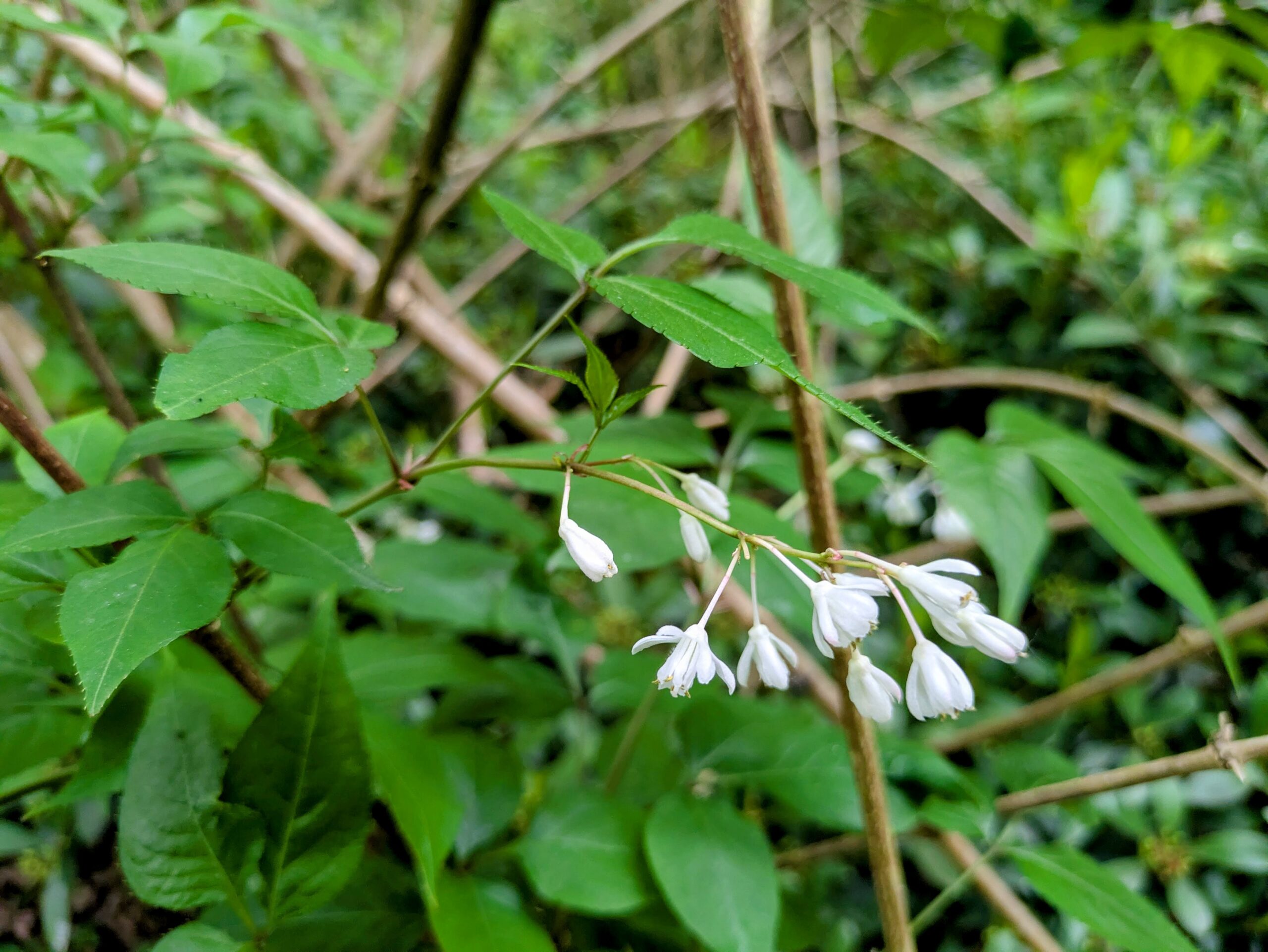
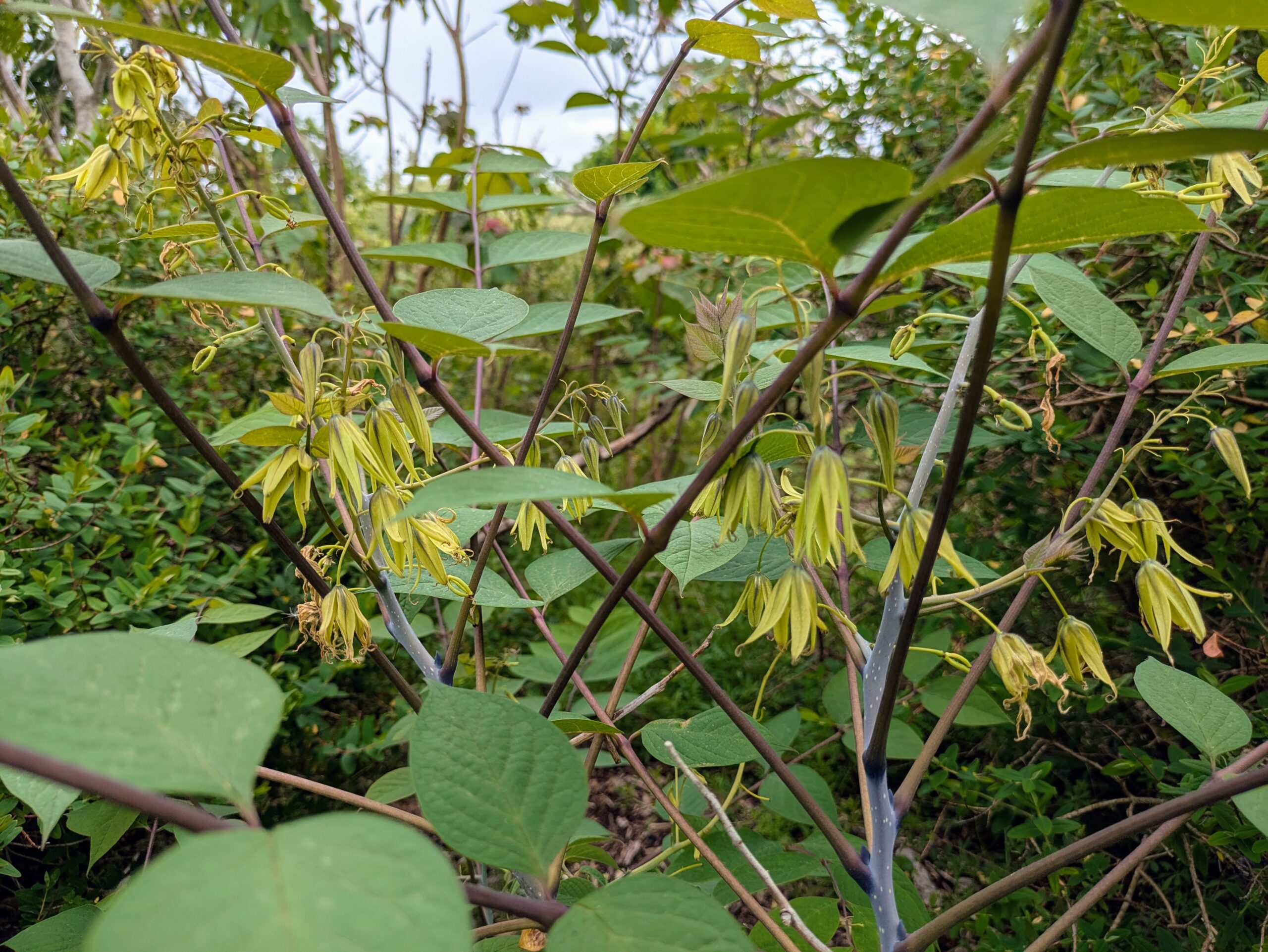
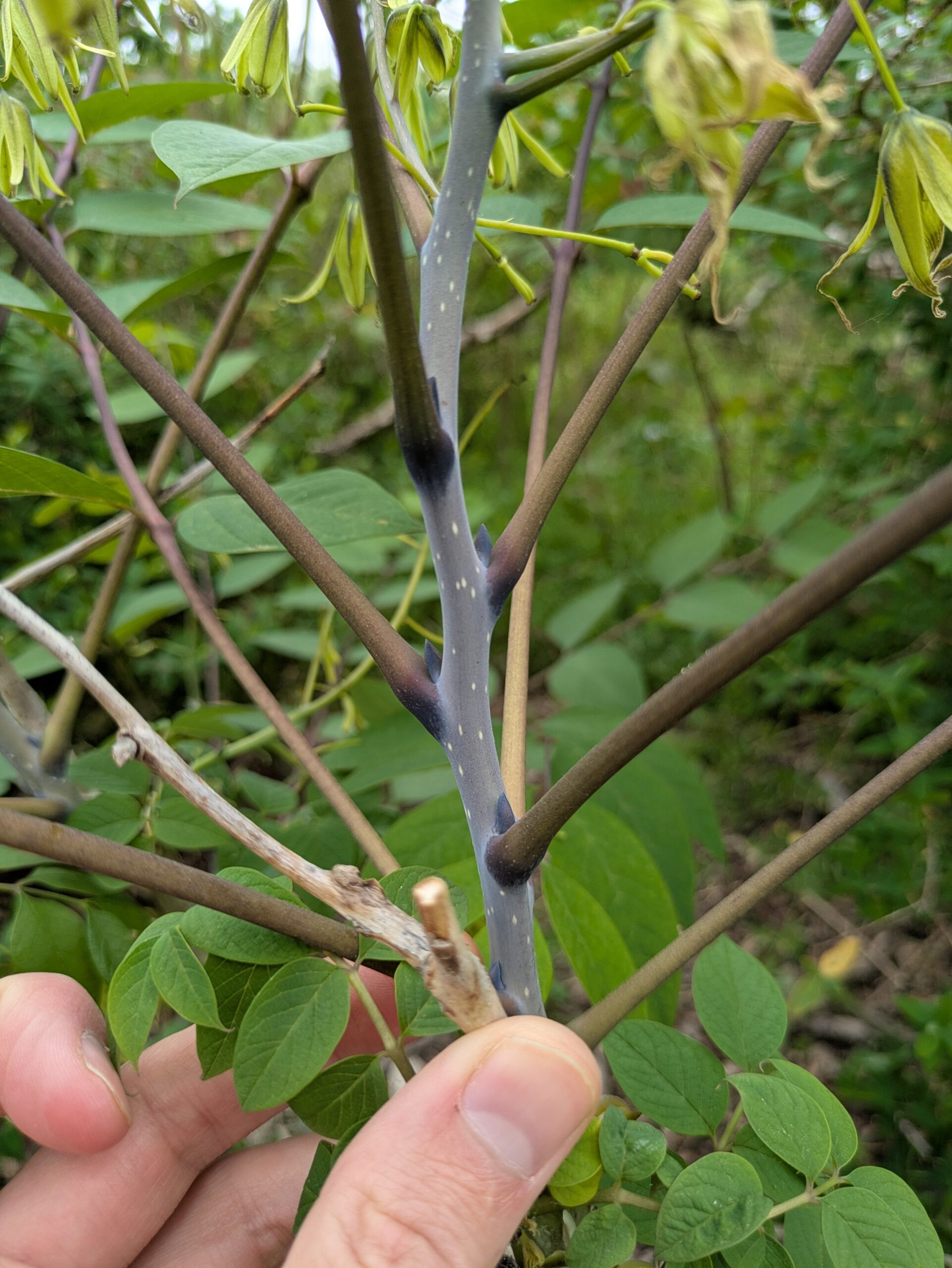
    The unusual flowers and blue-tinged stems of the blue bean tree, Decaisnea fargesii. This is a shrubby relative of Akebia from China, that is uncommon in cultivation. The tree is mainly known for the bright blue pods it produces in the fall, which have earned it the moniker “dead man’s fingers”. In my climate the pods ripen on Halloween every year – how fitting. The blue pods are edible and contain a sweet-flavored pulp and countless hard inedible seeds. Although there is little pulp to be had in each pod, this tree has a long history of edible use in rural China.

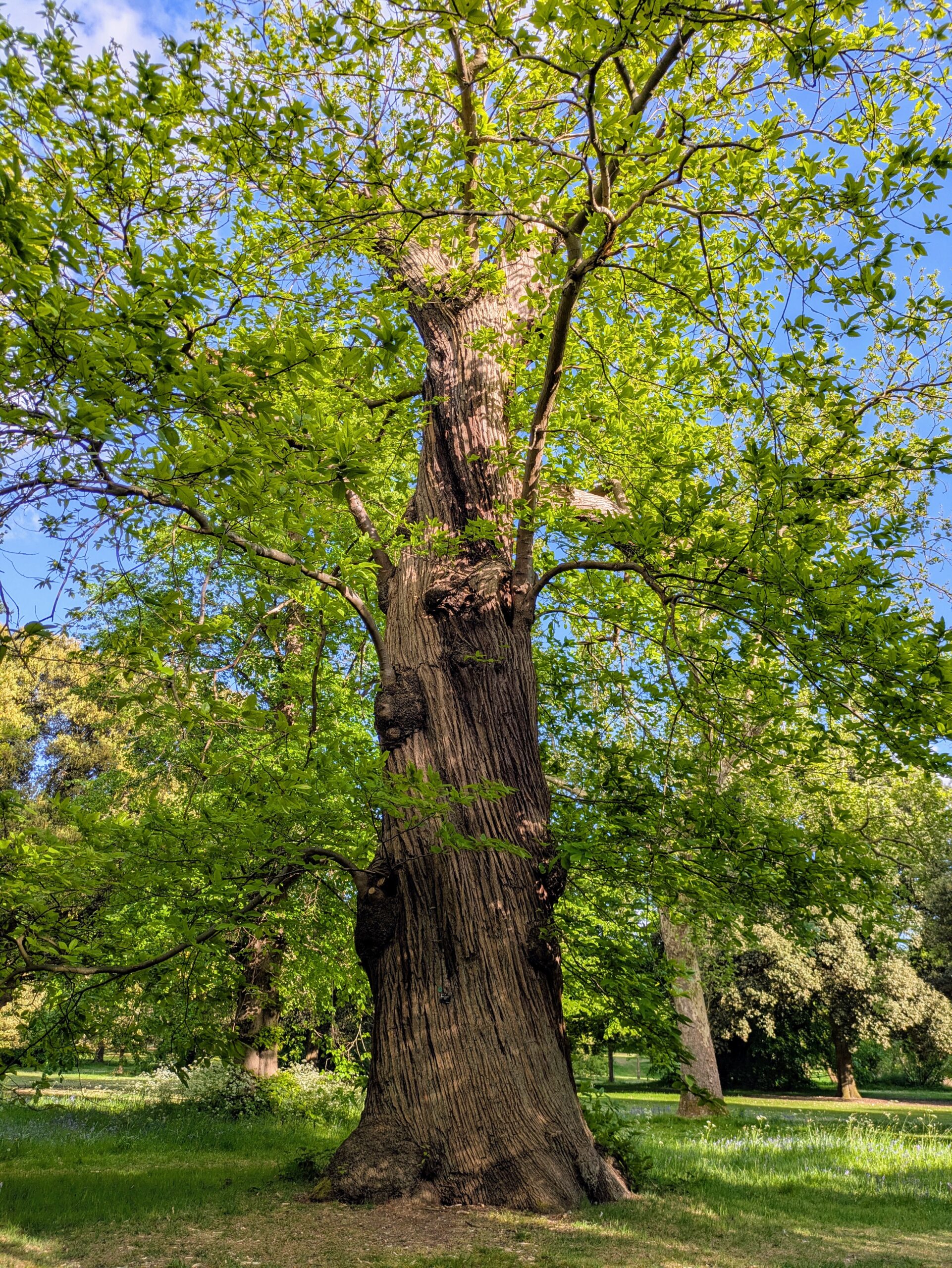
    The entire property was littered with massive specimens of Castanea sativa, the European sweet chestnut – truly a sight to behold! As an American it really drives home how incredible the American chestnuts (Castanea dentata) of the East Coast must have been before they were wiped out by the chestnut blight. Castanea sativa prefers a milder climate and does best in places like Italy and California. Hybrid chestnuts have been developed which perform much better in colder areas.

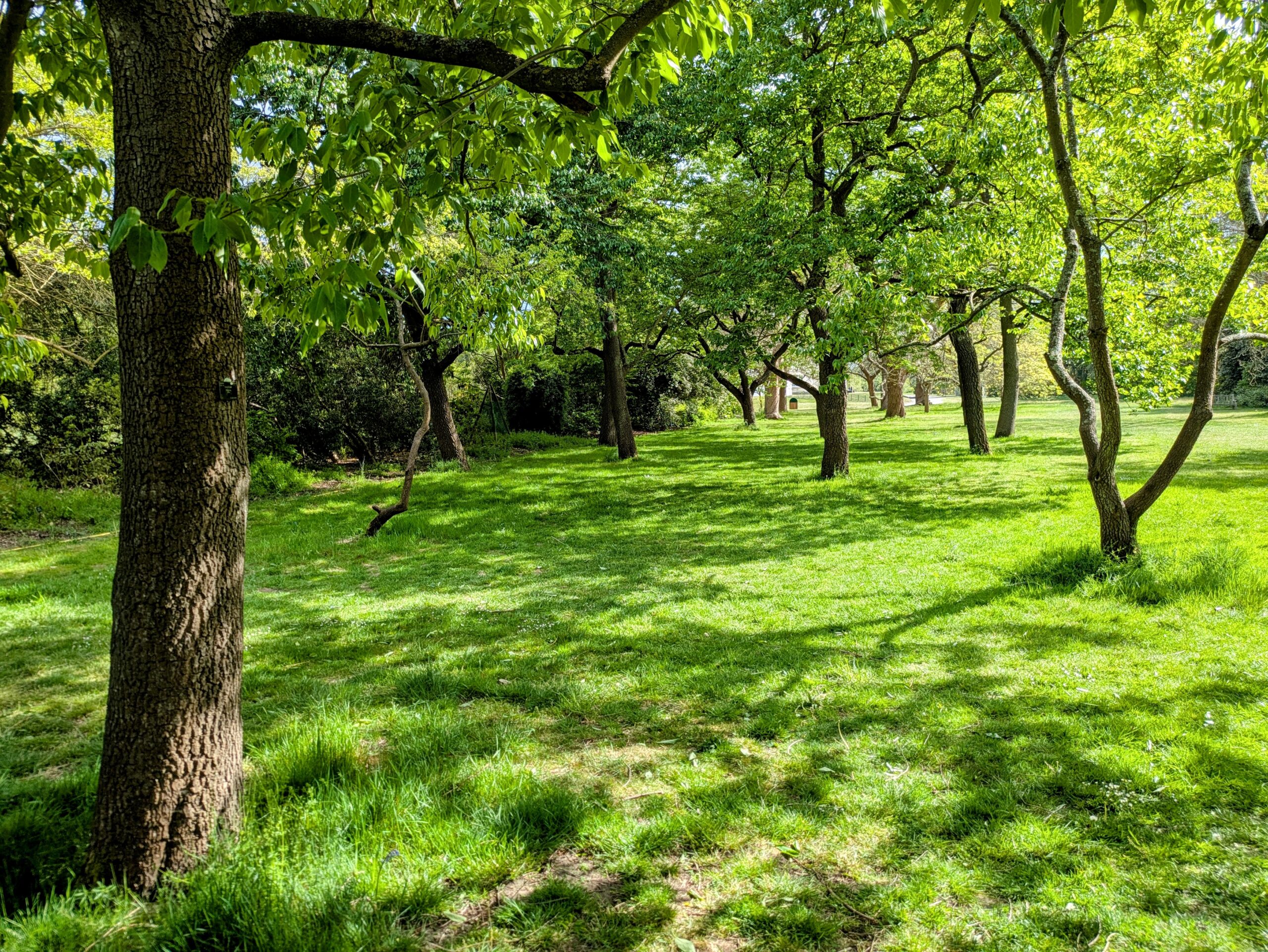
    The persimmon grove

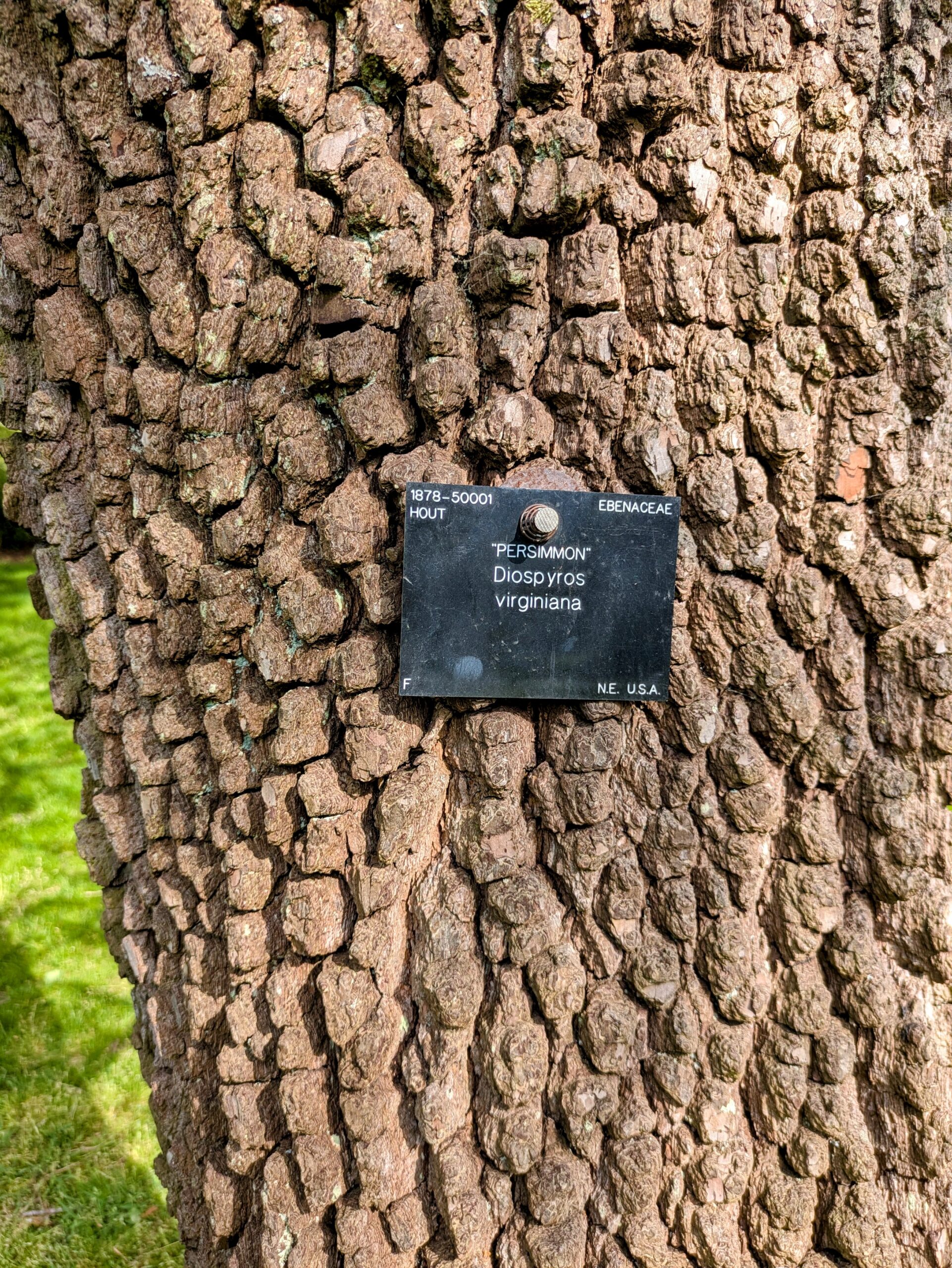
    This tree, planted in 1878, is the largest American persimmon, Diospyros virginiana, in the UK. Kew has a nice grove of persimmon trees, which mainly consists of Diospyros lotus, the date-plum, but with a handful of American and Asian persimmons (Diospyros kaki) as well. All of the persimmons produce edible fruits, though they vary in size, texture, and flavor. Persimmons are one of the easiest fruits to grow in any area where there is enough summer heat for them to ripen.

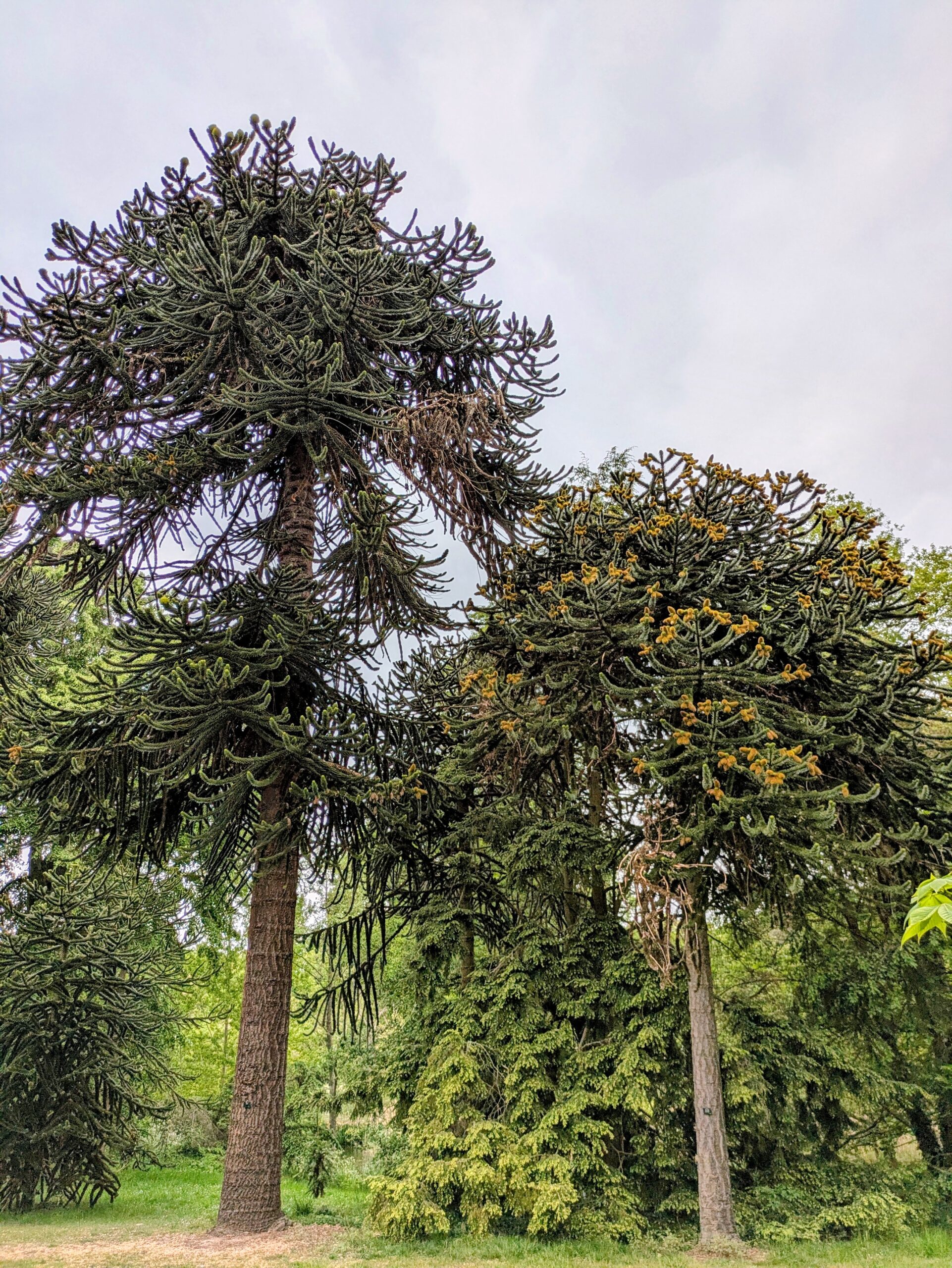
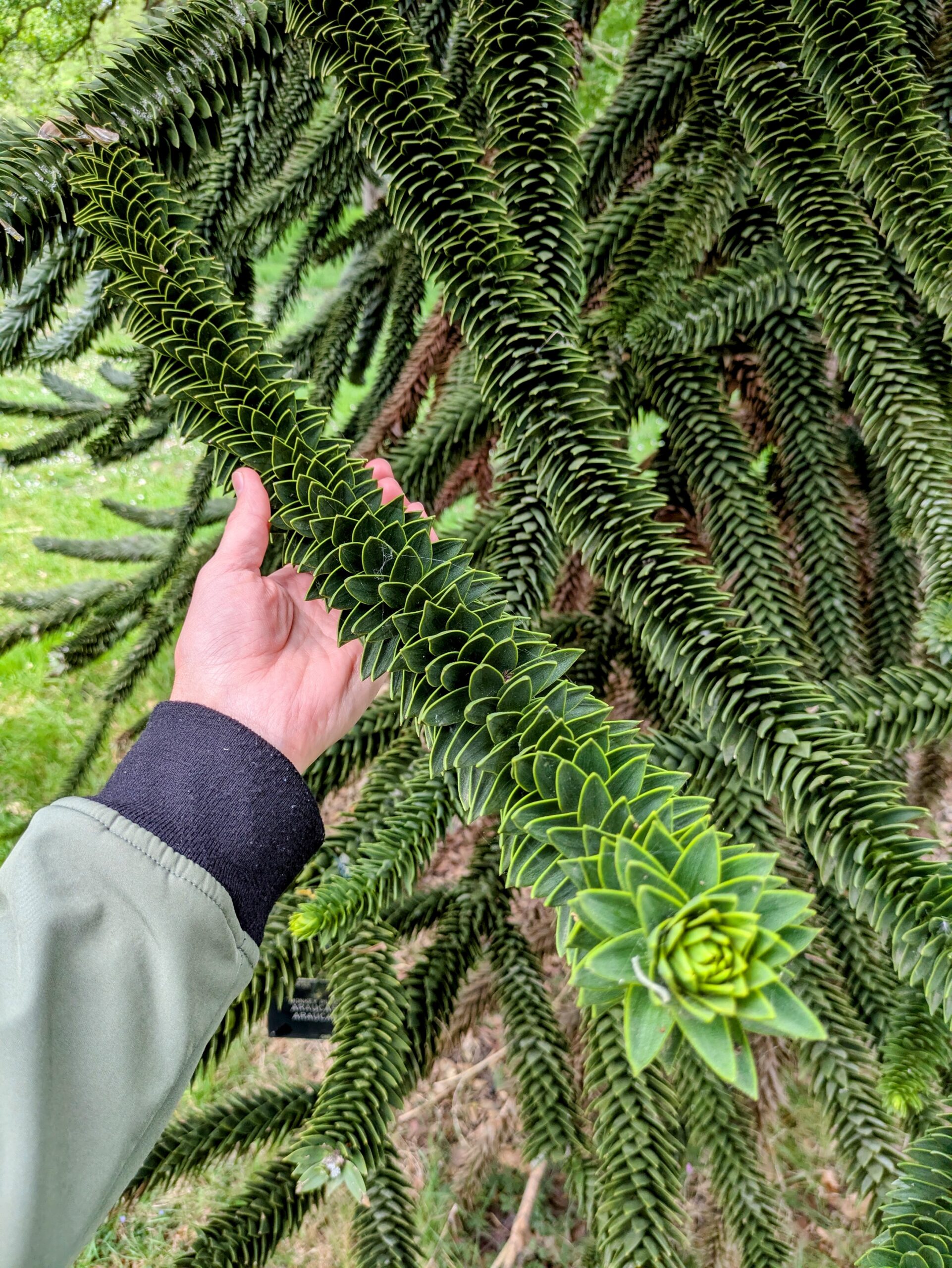
    The monkey puzzle tree, Araucaria aracuana, is an endangered conifer from Chile, where it grows in dramatic fashion on high mountain slopes. One of the most striking trees to behold, the individual leaves are stiff and sharp, apparently an ancient adaptation to prevent dinosaurs from eating them. While this tree is hardy down to USDA zone 6, it prefers areas with milder winters and cooler summers such as the UK and Pacific Northwest of the United States. The trees are dioecious, and female trees produce large seedpods containing starchy edible nuts. In the photo on the left you can see a female tree to the left and a male tree to the right. The female tree has large rounded cones at the top of the tree, and the male tree has smaller but showier cones dangling from the tips of each branch.

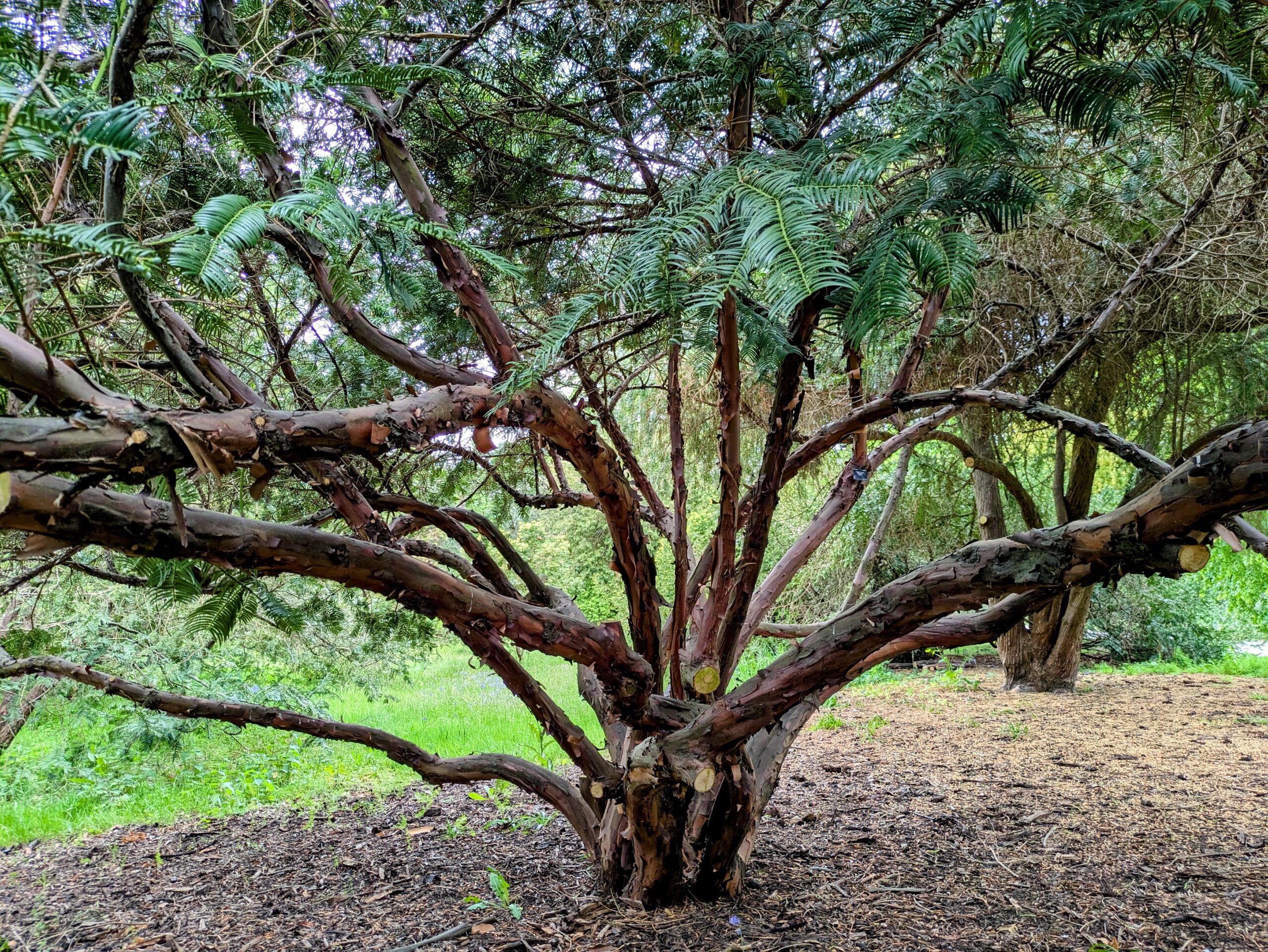
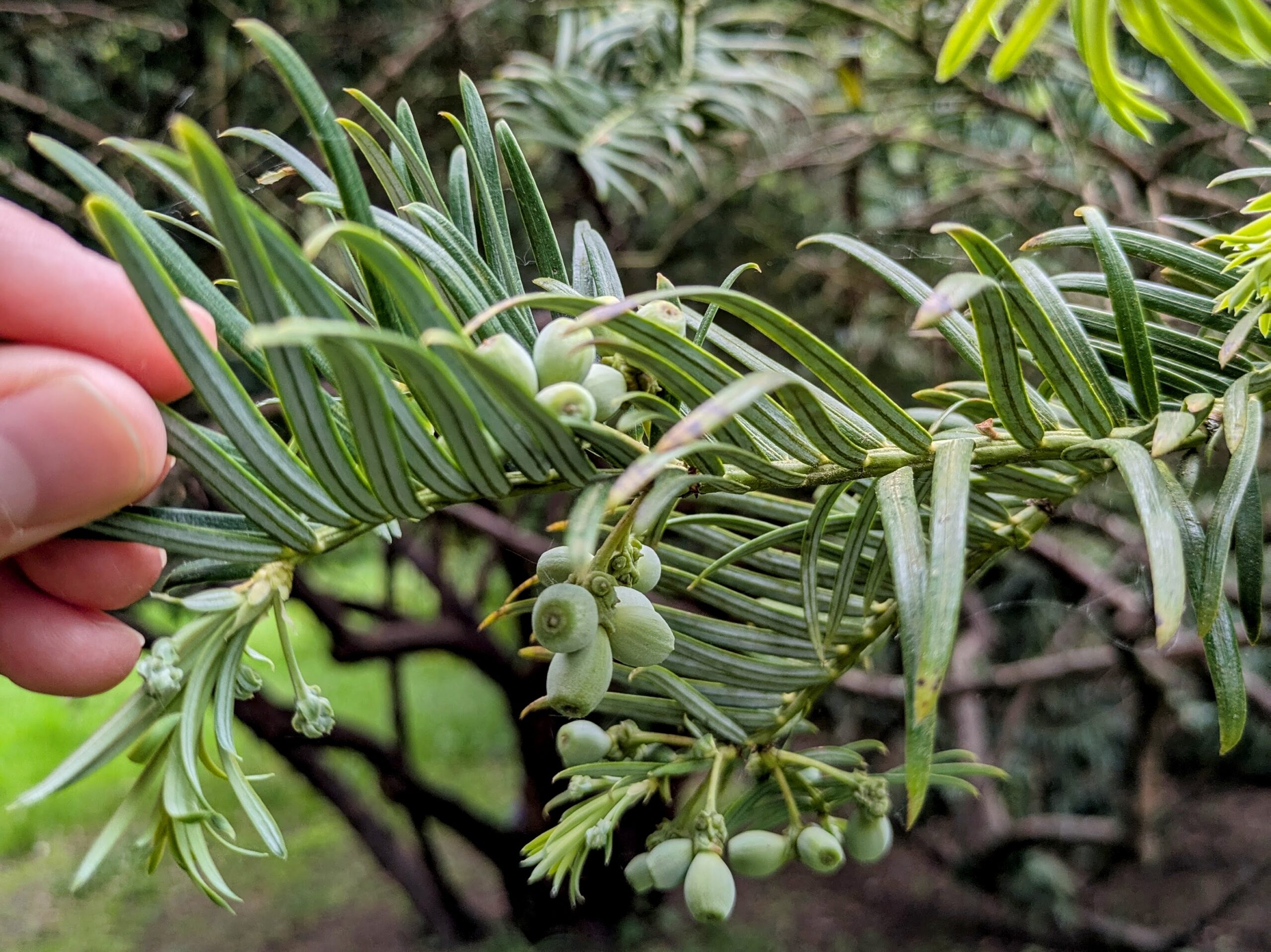
    Kew Gardens has an impressive collection of plum-yews, a group of East Asian conifers in the genus Cephalotaxus. While they are related to the true yews in the genus Taxus, plum-yews produce a much larger fruit and are significantly less toxic overall, attracting the attention of some novel fruit growers. The fruits (actually a fleshy seed aril, but I digress) have a unique flavor which I would liken to lychee with a hint of persimmon and pine sap. The photos above show the attractive reddish bark and young fruits forming on a specimen of Cephalotaxus harringtonia, the Japanese plum-yew. The big obstacle to growing plum-yews for their fruits is that they are dioecious and typically take at least 5 years to begin producing cones. This means you have to grow a handful of seedlings out for 5 years or more in order to get fruits. Still, there is some merit to growing plum-yews, as they can fruit in nearly full shade and make a nice evergreen hedge once established.

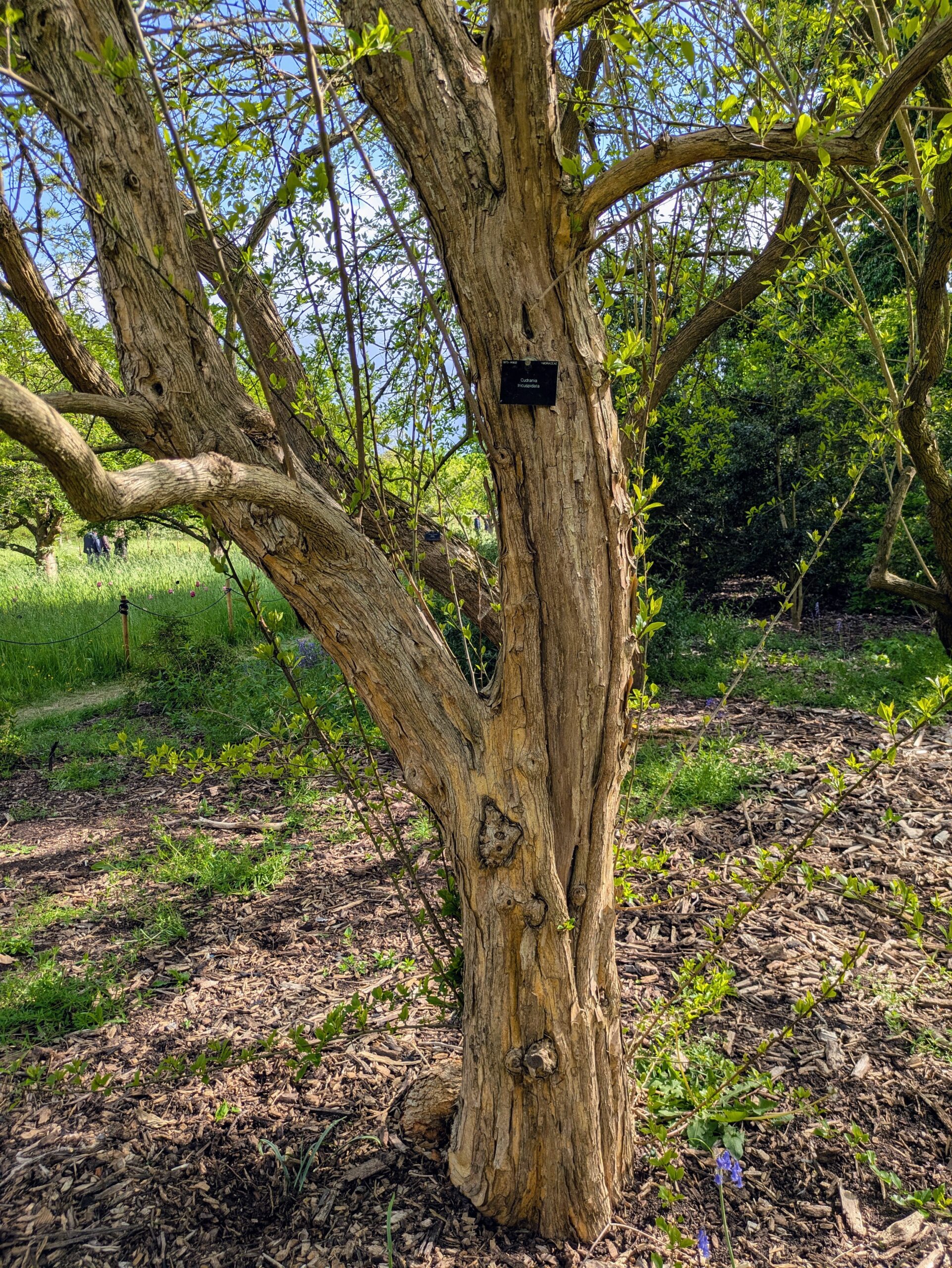
    A mature che tree, Cudrania/Maclura tricuspidata, planted in 1973. This is an uncommon fruit tree from East Asia which produces red fruits in fall that look like little brains. The fruits are juicy and have a watermelon-like flavor. Trees are dioecious, but female trees will produce seedless fruit if no male tree is present. The fruits have just enough time to ripen before the first frost in my zone 6b garden – they require summer heat. This species is typically grafted on osage orange (Maclura pomifera) rootstock to prevent suckering.

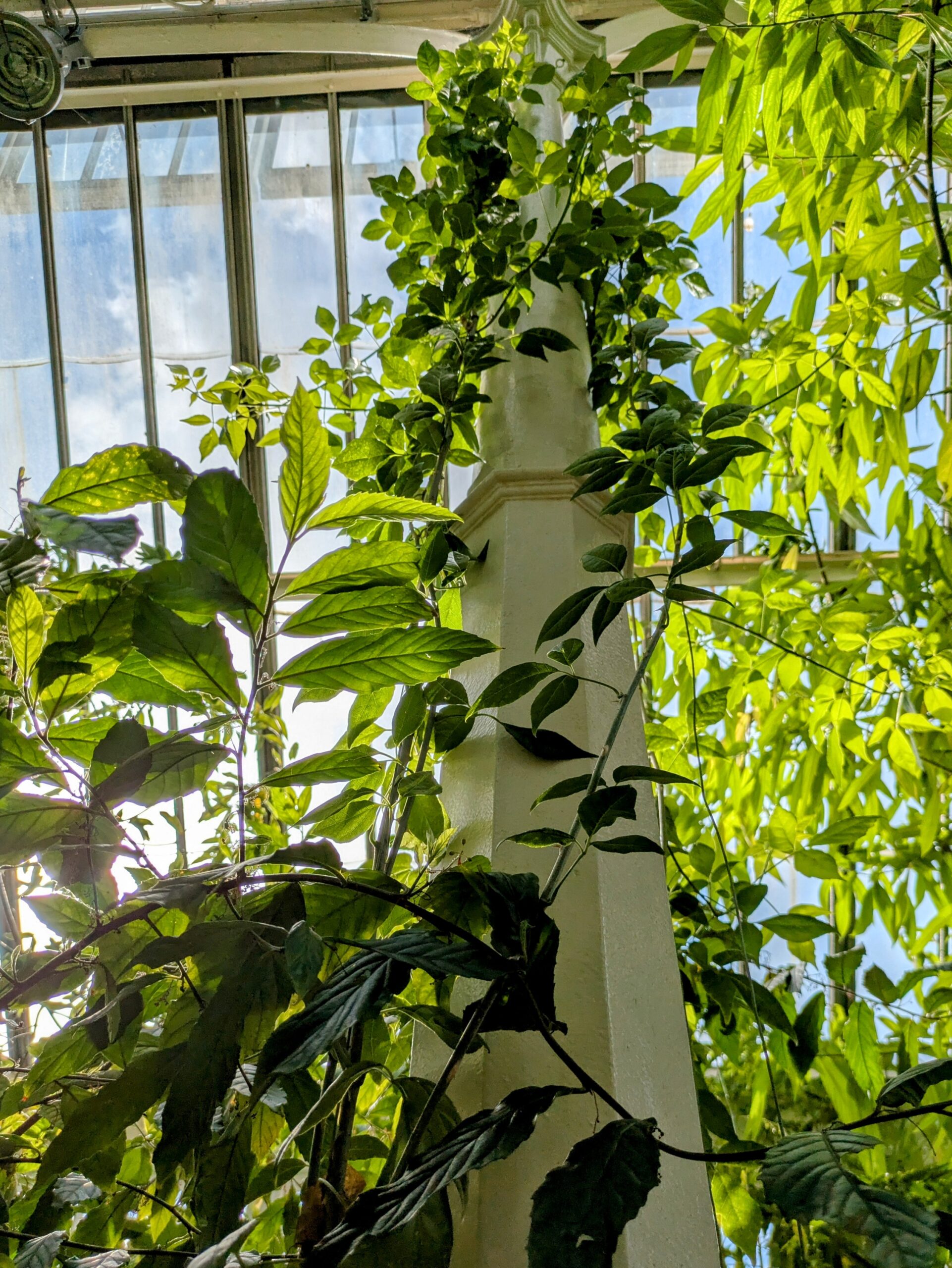
    A nice specimen of Eleutherococcus trifoliatus, a climbing eleuthero species from Southeast Asia, where the leaves and shoots are eaten as a vegetable. I tasted a small leaf and was surprised by its good flavor – parsley-like and free of bitterness. This plant was growing in the temperate house, which contains temperate plants that prefer warmer conditions. I’m unsure how cold-hardy this species actually is, though most Eleutherococcus species are very hardy. This species is very rare in cultivation but has become invasive in parts of Florida.

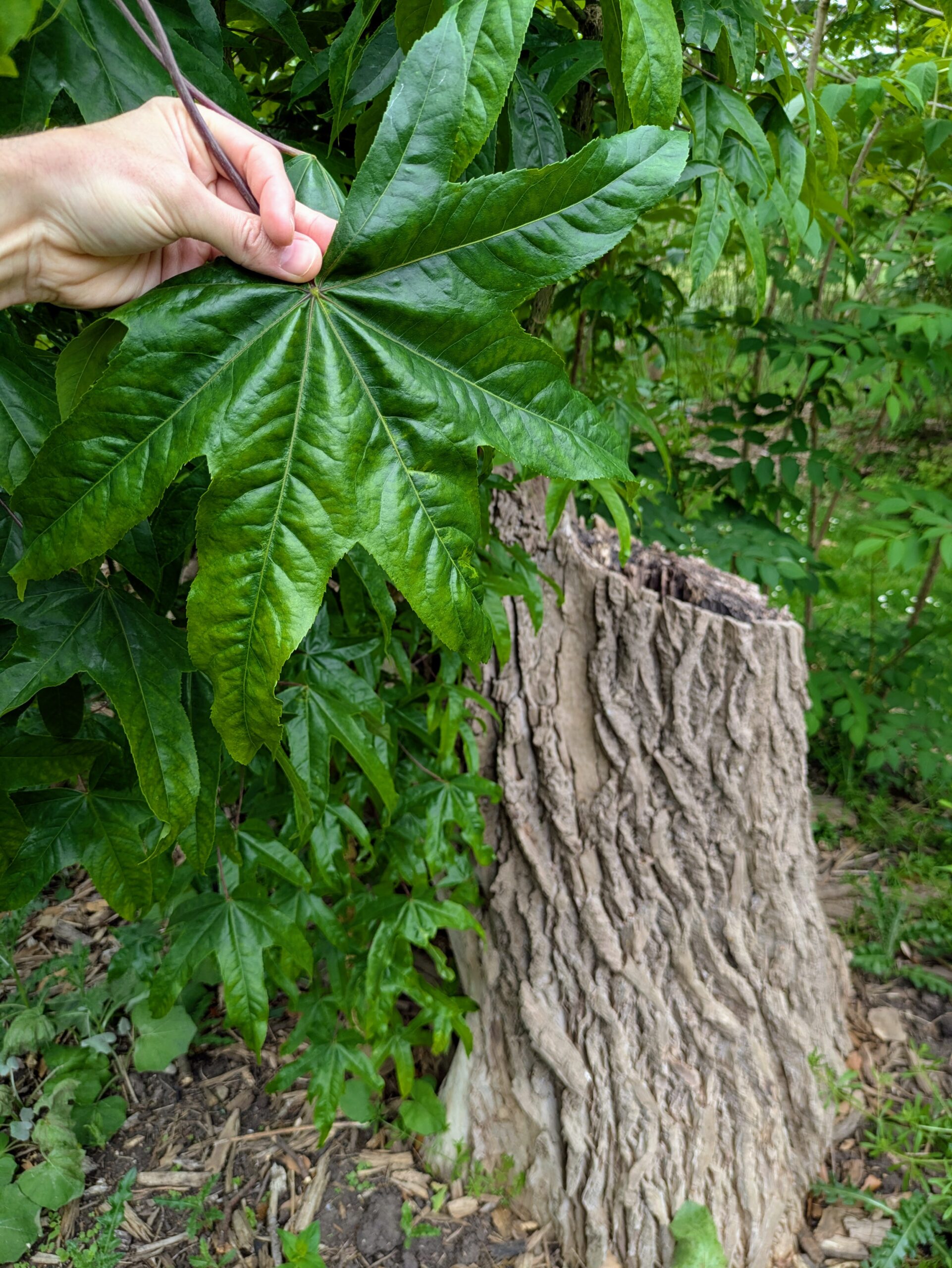
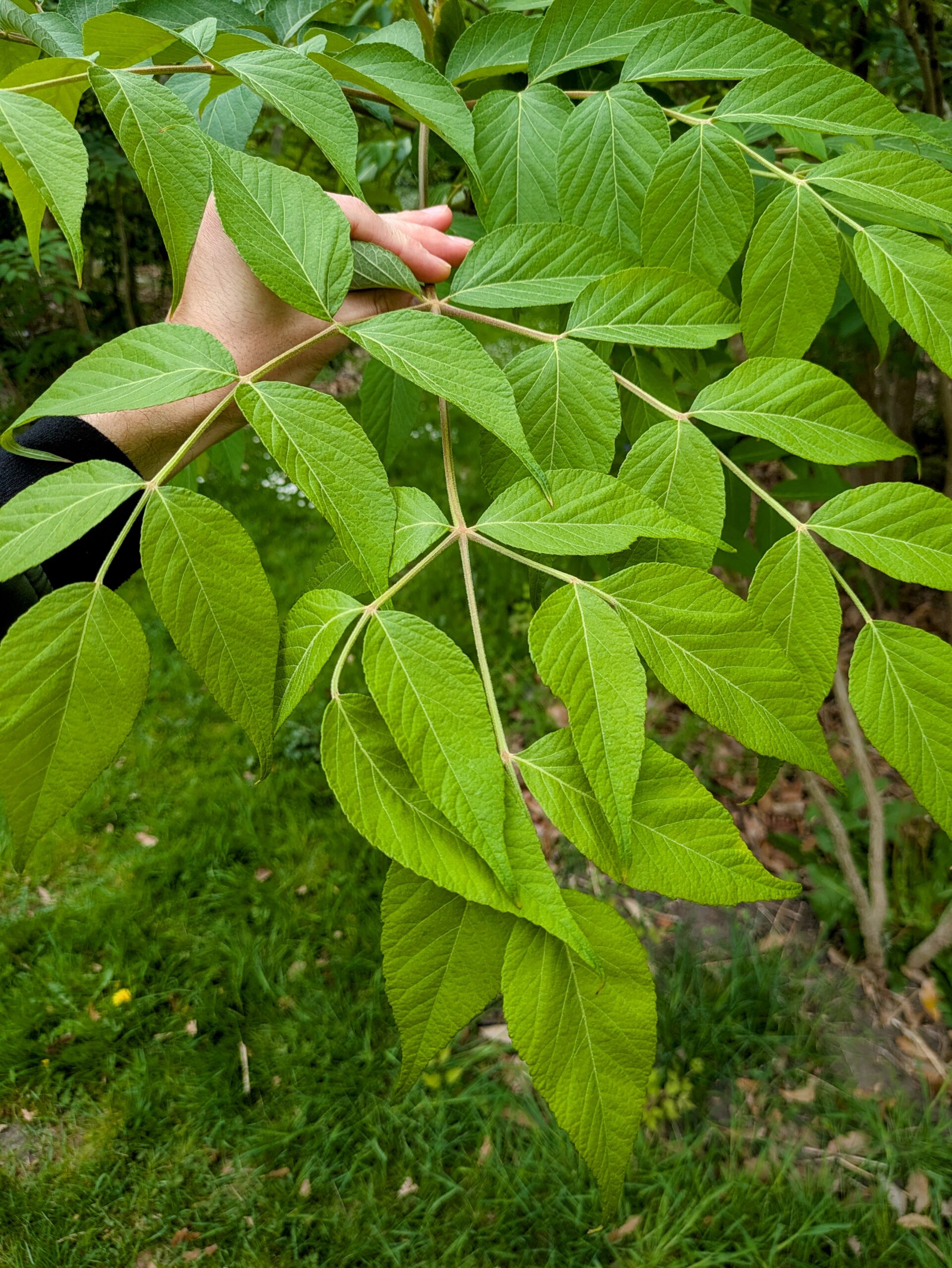
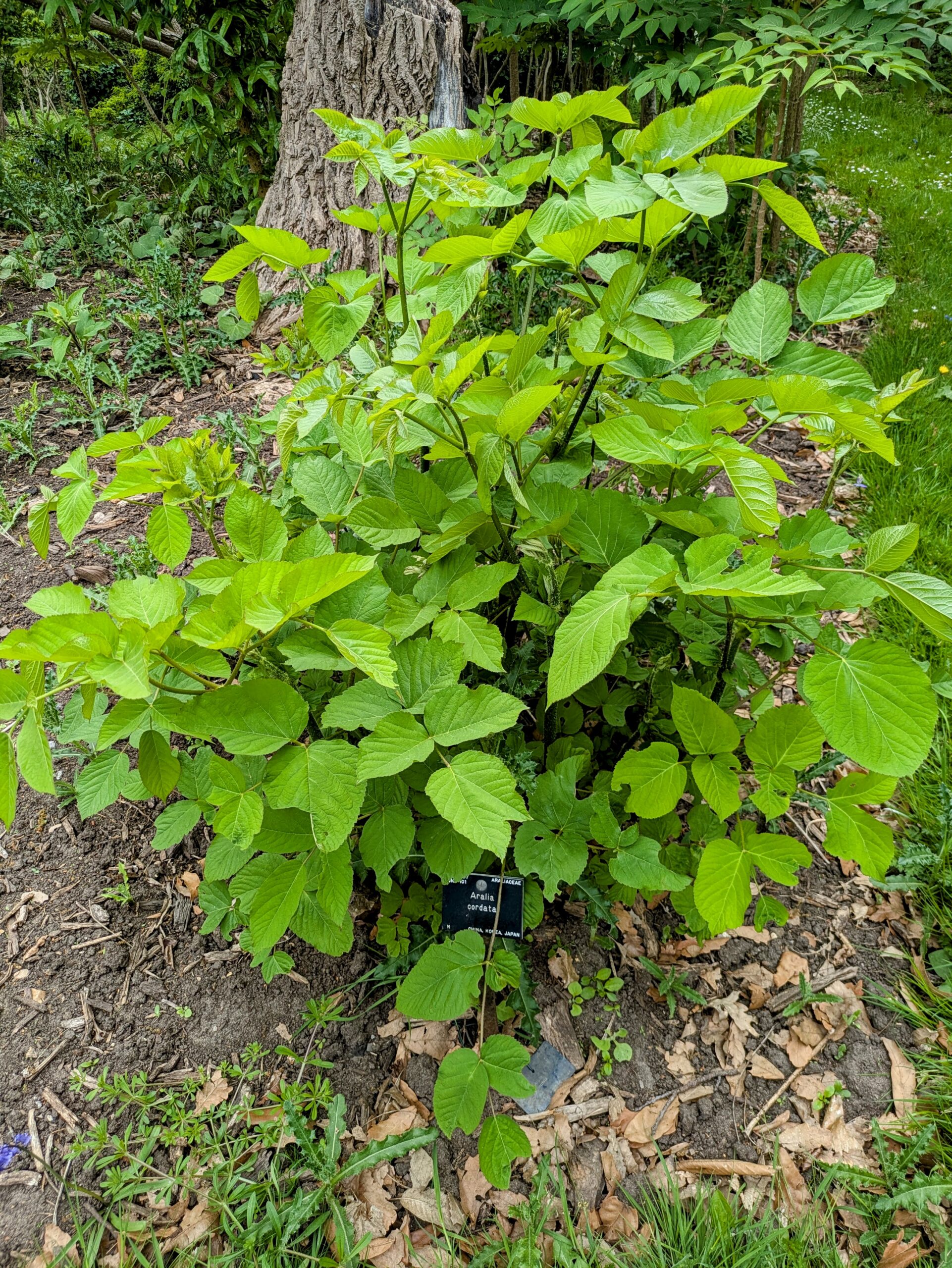
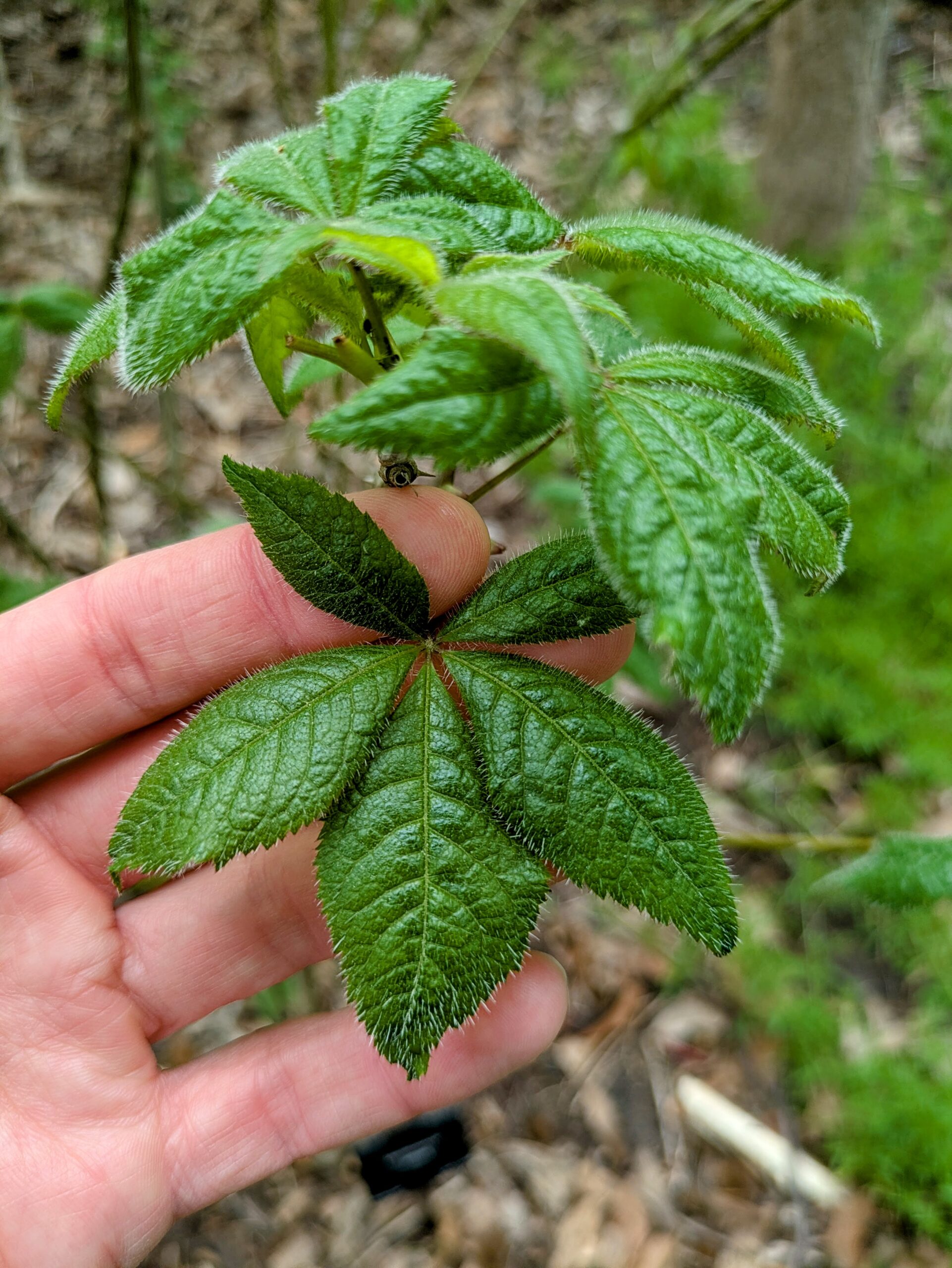
    The Araliaceae collection was in poor shape overall but did offer a look at some uncommon species in one of my favorite plant families. All of the species here have edible young leaves and shoots, eaten throughout East Asia. At top left is Kalopanax septemlobus, the castor aralia – a large tree with vicious thorns and unique palmate leaves. This specimen had died to the ground (note the giant stump), but was resprouting vigorously. At top right is an unlabeled Aralia species – likely Aralia elata or one of its close relatives – a suckering thorny shrub or small tree with attractive bipinnate foliage. While these plants are generally incredibly thorny, they can become thornless with age as seen here – an adaptation to prevent deer browsing of young plants. At bottom left is udo, Aralia cordata, an excellent perennial vegetable widely utilized throughout East Asia. Despite being an herbaceous perennial, it can become so large that you would think it was a shrub! And finally at bottom right is Eleutherococcus simonii, a rare shrubby species from China with unusual fuzzy leaves. I recently learned that a purple-leaved variety of this species is grown for edible and medicinal use in Yunnan province.

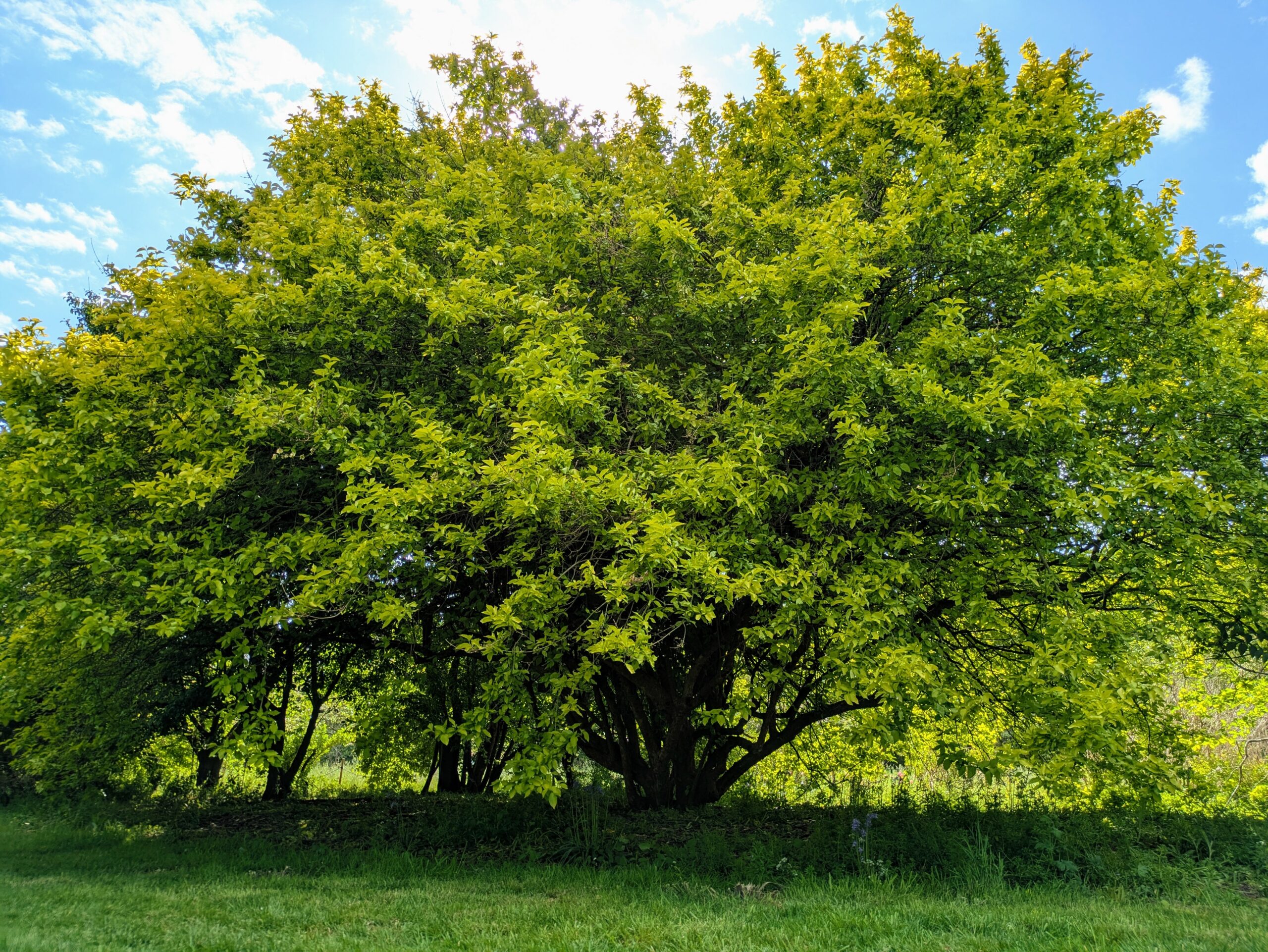
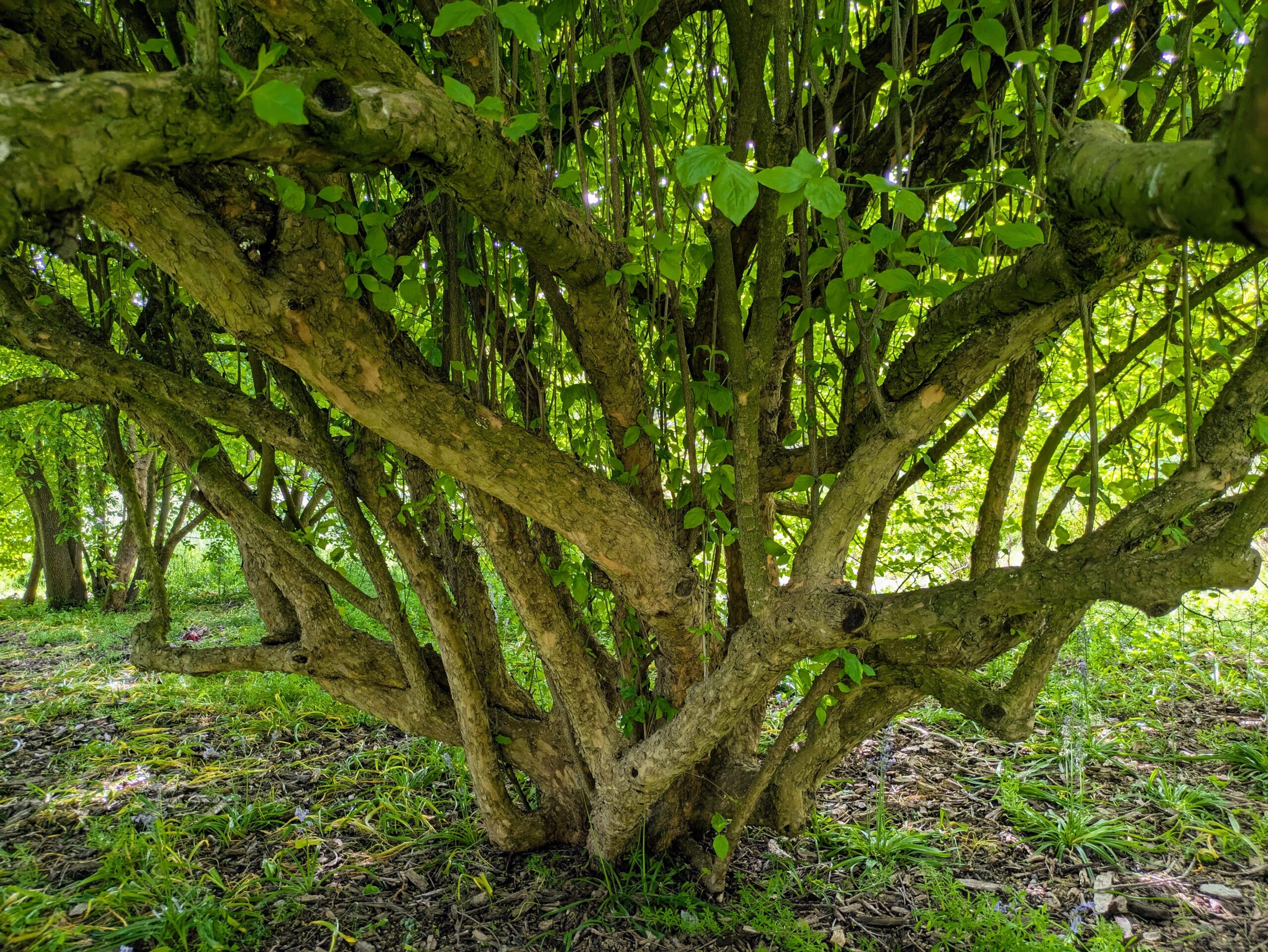
    An old specimen of Cornus mas ‘Aurea’, a variety of cornelian cherry with bright yellow new growth. It was even more striking to see in person! This tree must have been propagated from a cutting, as a grafted tree would not be able to have such a multi-stemmed form. Cornelian cherries are one of the easiest fruiting trees to grow, producing large amounts of small red fruits with a sweet-tart flavor in late summer. I recommend growing improved fruiting varieties such as ‘Elegant’ and ‘Yellow’ – just be sure to plant more than one for cross-pollination.

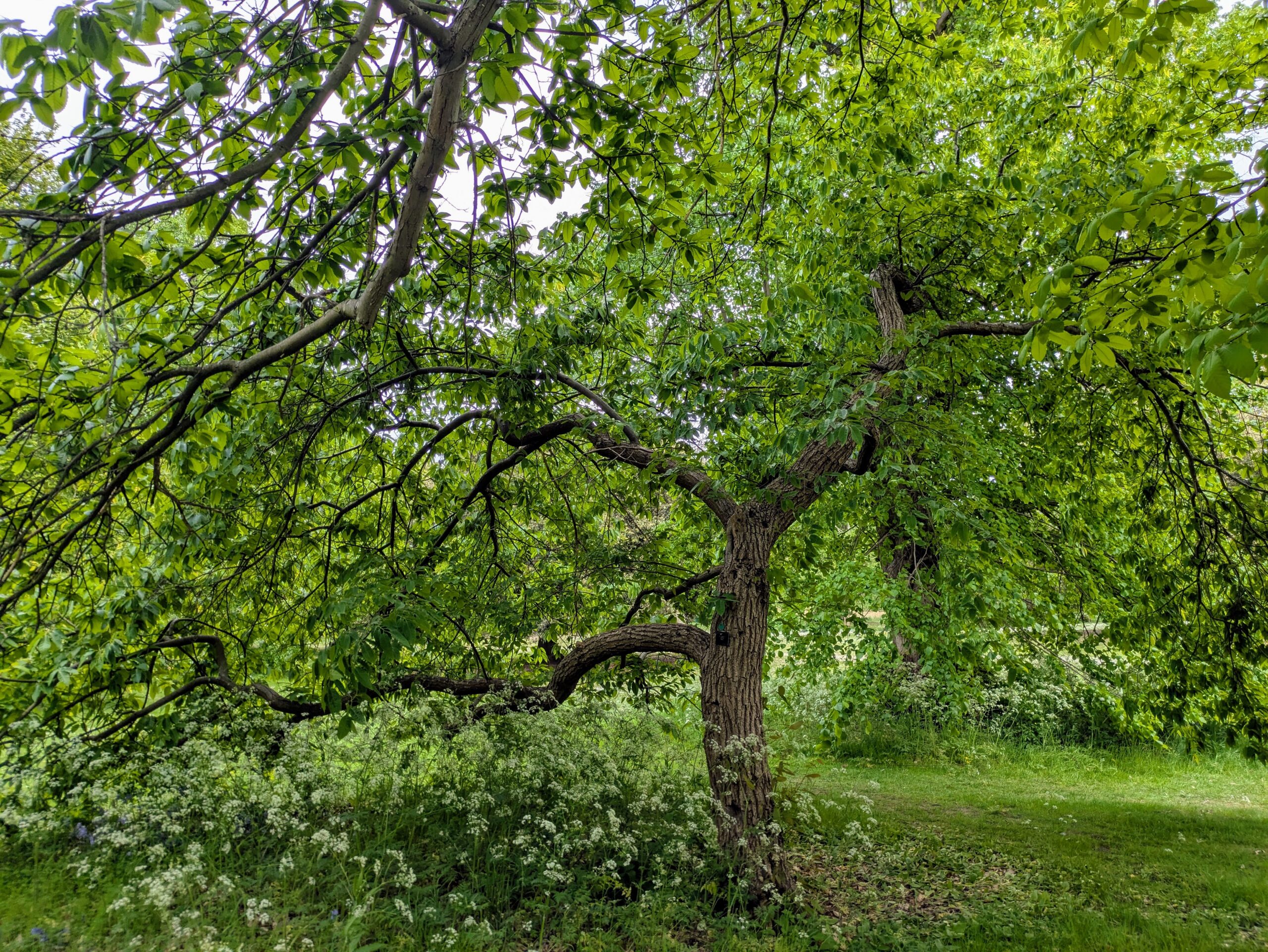
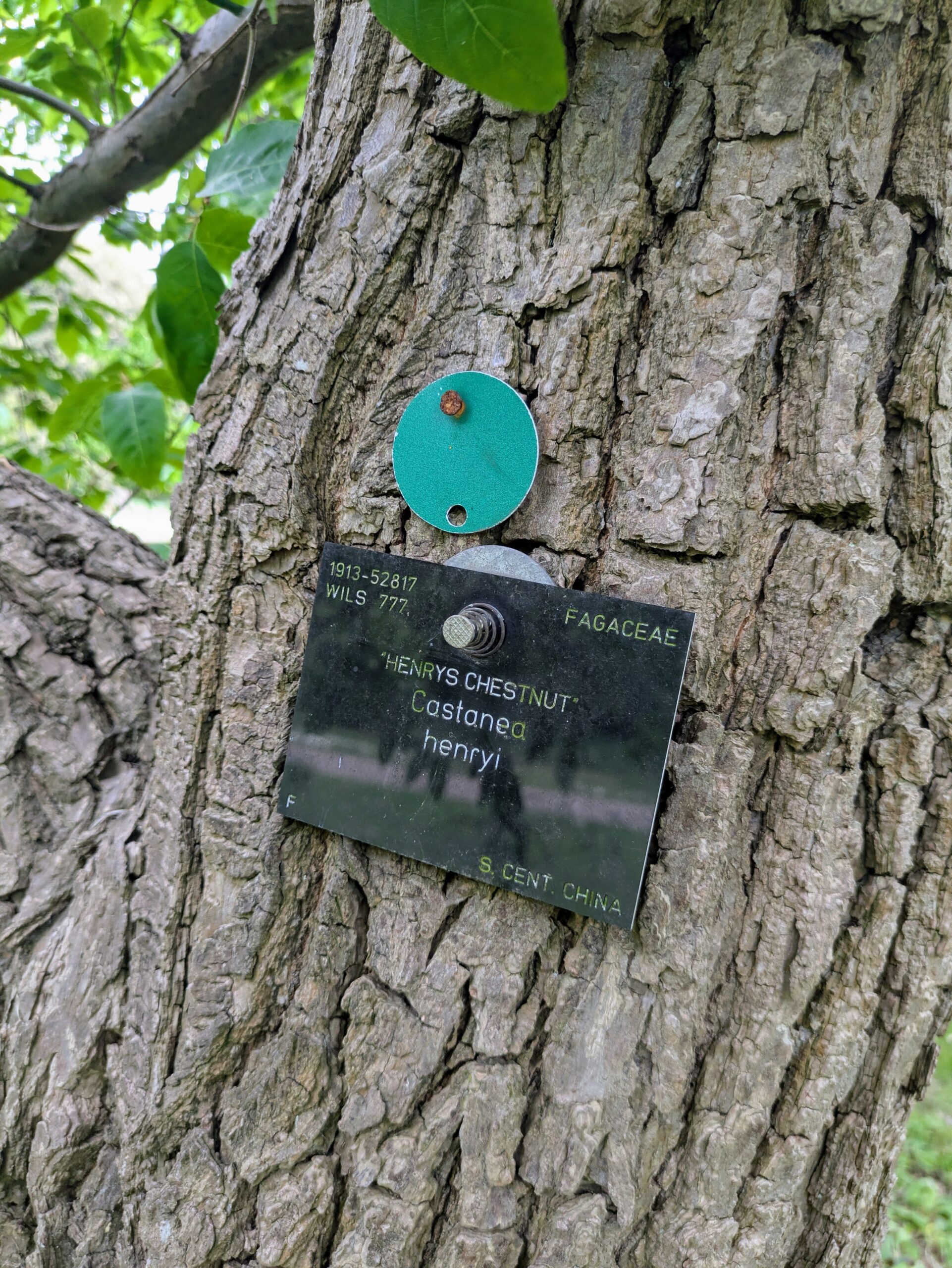
    Castanea henryi, or Chinese chinquapin, is a rare Chinese species of chestnut that produces tiny edible nuts. This species has attracted attention from chestnut breeders for its complete immunity to chestnut gall wasp, a scourge of many chestnut orchards. By crossing this species with chestnuts that produce larger nuts, the hope is to create a delicious large chestnut that isn’t affected by chestnut gall wasp. This tree, while small, is actually very old – planted in 1913. It has developed an interesting pendulous habit that I’ve seen in other old specimens of Castanea henryi.

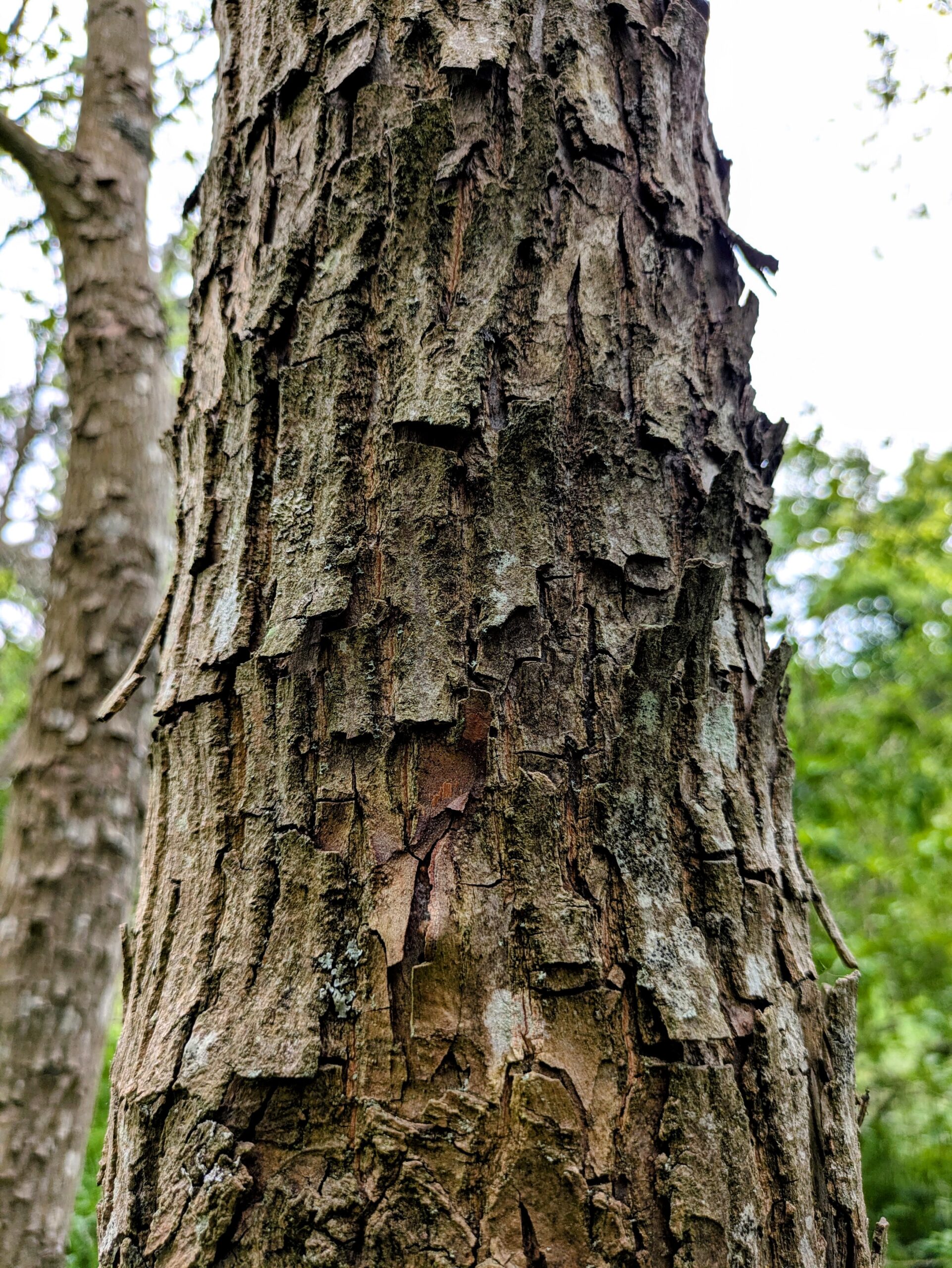
    A couple of specimens of Hovenia dulcis, the Japanese raisin tree. This large tree in the buckthorn family Rhamnaceae produces one of the most unusual edible fruits you’ll ever see – because it’s not a fruit at all! The fruit stalk or peduncle becomes fleshy and sweet, with a date-like flavor. When dried, these “fruits” can be used similarly to raisins, hence the name. This tree is adaptable to an incredible range of climates – it’s an invasive plant in the Brazillian rainforest, but I’ve also seen it thriving in Boston, Massachusetts. Older specimens develop bark which peels away in rectangular segments, revealing a reddish interior.

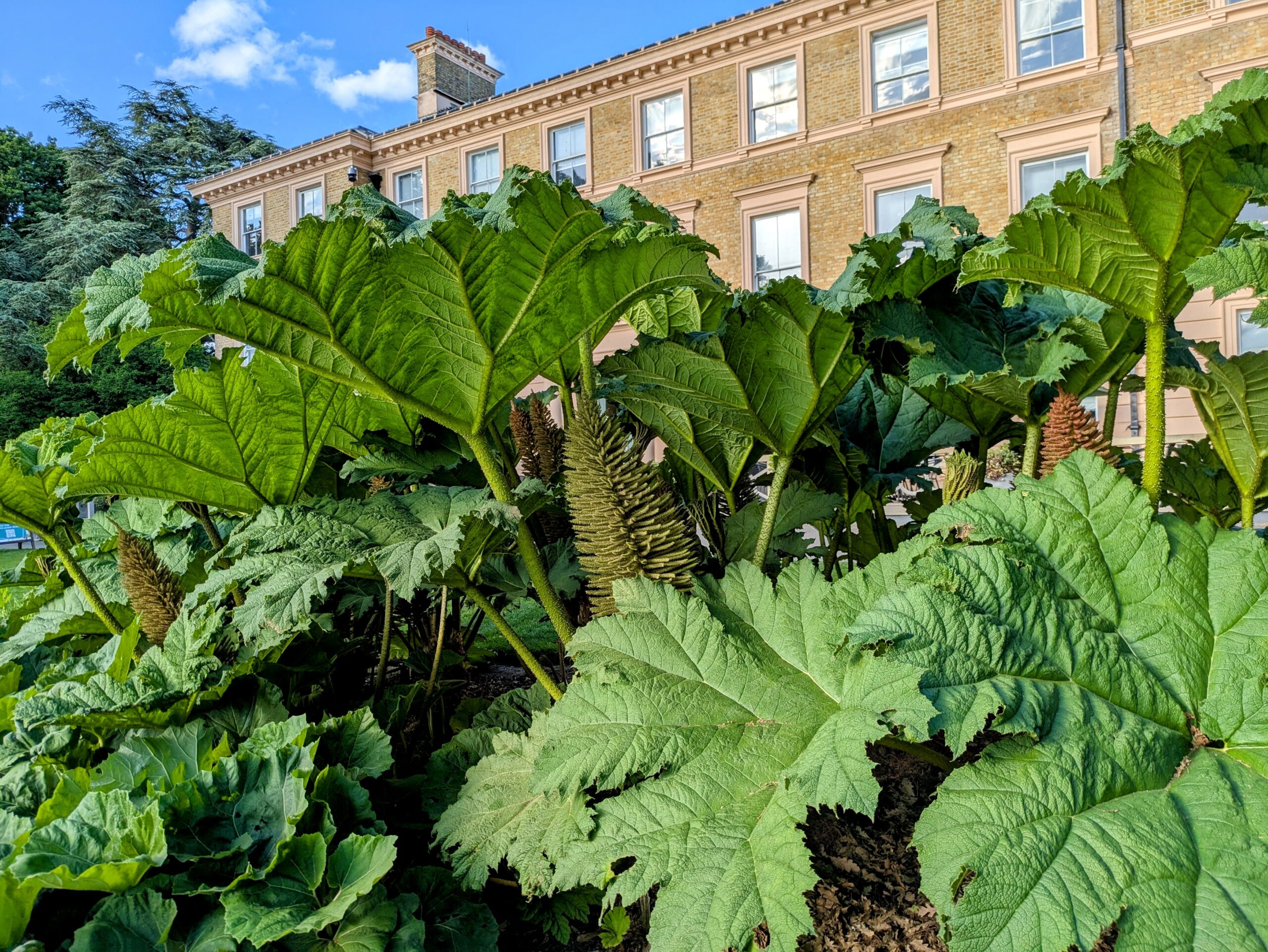
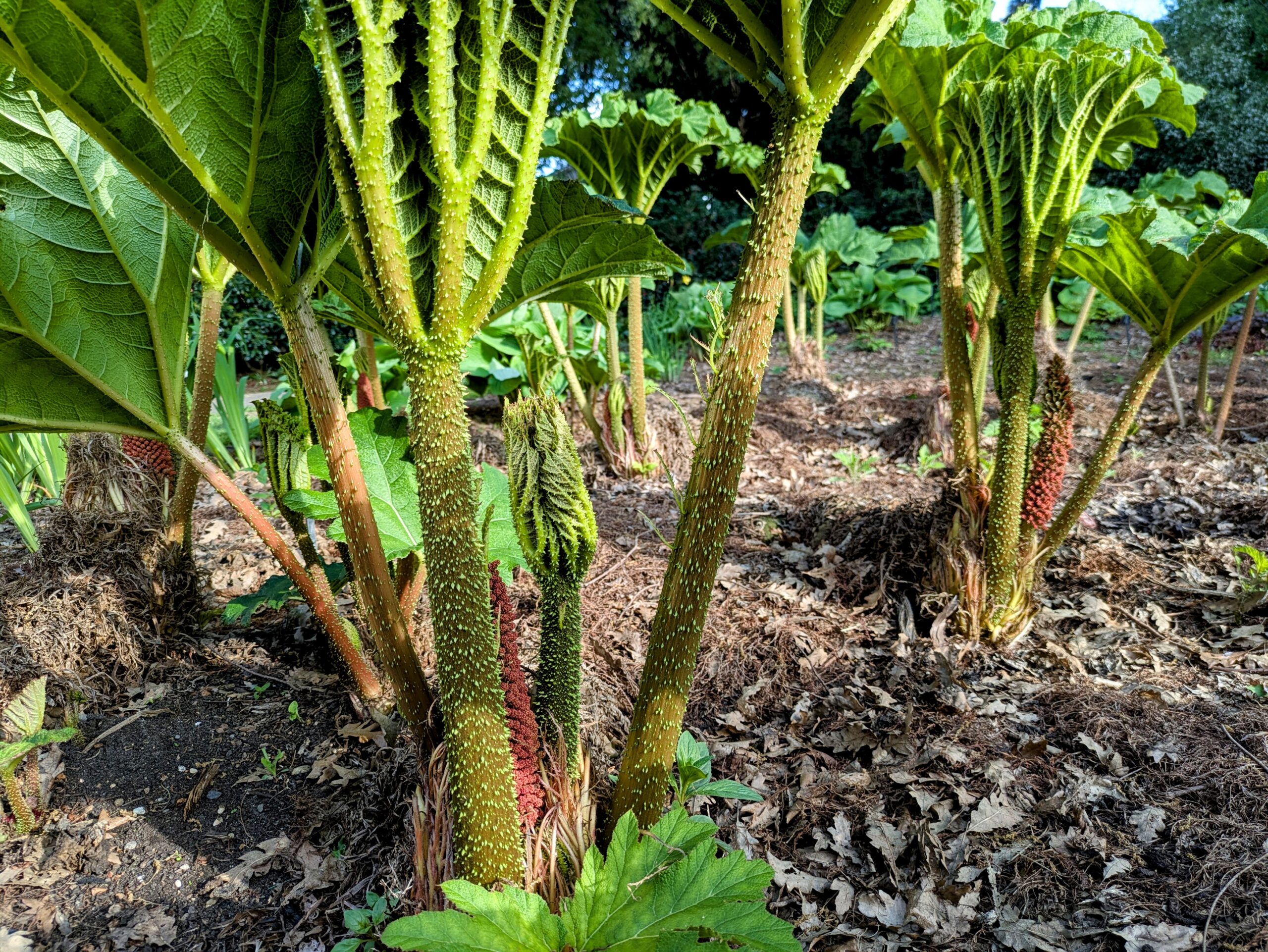
    An impressive patch of Gunnera × cryptica, a hybrid of Brazilian giant rhubarb (Gunnera manicata) and Chilean rhubarb (Gunnera tinctoria). These water-loving plants are common in the UK, where they’re grown as an ornamental on the banks of ponds and streams. The plant was named “giant rhubarb” due to its superficial resemblance to true rhubarb (Rheum species) and its edible stalks, which have a long history of use in Chile. Unfortunately this plant is not terribly cold-hardy!

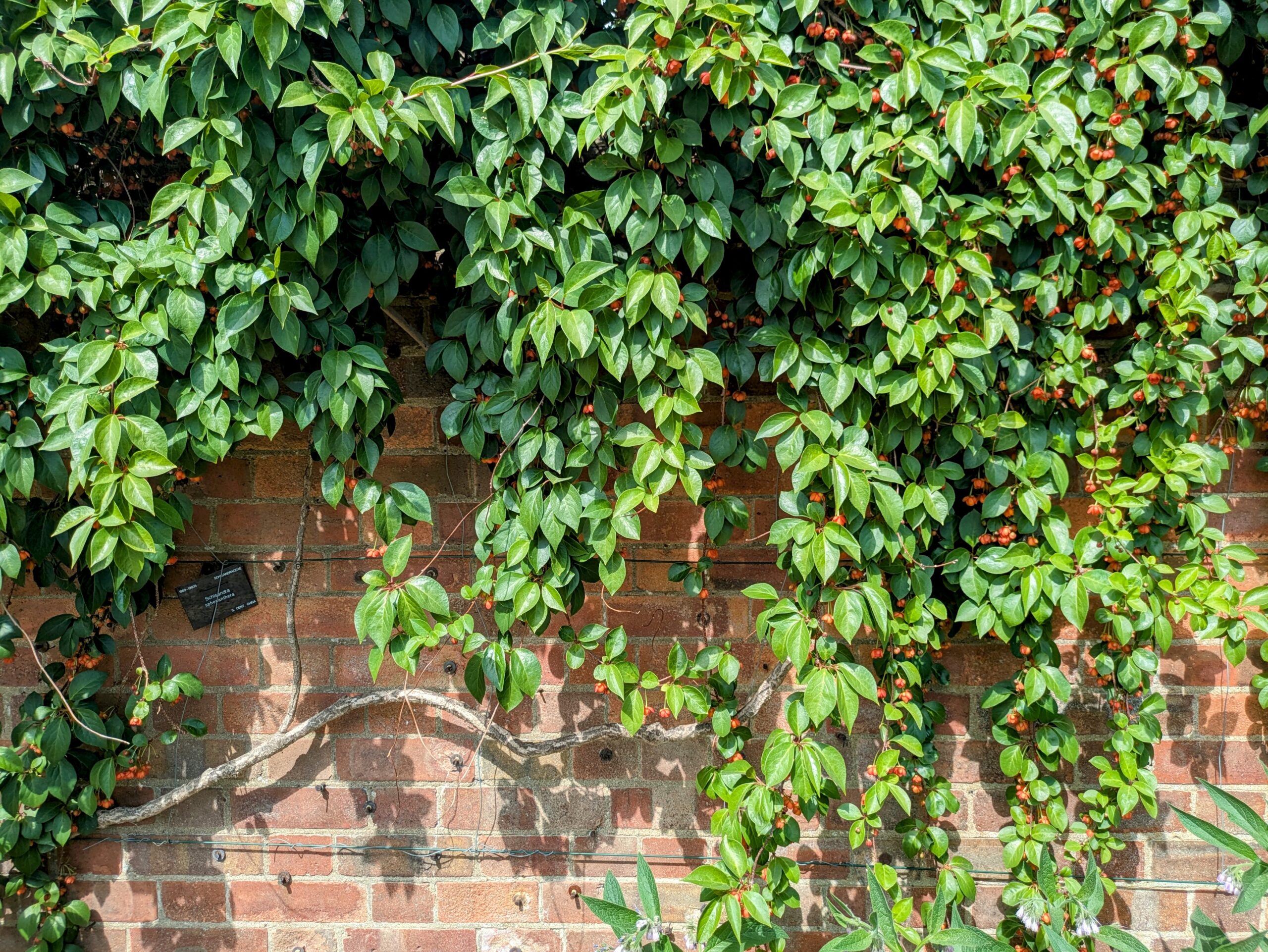
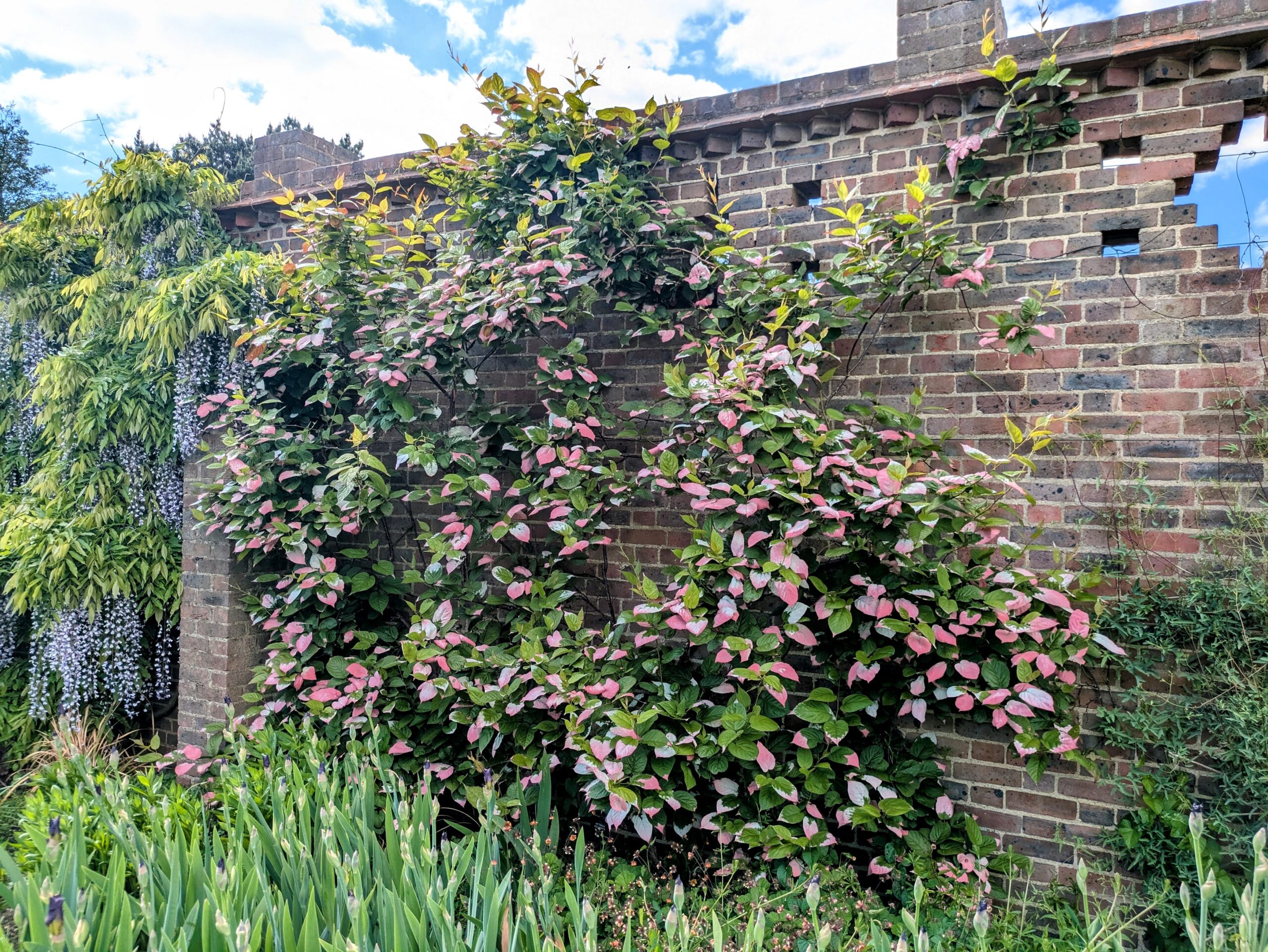
    A couple of edible ornamental vines grown against a brick wall – at left is Schisandra sphenanthera, a rare species of Chinese magnolia vine with attractive red flowers, and at right is a male specimen of Actinidia kolomikta, arctic kiwi. The berries of Schisandra species are edible and medicinal, with Schisandra chinensis being the species most commonly grown. (Look for the self-fertile variety ‘Eastern Prince’) The berries of Actinidia kolomikta are a true dessert quality fruit, and are becoming more popular, now sold in supermarkets as “kiwi berries”. Male arctic kiwis typically showcase this incredible variegation, starting white and fading to shades of pink. The tip of each individual leaf appears to be dipped in pink paint!

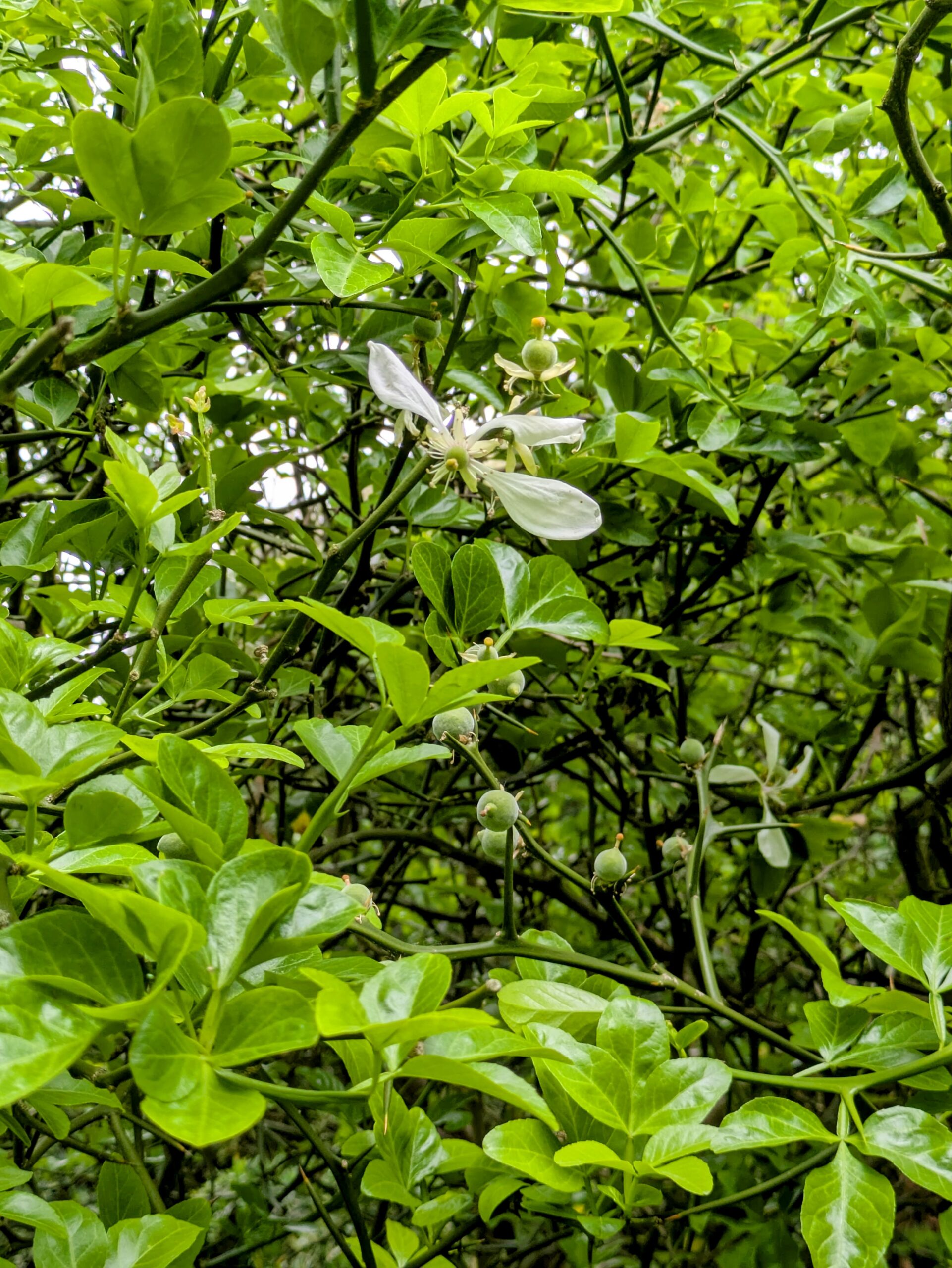
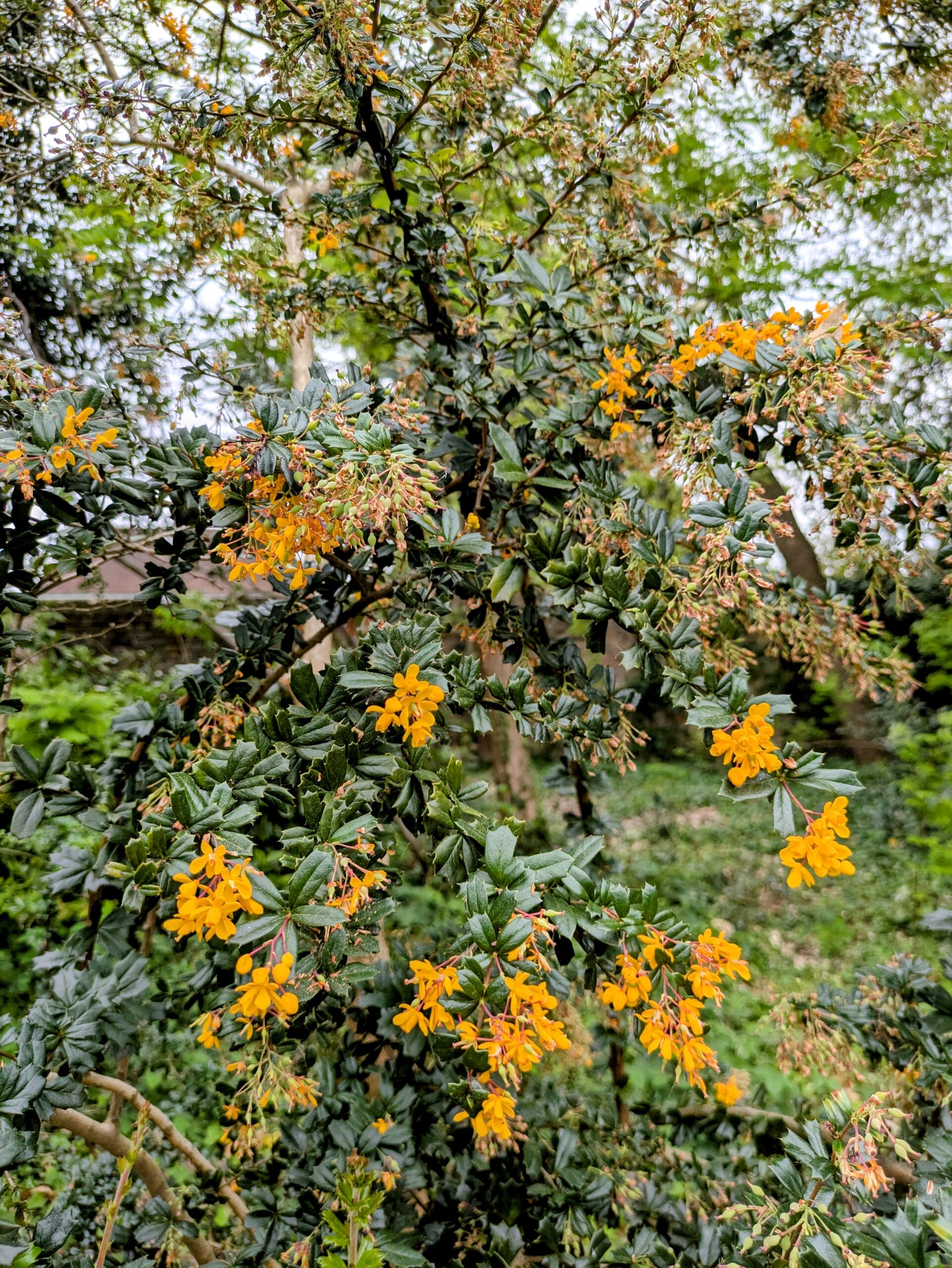
    The flowers and young fruits of Poncirus/Citrus trifoliata, the trifoliate orange – the hardiest citrus plant in the world, and the flowers and foliage of Berberis darwinii, Darwin’s barberry, an evergreen barberry species with showy flowers and tasty edible fruits. While intensely thorny, the trifoliate orange is an excellent novelty plant for northern gardens. It is hardy to at least zone 6. The fruits are seedy and bitter, but can still be used to make a nice marmalade. Darwin’s barberry, aside from its beauty and interesting history (discovered by Charles Darwin in Chile during his famous voyage onboard the Beagle) is also said to be one of the best tasting barberries. It prefers milder climates.

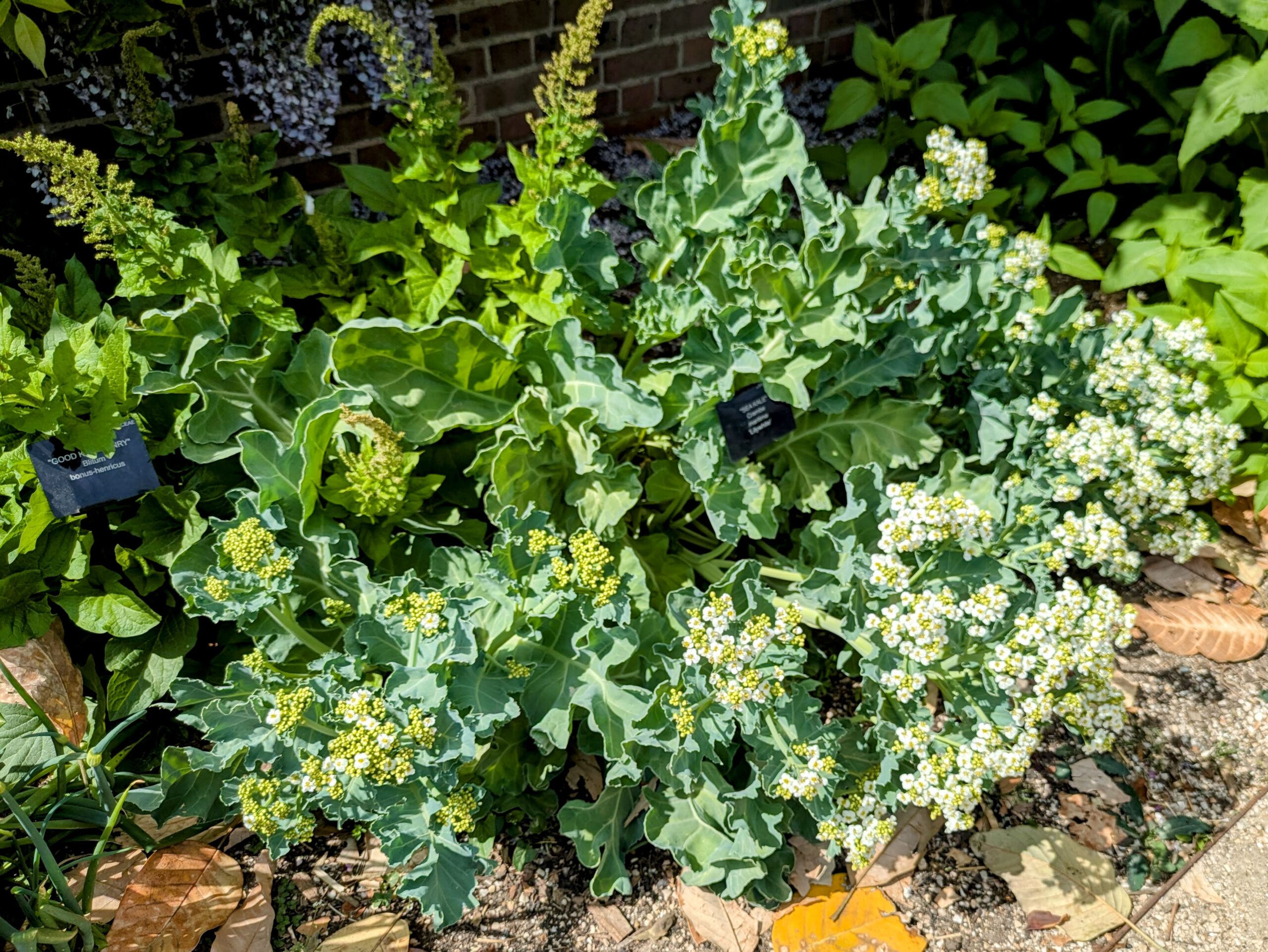
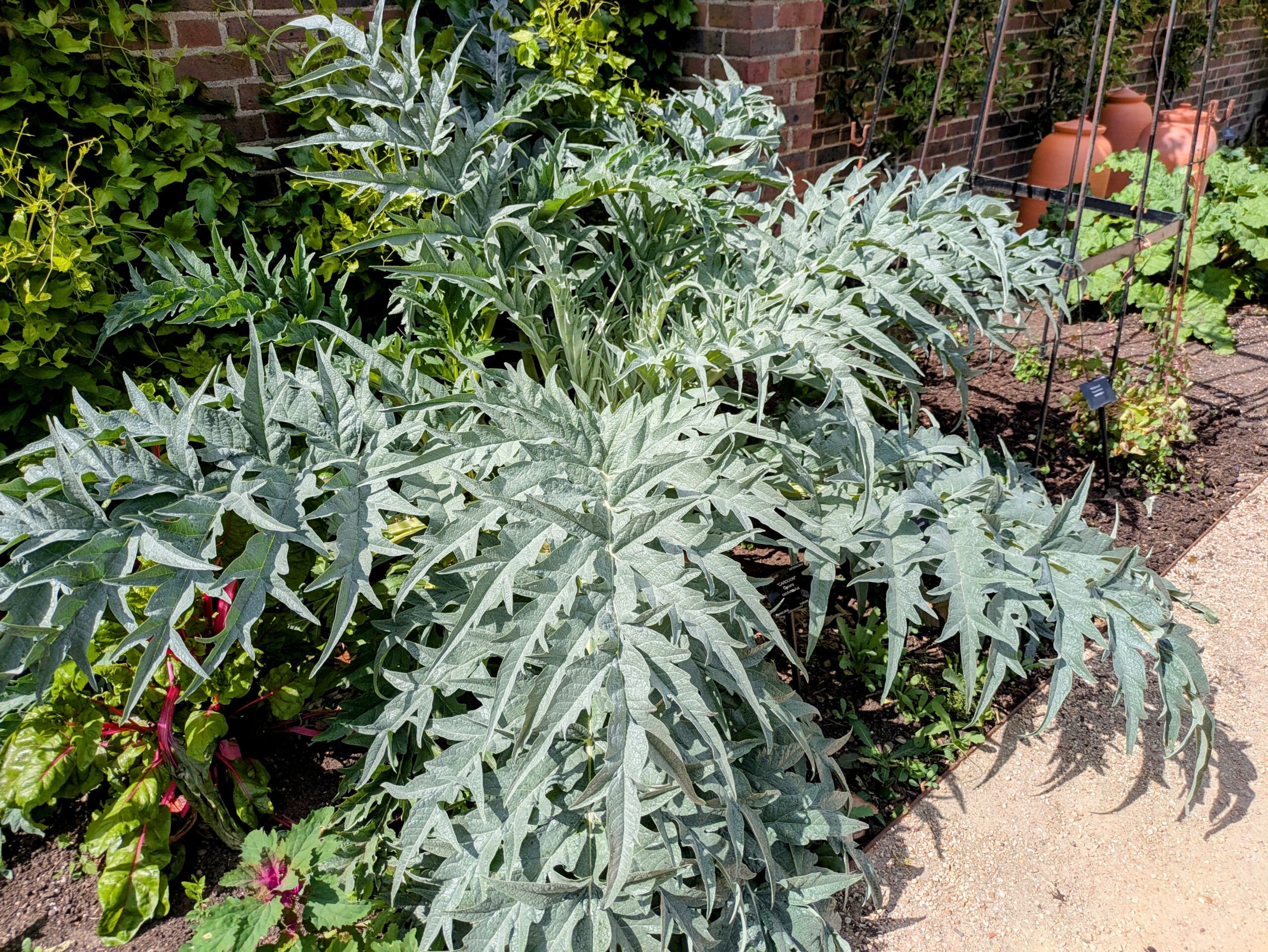
    At left is sea kale (Crambe maritima) in bloom with a few Good King Henry (Chenopodium bonus-henricus) plants behind it. I was lucky to visit the UK during peak sea kale bloom. Each sea kale plant forms a beautiful mass of fragrant white flowers that are also edible and delicious – does it get any better? At right is the gorgeous pale blue foliage of cardoon (Cynara cardunculus) with rhubarb and forcing pots behind. Cardoon can struggle in cold winter climates, but is worth trying for its incredible foliage effect. Good King Henry, sea kale, and cardoon, all have edible leaves and shoots. Sea kale flowerbuds, which look like tiny broccolis, are one of the finest gourmet vegetables on Earth.

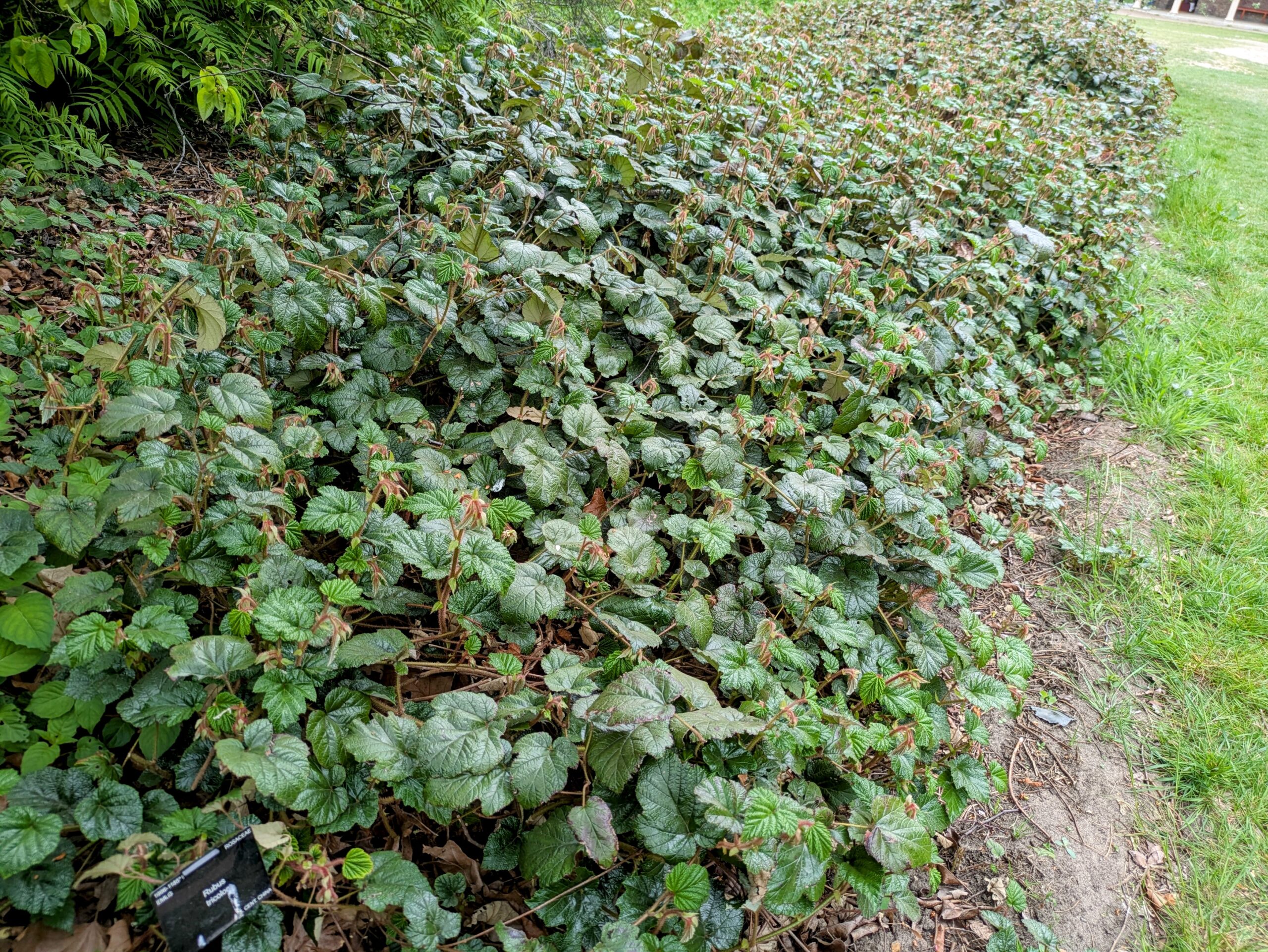
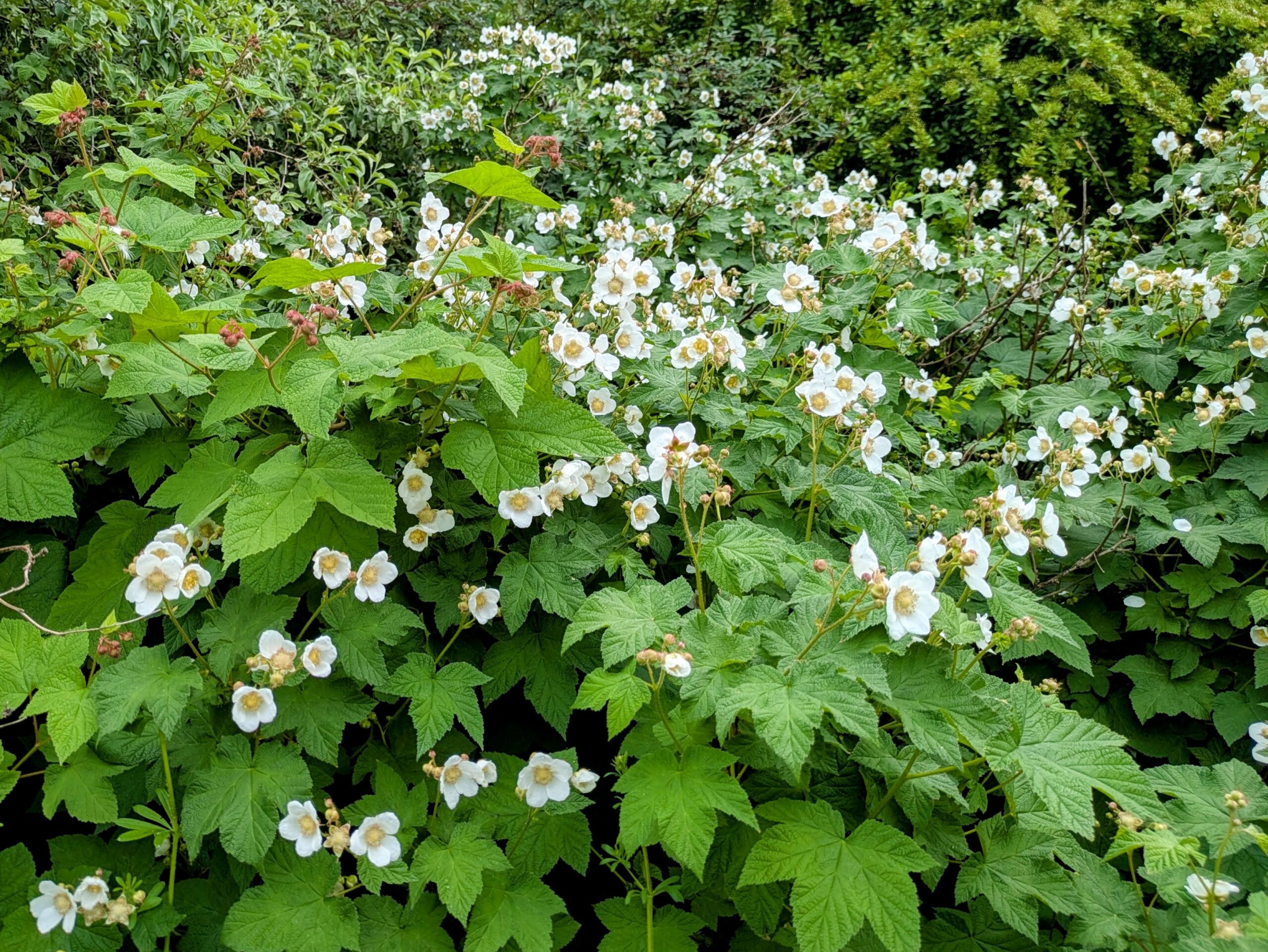
    Two uncommon Asian raspberry species. At left is Rubus tricolor, an evergreen groundcover raspberry from Taiwan with fuzzy red stems and small orange fruits. It prefers a milder climate but makes an excellent groundcover where it does well. At right is Rubus crataegifolius – an attractive raspberry with large palmate foliage and showy white flowers. This species is thorny and aggressive but produces larger red raspberries – there are named fruiting varieties of Rubus crataegifolius in Korea.

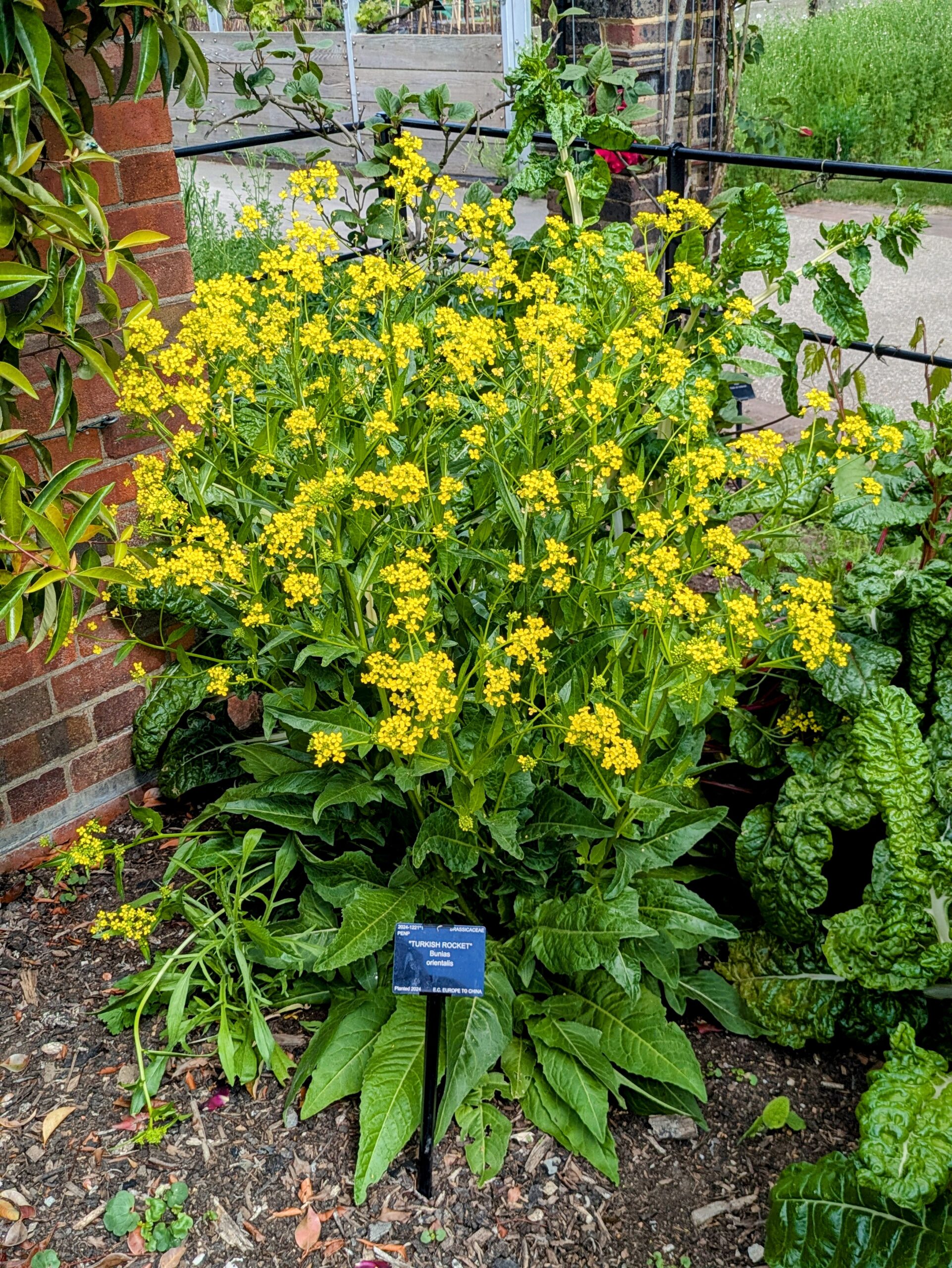
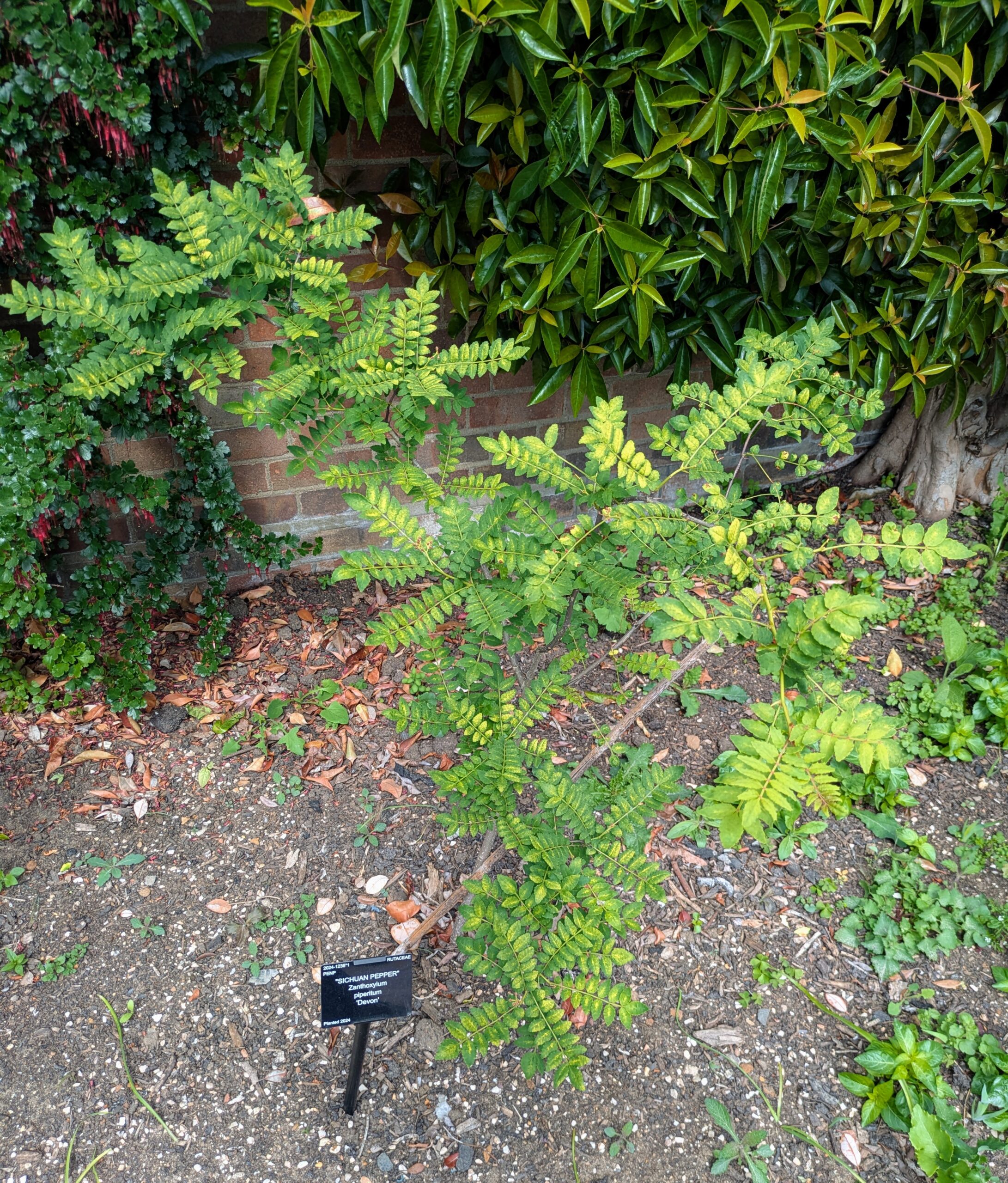
    Turkish rocket (Bunias orientalis) is gorgeous in bloom and the flowers are loved by hoverflies, a large class of beneficial insects – just don’t let it set seed or it’ll take over! The young leaves and especially the young flower buds are tasty on this species with a strong mustard flavor. Just about the easiest perennial vegetable you could grow. At right is a young sansho pepper tree, Zanthoxylum piperitum ‘Devon’. I wasn’t aware of any named cultivars of this species, so it was interesting to see this one. Sansho is popular among Japanese foragers, who harvest the spicy young leaves in spring. The main crop however, is the reddish seed husks in the fall, which, when dried and ground, are a world-class spice with a unique musky citrus flavor.

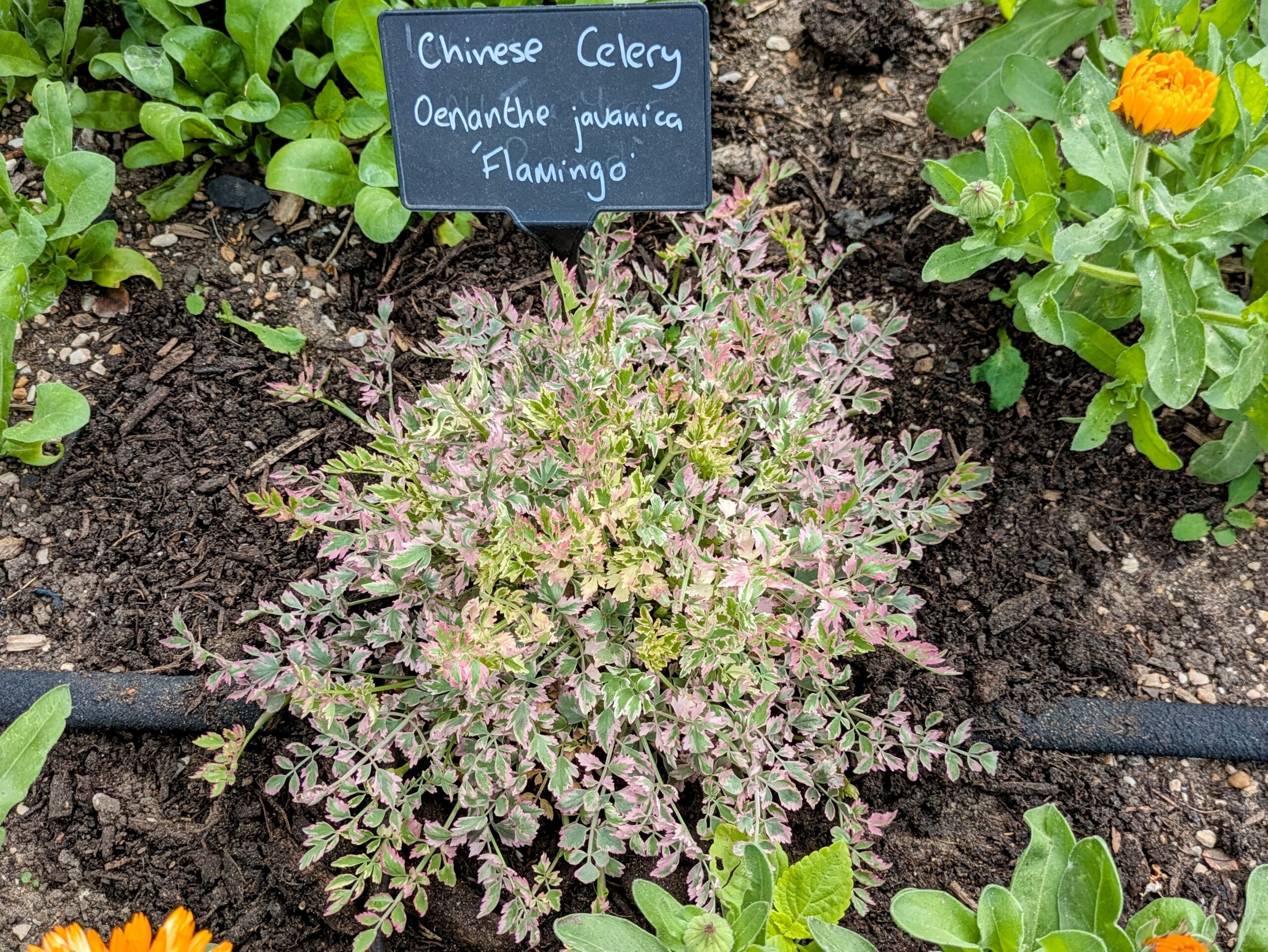
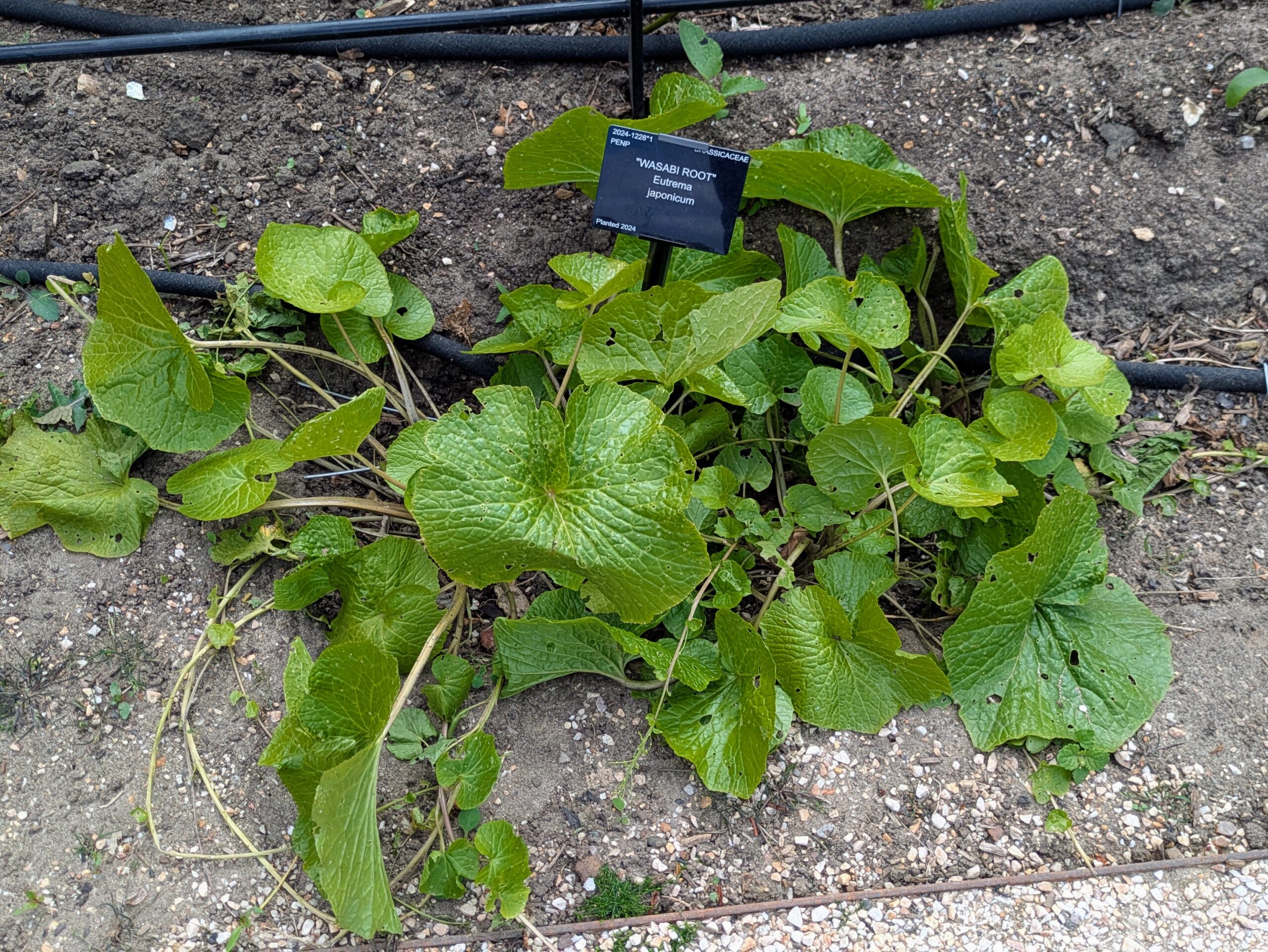
    Two moisture-loving vegetables from East Asia – note the irrigation hoses! At left is Oenanthe javanica ‘Flamingo’ – the variegated version of water celery, a great albeit aggressive perennial celery plant. It never develops a large stalk like true celery, but the celery-flavored foliage and thin stems are a great addition to any dish. It’s also a beautiful groundcover with its attractive tricolor foliage! At right is the true wasabi plant, Eutrema japonicum, which has a reputation for being very difficult to grow outside of its native range. It grows naturally along wooded mountain streams in Japan, so that tells you the sort of conditions it likes. Most wasabi sold outside of Japan is actually horseradish root, Armoracia rusticana.

  • Bumald’s Bladdernut – The Cauliflower Tree

    My first exposure to Staphylea bumalda, a species of Asian bladdernut shrub, was this ethnobotanical survey of wild food plants utilized in a rural mountain village in central China. The so-called “Bumald’s bladdernut” caught my attention because it was not only one of the most commonly eaten wild vegetables there, but also the most popular wild vegetable served in restaurants. Bumald’s bladdernut leaves were more popular in restaurants than the leaves of the Chinese toon tree,Toona sinensis, which are delicious and a revered wild food in China. The study features photos of bladdernut leaves being served as a vegetable side dish and dried in the sun for long-term storage.

    The survey area in central China where this story begins.

    What exactly was this plant which was apparently so delicious? After consulting several botanical references, I learned that Staphylea bumalda is a 6 foot (1.8 m) tall multi-stemmed shrub with attractive white flowers in the spring. It has a wide distribution in East Asia which includes China, Korea and Japan. The characteristic feature of the bladdernuts in the genus Staphylea is their inflated seedpod (bladder) which contains small hard seeds (nuts). Being a bladdernut, Staphylea bumalda is closely related to the American bladdernut Staphylea trifolia and the European bladdernut Staphylea pinnata, but differs from these other species in its smaller overall size. The plant can be grown in sun or shade in moist soils down to at least USDA zone 5.

    The flowers of Staphylea bumalda as photographed by iNaturalist user Rob Macfie in South Korea.

    The Chinese name for the plant listed in the aforementioned study is 树花菜, pronounced shù huācài – which translates to “tree cauliflower”. This name conjures fantastical images of its edible usage – who wouldn’t want to grow a cauliflower tree? The name refers to the small clusters of white flower buds which are harvested and eaten alongside the leaves in the spring. These flowerbud clusters are only a few inches long, but do resemble a tiny cauliflower or broccoli raab, despite being unrelated to either. The leaves and flowerbuds are generally eaten cooked, and can be used in a variety of cooked dishes.

    You can see why they call it “tree cauliflower” in this photo by iNaturalist user onidiras.

    In my opinion what sets this plant apart from others is the incredible flavor of the leaves and tiny “cauliflowers”. The plant has a strong flavor of sesame, as if the leaves were dipped in toasted sesame oil with a dash of black pepper. When I tried the leaves and flower buds for the first time I was very impressed by their flavor and chewy texture. I’ve tasted many unusual plants over the years and often they’re not terribly good. This was one I could easily eat a whole bowl of! On an established shrub the yield of edible leaves and “cauliflowers” can be tremendous. As referenced in the Chinese study, the leaves are also easily preserved by drying.

    A plate of young leaves and cauliflowers of Staphylea bumalda just after harvesting.

    When I consulted my Korean and Japanese foraging books I also found glowing reviews for the flavor: “The soft leaves have a refined taste without any bitter or peculiar flavor and are popular with people of all ages, from children to the elderly.” – high praise from a book that frequently recommends boiling plants multiple times to remove bitterness! I would later learn that a small industry is forming around the plant in rural China. Rural farmers are growing it in large numbers to sell to local restaurants and to export to cities. Because it is harvested in the spring before most crops are ready, it gives farmers a big financial boost going into the growing season. The recent surge in interest in wild foods and traditional Chinese medicine has only made it more successful. Unfortunately the best article I found on the subject has since been removed by its Chinese publisher.

    Boiled bladdernut leaves and flower buds with soy sauce for dipping.

    My first time seeing one of these plants in person was in August of 2021 during a trip to the Polly Hill Arboretum on Martha’s Vineyard. Staphylea bumalda is an uncommon species in cultivation, but as luck would have it, the proprietors of the arboretum had collected seed of it during a 2007 expedition to Japan. The 14-year-old plants I witnessed had a similar habit and silver-gray bark as a serviceberry, (Amelanchier species) but with leaves in threes and copious seed pods hanging on each bush.

    While most bladdernuts have a more cylindrical “bladder” with 3 or more segments, Staphylea bumalda has a flattened bladder with 2 lobes. This unique characteristic makes it easy to tell that you’ve got the right species. Each side of the bladder contains between 1 and 3 seeds about the size of a lentil – much smaller than the nuts of the American and European species. While the nuts of the larger bladdernuts can be shelled and eaten, the nuts of Staphylea bumalda are far too small to be used for this purpose, though there is some evidence that they have been pressed for oil in China.

    Staphylea bumalda “bladders” (center) and “nuts” (top left).

    I collected a large number of seeds from the bushes at the Polly Hill Arboretum during my visit, and upon returning home I attempted to germinate them. As it turns out, most bladdernut species are very difficult to grow from seed. Each individual seed has a hard and impermeable seed coat which inhibits germination. While the larger bladdernuts can be cracked or filed to open up the seed coat, Staphylea bumalda seeds are so small that attempting to crack or file them often results in the seeds being crushed. I failed in my first year trying to grow them, and so returned to the Polly Hill Arboretum the following year to collect more. Only after pretreating the seeds with concentrated sulfuric acid did I find some success.

    Success! Baby Staphylea bumalda plants.

    Out of the roughly 200 seeds that I collected, I only succeeded in getting exactly 2 to germinate! I wanted to grow at least 2 plants so that they could cross-pollinate, allowing me to one day collect seeds from my own garden. As you can imagine, I have since been protecting both plants with every ounce of my horticultural knowledge. I would say that they’re easily the most babied plants in my landscape! If you’re looking for seeds to try for yourself, there’s no longer any need to visit an obscure arboretum or botanical garden. Seeds are available online from Sheffield’s Seed and occasionally on eBay. I’ve ordered them from both sources and can at least confirm that they’re selling the right species, though I expect germination to be difficult from any source!

    After reading all of this, some of you may be wondering about the edible uses of the many other bladdernut species. In my opinion the young leaves of any Staphylea is worth trying. The study mentioned at the start of this article also lists Staphylea holocarpa, another Chinese species, as edible – though much less commonly used than S. bumalda. Staphylea holocarpa ‘Rosea’ is a noteworthy cultivar of this species with beautiful pink flowers. I’m growing it in my own garden but haven’t tasted it yet. Staphylea holocarpa grows much taller than Staphylea bumalda, so it may need to be pruned to keep the leaves within reach.

    The pink-tinged flowers of Staphylea holocarpa ‘Rosea’ are edible but perhaps too beautiful to eat!

    The European bladdernut Staphylea pinnata and the Caucasian bladdernut Staphylea colchica can likely both be used in all the same ways, though I have less experience with them. I know the flowers are eaten pickled in some European countries. Staphylea pinnata has the distinction of having the largest nuts of any bladdernut species, though they’re still quite small and difficult to crack. Martin Crawford at the Agroforestry Research Trust has written about cracking and eating them. The nutmeat within the shell is green, similar to a pistachio. One other oddball in the bladdernut family is Euscaphis japonica, the Korean sweetheart tree, a larger and less-hardy species famous for its attractive red seed pods in the fall. I’ve sampled the young leaves of this species, which are listed as edible in many reputable sources, but found them tough and undesirable.

    Curiously, I’ve been unable to find any ethnobotanical record of the American bladdernut, Staphylea trifolia, being eaten. Despite its large range throughout the eastern United States, it doesn’t seem that it was utilized much by Native Americans. The species is also not listed in any of the comprehensive American foraging books in my collection. For this reason I’ve taken it upon myself to taste test the young leaves and flowerbuds. When I tried them boiled I found them to be mild and agreeable but missing the delicious sesame flavor found in Staphylea bumalda. I’ve since eaten a large quantity of the leaves with no ill effects and met others who have tried them too. I would encourage anyone curious to give them a shot. Staphylea trifolia deserves to be more widely planted anyway – it’s a highly adaptable species with attractive flowers and curious striped bark.

    I hope you’ve enjoyed this deep dive into the relatively unexplored culinary properties of the bladdernuts. I’m hoping that more people will learn about the incredible edible uses of these plants, and I’d especially like to see them become more widely available in the nursery trade. Let me know if you’ve tried them and what you think! Here’s to bountiful harvests of tree cauliflower!

    A specimen of Staphylea bumalda growing at the Cornell Botanic Gardens in Ithaca, NY.

  • The Uncommon Spicebush

    The very first plant I learned to forage was the common spicebush, Lindera benzoin. My foraging teacher “Wildman” Steve Brill pointed out the bush and explained to us that it could be easily identified by the lenticels on its bark and the fragrance it emits when a branch is broken. He recommended collecting the berries in the fall to use as a potent spice. Since that time I’ve been collecting spicebush berries every fall. My favorite way to use them is to blend one or two berries into a smoothie for a spicy kick. I think the flavor is more akin to nutmeg, cardamom, or allspice than anything else.

    Spicebush berries on the bush.

    One common mistake people make with spicebush berries is attempting to store them dried. The spicebush berry is high in fat, so it should be stored frozen to prevent the fats from turning rancid. Its high fat content is one reason why it’s a favorite food of migratory songbirds, who need that energy to fuel their migration. I’ve always admired the resilience of the common spicebush, as it’s one of the few native plants in the northeast that can compete with invasive plants in the forest understory. I grow a male and female here in my garden.

    The spring flowers of common spicebush.

    Eventually I learned that there are some uncommon varieties of the common spicebush. My favorite local nursery Broken Arrow Nursery, which specializes in rare and unusual plants, sells Lindera benzoin ‘Rubra’, a male variety with red flowerbuds. This variety was discovered on the side of the road by Dr. Brian Maynard of the University of Rhode Island. I got to meet him and take cuttings from one of his plants, but I failed to get them rooted or grafted. As it turns out, the common spicebush is very difficult to propagate.

    Another almost-mythical form of the common spicebush is Lindera benzoin ‘Xanthocarpa’, a female form with yellow rather than red fruits. This mutation occurs randomly in wild populations, and is exceptionally difficult to find because it can only be seen when the bushes are fruiting. In the winter of 2021 I searched through all sightings of fruiting Lindera benzoin on iNaturalist and managed to find a few examples of this form. You could say that my searching “bore fruit”. Unfortunately the seeds I received from a kind iNaturalist member failed to germinate.

    I’ve always thought it would be funny to grow ‘Rubra’ and ‘Xanthocarpa’ side by side. You’d have a male spicebush with red flowers that should be yellow next to a female spicebush with yellow fruits that should be red. Sadly I’ve been unable to make it happen, though I continue to try!

    Global distribution of the genus Lindera based on iNaturalist observations.

    As the years have gone on, I’ve learned to appreciate the other non-native members of the genus Lindera as well. There are far more spicebush species in Asia than there are in North America after all. Two of my favorites are Lindera angustifolia and Lindera obtusiloba, the narrow-leaf and blunt-lobed spicebushes respectively. I always seek these plants out on my trips to botanical gardens and arboreta.

    Lindera angustifolia or narrow-leaf spicebush is an East Asian species with excellent fall color and an interesting quirk. Rather than dropping its leaves in the fall, it holds onto them firmly all winter long. I’ve planted a hedge of this species along the back of my property to form a pseudo-evergreen barrier between my yard and my neighbor’s. The wind blowing through the leaves in winter makes a pleasing sound similar to a bamboo grove, without the invasive qualities.

    Lindera obtusiloba or blunt-lobed spicebush is a larger tree-like species that has three-lobed leaves similar to our native Sassafras. The blunt-lobed spicebush’s most striking feature is its reliable fall color. It turns a vibrant yellow-orange every fall without fail, even in woodland settings or when conditions for fall color are poor. The Plants for a Future database says “Young leaves are fried and used as a Buddhist ceremonial dish”, but I’ve found no evidence of this. I guess I’ll have to fry some up sometime and have a taste.

    Both of these Asian spicebushes have yellow flowers in the spring, similar to the common spicebush. The blunt-lobed spicebush has larger flowers in proportion to its larger overall size, while the flowers of the narrow-leaf spicebush are hidden behind its persistent leaves. The Asian spicebushes also produce a small fruit, which is decidedly less edible than the native species. On the one occasion that I ventured to taste it I was immediately punished by its terrible bitterness! As far as spicebush fruits are concerned, you could say that the fruits of the common spicebush are uncommonly delicious.

  • Fiveleaf Aralia – The Incredible Edible Hedge

    Back in the spring of 2022 I was trying to solve a garden problem that had been plaguing me for some time. One edge of my front lawn, where I wanted to grow a food forest, connected seamlessly with my neighbor’s front lawn. The shared border of our properties is roughly 30 feet (9 m) long and highly visible to passersby on the sidewalk and street. If I wanted to grow a garden in this spot, I would need a physical barrier to prevent the neighbors from mowing down or walking on my valuable plants. In addition, I wanted to make sure that mulch I put down in this area didn’t migrate onto my neighbor’s property. A fence would be the obvious solution to this problem, but I thought it would be too mundane a solution for such a highly visible part of the yard. I wanted my yard to inspire others to garden, and this part of the yard would be the first thing people see when coming down the street.

    The problem area

    So I decided that a small ornamental hedge would be the ideal solution. The hedge should be under 4 feet (1.2 m) in height so that I could see over it while backing out of the driveway, and should be under 2 feet (0.6 m) in width so that it wouldn’t take up too much of my limited gardening space. Of course, since I was planning on growing a food forest, I was also looking for a plant that was edible or useful in some way. The hedge in question would have to meet all of these requirements on top of being well-adapted to the conditions of the site: a dry and sunny location in USDA zone 6b.

    Traditional boxwood hedges – pretty but not terribly useful.

    As I began my research, the first plant that came to mind was the Japanese flowering quince, Chaenomeles japonica. This is a short Asian shrub in the rose family with attractive flowers and small edible fruits. It tops out at around 3 feet (1 m) in height – perfect – but tends to have a messy habit and naturally grows twice as wide as tall. This means it would require frequent pruning to keep the hedge looking tidy and its width in check. As I thought about it more, I realized that because this species flowers on the prior year’s wood, routine pruning of the hedge would also result in a reduction in flowers and fruits. In this way maintaining the plant as a hedge runs counter to its main uses – fruiting and flowering, making it a poor fit.

    Japanese flowering quince (Chaenomeles japonica) in bloom at the Arnold Arboretum.

    It was at this point that I had a realization. If I could find a hedging plant that had edible leaves, then I could combine the pruning and harvesting into a single action. Growing the plant as a hedge wouldn’t be a negative, but a great way to keep the leaves within reach! Instead of composting the clippings, I could actually eat them, and additional pruning would only stimulate the plant to produce more tender young leaves for me to harvest. If a plant like this existed, it would have a magical synergy between ornamental and edible qualities.

    A hedge of chaya (Cnidoscolus aconitifolius) growing at ECHO (Educational Concerns for Hunger Organization). Photo from Eric Toensmeier.

    Now it may sound odd to the average Westerner to eat the leaves of a shrub, but I had heard about it being done with a few different species in the tropics, such as chaya (Cnidoscolus aconitifolius) and katuk (Breynia androgyna). Was there a cold-hardy plant that could fill that same role in my New England garden? As I do whenever I have questions of this kind, I consulted the Plants for a Future database. I ran a search for all shrubs with edible leaves that could grow in my conditions and began delving into the data.

    An excerpt from the PFAF page for fiveleaf aralia, Eleutherococcus sieboldianus

    As I was poring over the data, one plant in particular stood out to me: fiveleaf aralia – Eleutherococcus sieboldianus. It had reputable citations for the edibility and good flavor of the leaves, was fully hardy, (down to zone 4!) and was even marked as a species suitable for growing as a hedge. Fiveleaf aralia is a woody member of the ginseng family, which contains a number of other shrubs and perennials with long histories of edible and medicinal use. This gave me some confidence that it was at least safe to consume. Its listed height and width of around 8 feet (2.4 m) however seemed at odds with its recommendation as a hedging plant. All of the photos I found of the plant online were of a large sprawling shrub.

    Fiveleaf aralia growing in a woodland setting at Hortus Arboretum in upstate NY.

    So I tried to find examples of this plant being grown as a hedge. In doing so I came across “Experiments with Hedges”, a 1931 publication by famous landscape architect Frank A. Waugh. In this paper Waugh details his experiments with various plant species as hedges, including fiveleaf aralia under its old Latin name Acanthopanax pentaphyllum. Waugh says of the plant: “This makes an excellent hedge if conscientiously pruned. The example in this experiment stands 3½ – 4 feet high and is 3 feet wide.” Right in the ballpark I was looking for! He even provides a great photo of the hedge itself.

    Waugh, F. A. (Frank Albert), 1869-1943. Acanthopanax (woman standing next to hedge), ca. 1925. Frank A. Waugh Papers (FS 088). Special Collections and University Archives, University of Massachusetts Amherst Libraries

    I also learned through a photo on Dave’s Garden, that this species is grown as a formal hedge in Boston’s famous Public Garden. I visited the hedge on one of my trips to the Arnold Arboretum and was impressed with its small size and dense foliage. Upon measuring it, I found that it was maintained at only 3 feet (1 m) tall and 1 foot (30 cm) wide! The individual plants in the hedge were planted with a dense 1 foot (30 cm) spacing. Surely it must require frequent pruning from the garden staff to be kept so small. Apparently some members of the local Asian community had also noticed the hedge, as I came across this complaint that people were in fact harvesting and eating its leaves!

    A beautiful formal hedge of fiveleaf aralia in the Boston Public Garden.

    Frustrated at the lack of any English language information regarding its edibility, I decided to research the plant using its Japanese name: himeukogi or ヒメウコギ. Through this research I learned that fiveleaf aralia has been grown specifically as an edible hedge in the Japanese city of Yonezawa since feudal times. Its planting had been encouraged by the local lords and generals who saw value in its ability to secure property lines with its thorny branches while also providing important nutrition in case of famine. In fact, one of the most common ways the plant is eaten today hearkens back to its history as a famine prevention food. By boiling the leaves and adding them to rice, you can add crucial vitamins and minerals that a rice-only diet lacks, preventing the worst effects of malnutrition. Due to this long history, the people of Yonezawa continue to grow hedges of this plant (and eat them!) to this day.

    A traditional fiveleaf aralia hedge in Yonezawa, Japan. Bamboo is used to provide additional support.

    In addition to the historic use of fiveleaf aralia in Yonezawa, I discovered that there is actually a budding food industry being built up around the plant. Formed in 1999, the “Ukogi Town Yonezawa Hedge Association” has been growing the plant commercially and promoting its use as an edible hedge. They actually have an entire fiveleaf aralia farm that grows the plant for local farmers markets, grocery stores, and for use as a nutritious food additive. Their website is one of the best sources for fiveleaf aralia information on the web, with detailed information about the history of the plant as well as everything you need to know to grow and prepare it. Much to my surprise, they even produced a line of fiveleaf aralia flavored ice cream!

    After reading all of this, my enthusiasm for the plant had turned into a full-on mania. A vigorous and easily-grown hedge with edible leaves, fully hardy to USDA zone 4? I had read everything I needed to know, and was ready to get some plants in the ground. Clearly the plant was safe to eat and in fact tasted pretty good. The only remaining question I had was “where can I get plants?” Only the variegated form was available in the nursery trade, and I was worried that it wouldn’t be vigorous enough to survive in full sun and make a dense hedge. (I would find out later that the variegated form doesn’t taste good anyway.) I couldn’t find the more vigorous green form of the plant for sale anywhere.

    A variegated fiveleaf aralia growing at the JC Raulston Arboretum.

    In my search for nurseries that sold the plants, I discovered that it was a popular shrub species for shade gardens starting around 100 years ago. It appears in countless gardening books and nursery catalogs from the time under its old name Acanthopanax sieboldianus. As it turns out, large populations of this plant still exist on old estates from that era that have been turned into parks or otherwise forgotten. If left unattended fiveleaf aralia spreads by tip-layering to form large clonal colonies similar to a blackberry. They can take over large swaths of woodland in ideal conditions.

    This patch of fiveleaf aralia at the Bartlett Arboretum in Stamford, CT shows its arching habit and attractive silver-gray bark in winter.

    The more prudent of you will understandably have concerns about this invasive quality. Allow me to put some of those concerns to rest. Because fiveleaf aralia spreads primarily by tip-layering, maintaining it as a trimmed hedge completely removes the main way that it gets around. The plant cannot tip-layer unless the branches are allowed to arch over and touch the ground. Fiveleaf aralia is also dioecious, and all plants in the United States appear to be female clones, so it rarely sets seed.

    Still, the species does seem to be expanding its range throughout the eastern half of the United States. While many local invasions of fiveleaf aralia can be explained as escapes from abandoned garden plantings, there are still others which are clearly caused by bird dispersal of the seeds. The good news is that it’s easy enough to remove flowers and fruit clusters from a trimmed hedge should they occur.

    iNaturalist map showing occurrences of fiveleaf aralia in the eastern United States and Canada.

    Eventually with the help of iNaturalist I located a large colony of fiveleaf aralia in a local park where it seems to have spread from a single ancient planting. The patch was growing in full shade on a steep slope along the side of a bridge, highlighting the incredible adaptability of the species. With well over 100 plants in the patch it would be easy for me to dig some up to transplant into my yard.

    And so on a warm day in mid-March I ventured back to the park, dug up 28 small plants, trimmed them back, and planted them in the aforementioned location. I planted at 1 foot (30 cm) spacing as recommended by the “Ukogi Town Yonezawa Hedge Association” website and hoped for the best. It wasn’t long before the plants began to grow in earnest and by June the first inkling of a hedge was visible.

    As my own planting was getting established, I decided to experiment with the culinary properties of the species using leaves harvested from the patch in the local park. Raw the leaves have a green almost celery-like flavor with a bitter finish, but cooked the bitterness is significantly reduced and the flavor is that of a uniquely aromatic green vegetable. Because the bitterness is caused by water-soluble saponins, the main way to prepare the plant is by boiling the leaves. Just like spinach, the leaves cook down a lot when boiled, so it’s important to harvest a lot of them!

    Only the young, tender leaves are edible – older leaves become too tough. This means that in the spring you can harvest all of the leaves off of the plant but throughout the rest of the year only the young growing shoots may be harvested. Thankfully the young leaves and shoots have a clearly visible color difference which makes them stand out. When harvesting the young leaves in spring you have to be careful of the thorns which occur under each leaf cluster. The young shoots are comparatively easier to harvest as you simply snap them off anywhere the thorns haven’t hardened yet. By keeping the plant as a trimmed hedge you can harvest young shoots as late in the year as September.

    Traditionally the leaves are eaten boiled with rice, as tempura, or as an “aemono” or Japanese chopped salad with walnuts and toasted miso all chopped together. I’ve tried all three of these traditional preparations and I enjoy them so much that I make them regularly throughout the year. The aemono in particular is delightful! This video shows its preparation as well as other traditional preparations of the plant.

    Fiveleaf aralia with rice and fiveleaf aralia tempura – delicious.

    In addition to the traditional Japanese uses for the leaves, I’ve also used them to make a quiche, as a topping on pizza, and as a soup ingredient, all with great results. Because the leaves are fairly mild, they’re suitable for a wide range of uses. After boiling the leaves, the water can be pressed out and the leaves may be frozen for future use.

    Vegan quiche made with fiveleaf aralia from the freezer.

    Regarding the nutrition of the plant, fiveleaf aralia could rightly be called a superfood! The word “adaptogen”, which has been so widely used to describe highly nutritious wild food plants, was originally coined to describe Eleutherococcus senticosus, a close relative of Eleutherococcus sieboldianus. While Eleutherococcus senticosus is much too bitter to be used as a food plant, Eleutherococcus sieboldianus can provide similar benefits in a more palatable package. Research on the nutrition of the species is still ongoing, but all indications point to it being a good source of vitamins A, C, E, calcium, magnesium, iron, zinc and folate in addition to the medicinal and antioxidant qualities of the saponins and polyphenols found in its leaves.

    The author with his young hedge in June of 2023 – sheet mulching in progress at left. Photo by Mike Amato.

    The hedge I planted grew quickly and reached full size in around 2½ years after planting. I keep it trimmed to 4 feet (1.2 m) in height and 2 feet (0.6 m) in width. As Frank A. Waugh said in “Experiments with Hedges”, the plant does require conscientious pruning due to its fast rate of growth. This is less of a problem when you’re eating the leaves, because each pruning session is also a harvest session! This is that magical synergy I was looking for!

    The hedge reaching full-size in June of 2024.

    Looking back, I can only say that “the incredible edible hedge” has been a tremendous success. The hedge looks great and is protecting my young food forest admirably. The dishes I’ve made with fiveleaf aralia have become some of my favorites, and I look forward to making them each spring. The fiveleaf aralia harvest is mainly limited by my patience in picking the leaves and shoots, so I’m currently exploring tools to help automate the process such as devices for stripping leaves from branches and a hedge trimmer with a basket for catching trimmings. I’m hoping that others will learn about the many benefits of this plant, and many more “incredible edible hedges” will be planted soon!

    The dormant hedge in February of 2025.